

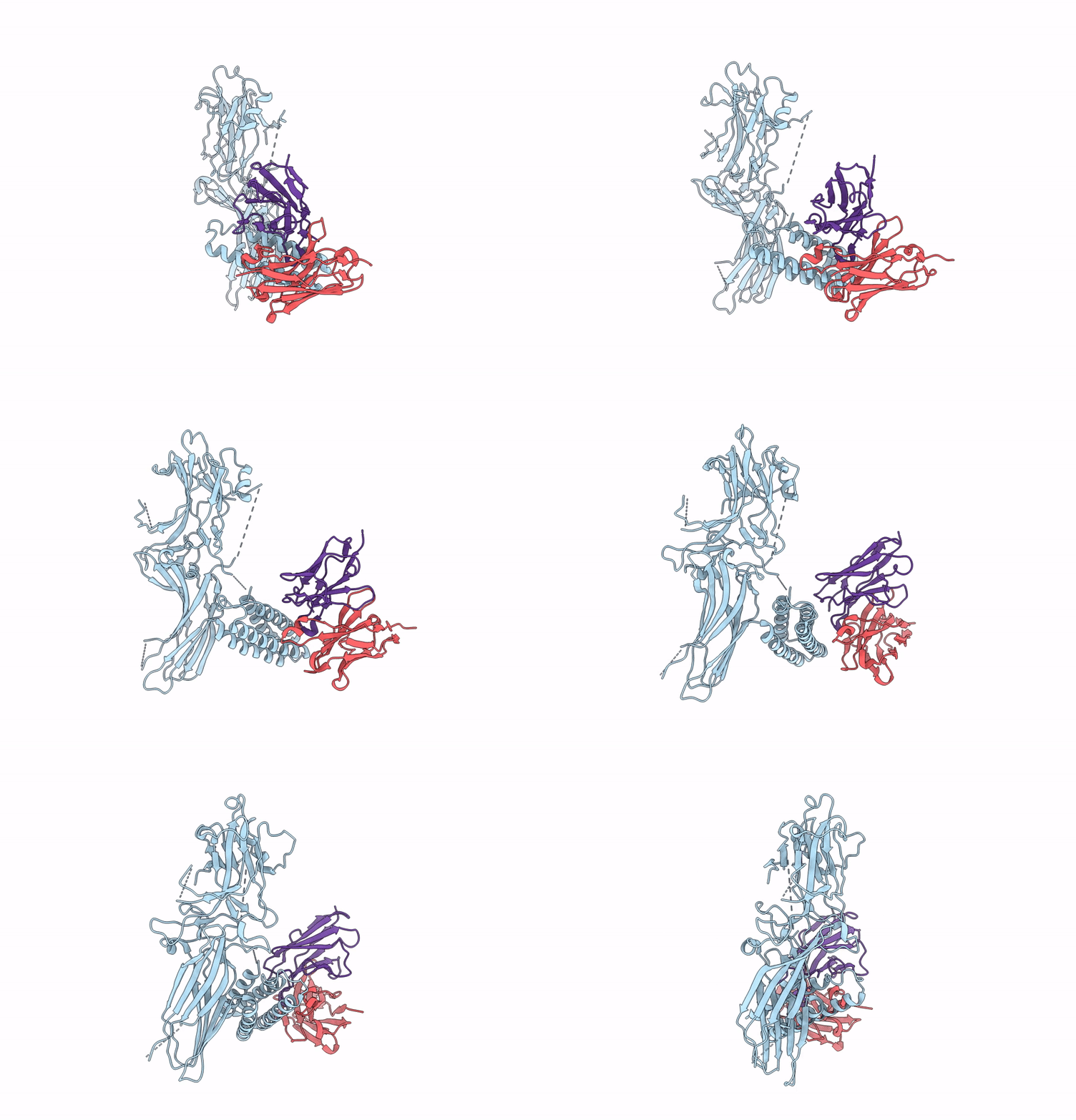
9DNG image
Deposition Date 2024-09-17
Release Date 2025-01-22
Last Version Date 2026-09-02
Entry Detail
PDB ID:
9DNG
Title:
Structure of rat beta-arrestin 1 by fiducial-assisted cryo-EM
Biological Source:
Source Organism(s):
Homo sapiens (Taxon ID: 9606)
Rattus norvegicus (Taxon ID: 10116)
Method Details:
Experimental Method:
Resolution:
3.52 Å
Aggregation State:
PARTICLE
Reconstruction Method:
SINGLE PARTICLE
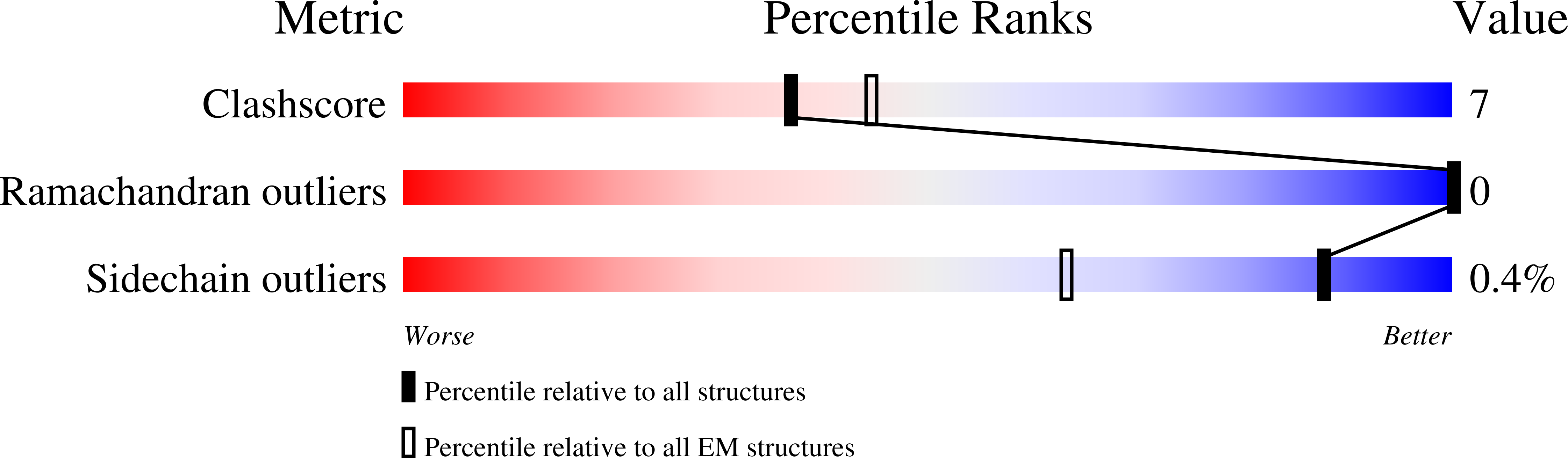
Macromolecular Entities
Polymer Type:polypeptide(L)
Molecule:Beta-arrestin-1,Soluble cytoc
Gene (Uniprot):Arrb1
Mutagens:M29W, H124I, R128L
Chain IDs:C (auth: A)
Chain Length:494
Number of Molecules:1
Biological Source:Rattus norvegicus
Polymer Type:polypeptide(L)
Molecule:anti-BRIL Fab Heavy chain
Chain IDs:A (auth: H)
Chain Length:225
Number of Molecules:1
Biological Source:Homo sapiens
Polymer Type:polypeptide(L)
Molecule:anti-BRIL Fab LIGHT chain
Chain IDs:B (auth: L)
Chain Length:212
Number of Molecules:1
Biological Source:Homo sapiens
Ligand Molecules
Primary Citation

Abstact

beta-Arrestins are multifunctional regulators of G-protein-coupled receptor (GPCR) signalling and orchestrate diverse downstream signalling events and physiological responses across the GPCR superfamily(1-3). Although GPCR pharmacology has advanced to target orthosteric and allosteric sites, as well as G proteins and GPCR kinases, direct chemical tools to modulate beta-arrestin activities have remained conspicuously absent. Here we report the identification of small-molecule inhibitors that selectively target beta-arrestins and delineate their mechanism of action through integrated pharmacological, biochemical, biophysical and structural analyses. These inhibitors disrupt beta-arrestin engagement with agonist-activated GPCRs, impairing desensitization, internalization and beta-arrestin-dependent physiological functions while sparing G protein-receptor coupling. Cryo-electron microscopy, molecular dynamics simulations and structure-guided mutagenesis reveal that one modulator, Cmpd-5, engages a pocket within the central crest of beta-arrestin1 formed by the middle, C and lariat loops, a critical receptor-binding interface, stabilizing a distinct conformation that is incompatible with full beta-arrestin-receptor engagement. Together, these findings establish a mechanistic framework for beta-arrestin modulation, reveal a novel allosteric site for structure-based drug design, and open new avenues for transducer-targeted, pathway-specific GPCR therapeutic agents.

Legend

Protein

Chemical

Disease

Primary Citation of related structures
Feedback Form
Name
Email
Institute
Feedback