

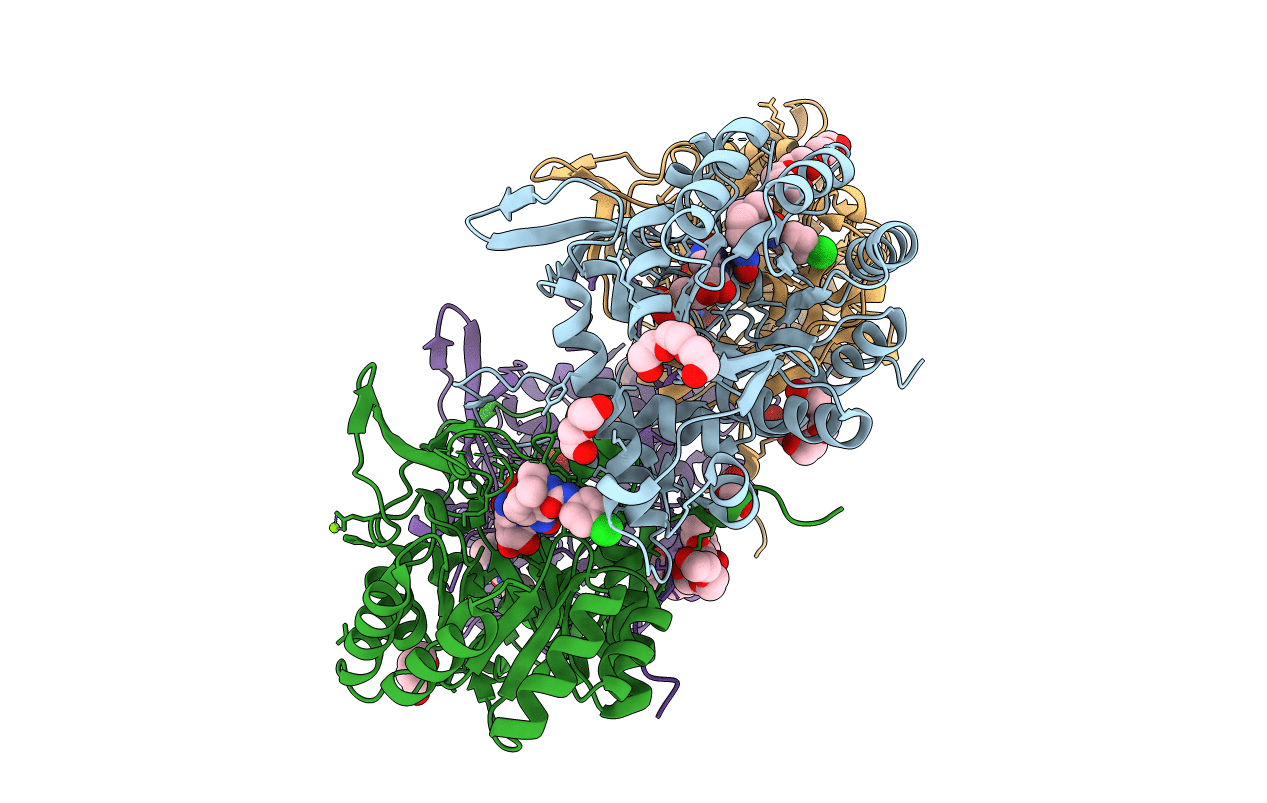
5UZS image
Deposition Date 2017-02-27
Release Date 2017-03-22
Last Version Date 2026-03-25
Entry Detail
PDB ID:
5UZS
Title:
Crystal Structure of Inosine 5'-monophosphate Dehydrogenase from Clostridium perfringens Complexed with IMP and P200
Biological Source:
Method Details:
Experimental Method:
Resolution:
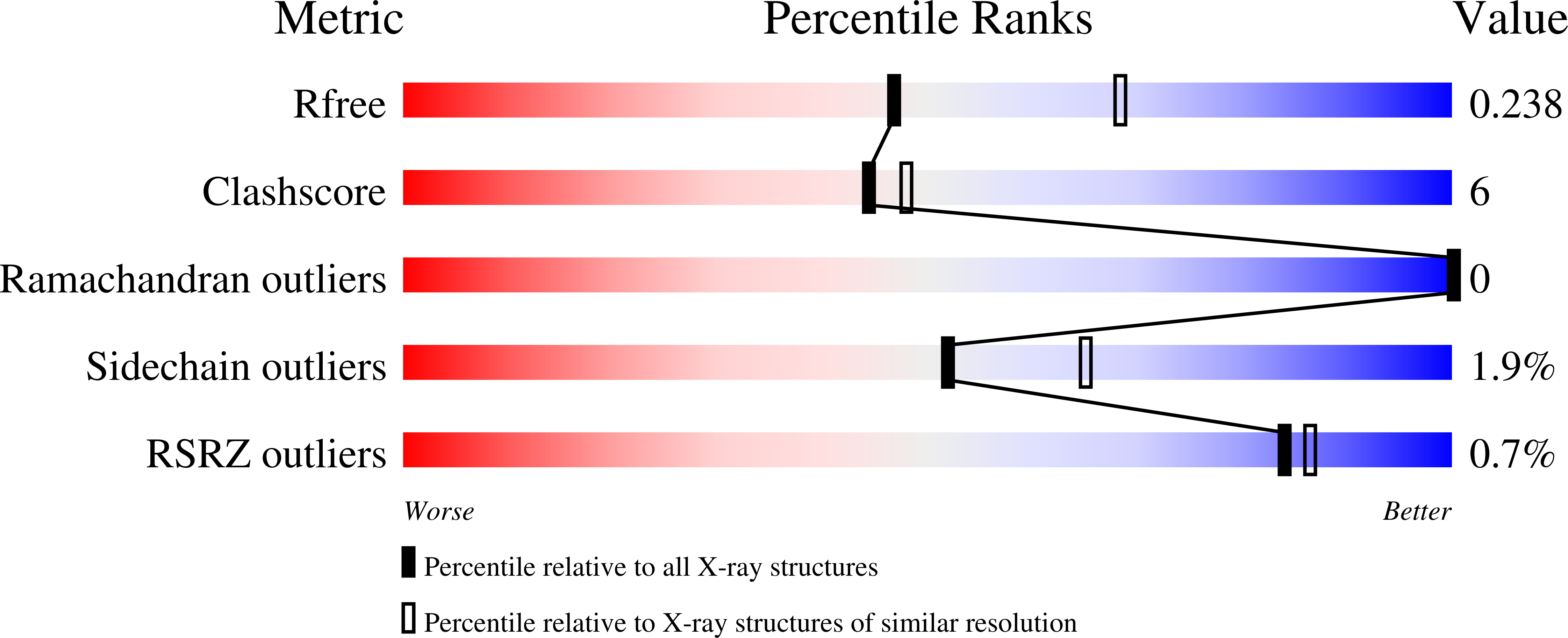
2.37 Å
R-Value Free:
0.23
R-Value Work:
0.17
R-Value Observed:
0.17
Space Group:
P 21 21 2
Macromolecular Entities
Structures with similar UniProt ID
Protein Blast
Polymer Type:polypeptide(L)
Molecule:Inosine-5'-monophosphate dehy
Gene (Uniprot):guaB
Mutagens:CBS domain (residues 89-215) is replaced by residues SGG
Chain IDs:A, B, C, D
Chain Length:363
Number of Molecules:4
Biological Source:Clostridium perfringens (strain ATCC 13124 / DSM 756 / JCM 1290 / NCIMB 6125 / NCTC 8237 / Type A)
Modified Residue
Compound ID Chain ID Parent Comp ID Details 2D Image
ALY A LYS modified residue
Primary Citation
Role of the Mobile Active Site Flap in IMP Dehydrogenase Inhibitor Binding.
Acs Infect Dis. 11 442 452 (2025)
PMID: 39879323 DOI: 10.1021/acsinfecdis.4c00636

Abstact

Inosine 5'-monophosphate dehydrogenase (IMPDH) is a promising antibiotic target. This enzyme catalyzes the NAD-dependent oxidation of inosine 5'-monophosphate (IMP) to xanthosine 5'-monophosphate (XMP), which is the rate-limiting step in guanine nucleotide biosynthesis. Bacterial IMPDH-specific inhibitors have been developed that bind to the NAD(+) site. These inhibitors display varied affinities to different bacterial IMPDHs that are not easily rationalized by X-ray crystal structures of enzyme-inhibitor complexes. Inspection of X-ray crystal structures of 25 enzyme-inhibitor complexes, including 10 newly described, suggested that a mobile active site flap may be a structural determinant of inhibitor potency. Saturation transfer difference NMR experiments also suggested that the flap may contact the inhibitors to varying extents in different IMPDHs. Flap residue Leu413 contacted some inhibitors but was not structured in the crystal structures of other inhibitor complexes. The substitution of Leu413 with Phe or Ala in Bacillus anthracis IMPDH had inhibitor-selective effects, suggesting residue 413 could be a structural determinant of affinity. Curiously, the Ala substitution increased the potency of most inhibitors, even those that contacted Leu413 in the crystal structures. Presteady-state and steady-state kinetics experiments showed that the Leu413Ala substitution had comparable effects on inhibitor binding to the noncovalent E.IMP complex and the covalent intermediate E-XMP*, suggesting that the flap had similar interactions in both complexes. These results demonstrate that contacts do not necessarily indicate favorable interactions, and poorly structured mobile regions should not be discounted when assessing binding determinants.

Legend

Protein

Chemical

Disease

Primary Citation of related structures
Feedback Form
Name
Email
Institute
Feedback