

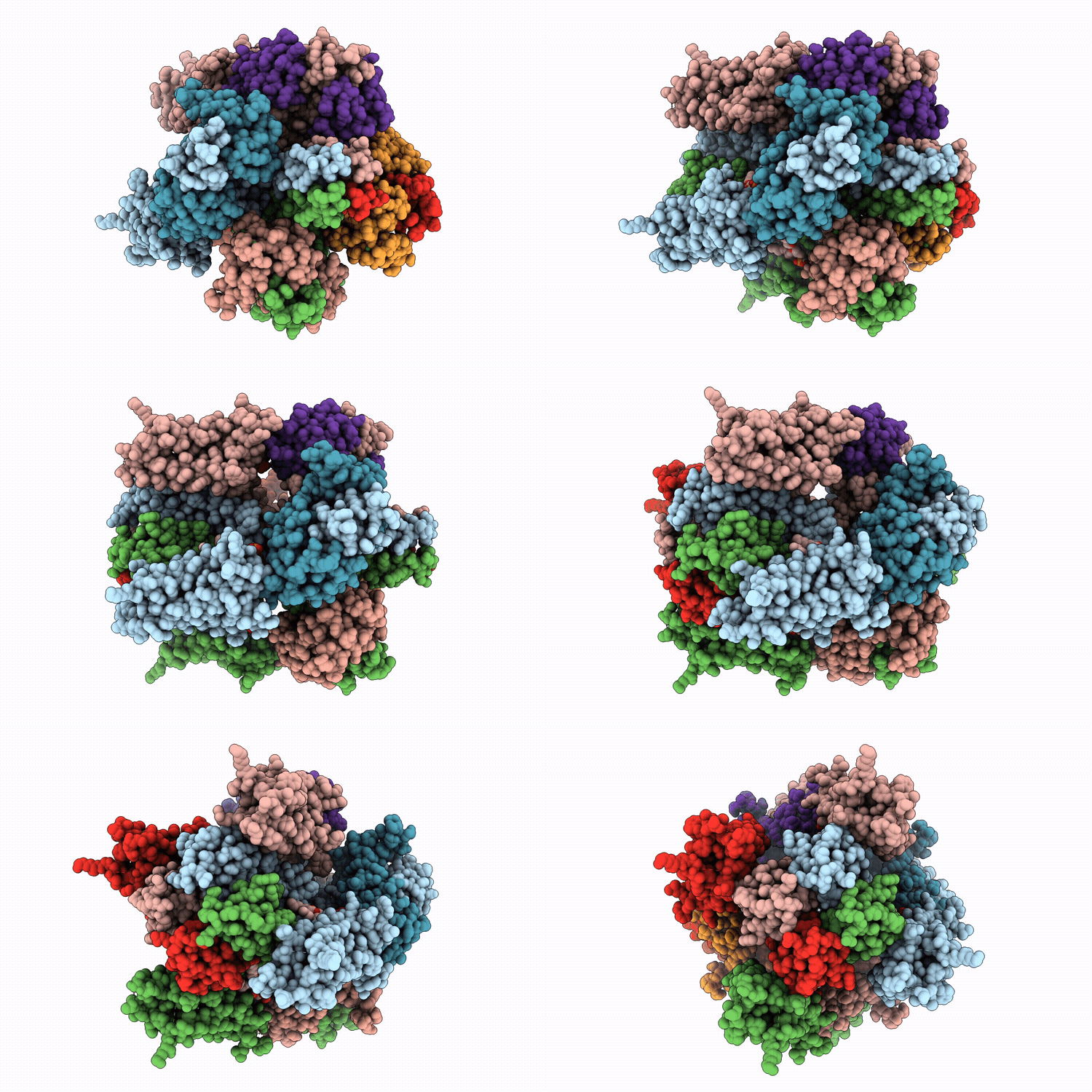
12DK image
Deposition Date 2026-03-28
Release Date 2026-05-06
Last Version Date 2026-06-17
Entry Detail
PDB ID:
12DK
Title:
structure of human KCNQ1-CaM-PIP2 intermediate state
Biological Source:
Source Organism(s):
Homo sapiens (Taxon ID: 9606)
Expression System(s):
Method Details:
Experimental Method:
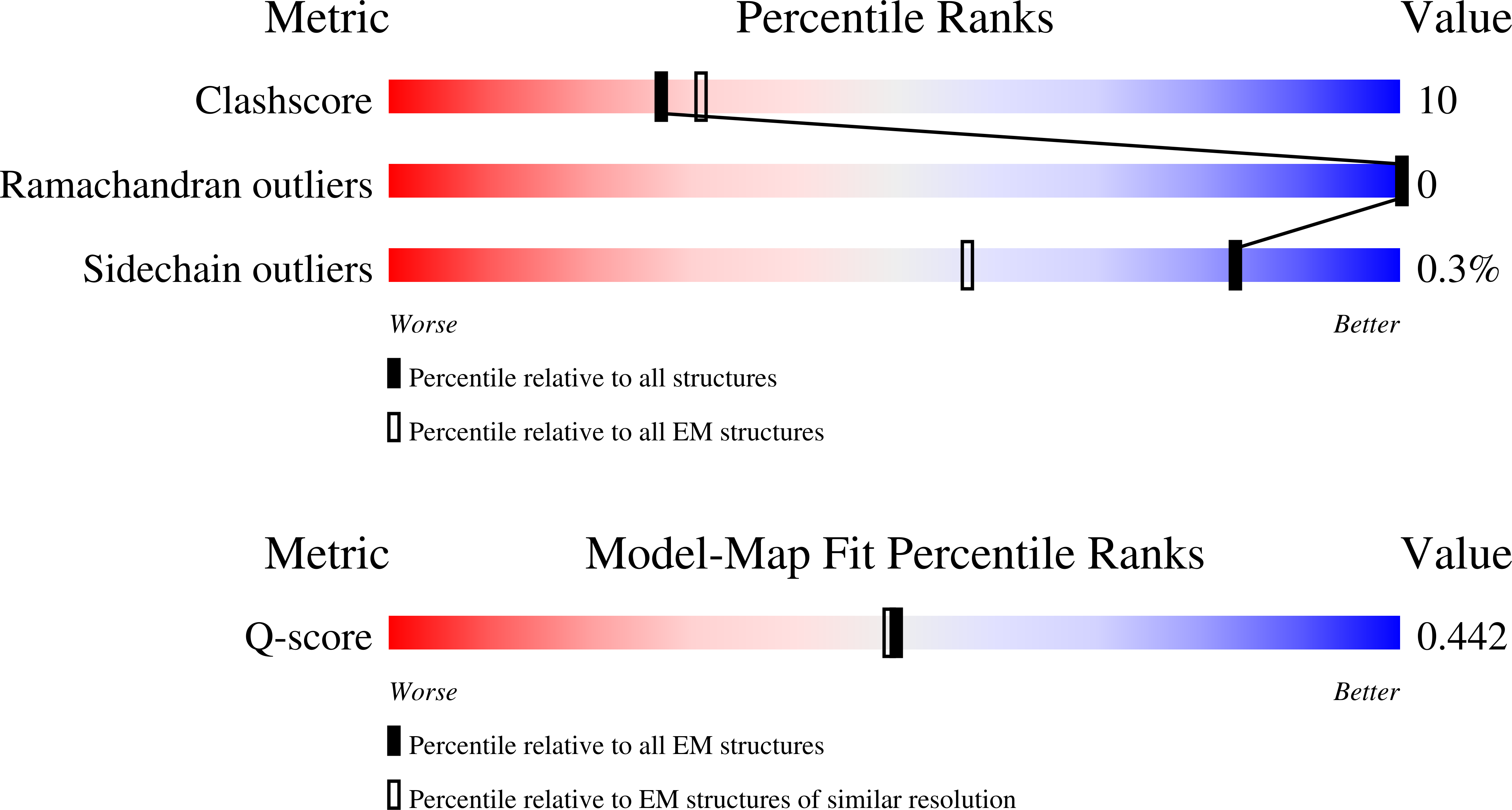
Resolution:
3.47 Å
Aggregation State:
PARTICLE
Reconstruction Method:
SINGLE PARTICLE
Macromolecular Entities
Polymer Type:polypeptide(L)
Molecule:Potassium voltage-gated chann
Gene (Uniprot):KCNQ1
Mutagens:I145C, E160R, R231E
Chain IDs:A, F (auth: C), G (auth: E), H (auth: G)
Chain Length:545
Number of Molecules:4
Biological Source:Homo sapiens
Polymer Type:polypeptide(L)
Molecule:Calmodulin-1
Gene (Uniprot):CALM1
Chain IDs:B, C (auth: D), D (auth: F), E (auth: H)
Chain Length:149
Number of Molecules:4
Biological Source:Homo sapiens
Primary Citation
PIP 2 activation of the cardiac I Ks potassium channel.
Res Sq ? ? ? (2025)
PMID: 41282193 DOI: 10.21203/rs.3.rs-7609003/v1

Abstact

The I(Ks) channel complex, composed of the voltage-gated potassium channel KCNQ1 and its regulatory subunit KCNE1, is essential for the termination of cardiac action potentials. The function of KCNQ1 and I(Ks) requires PIP(2), and its depletion abolishes channel opening. Previous studies revealed that KCNQ1 adopts both bent and straight conformations and can bind two PIP(2) molecules: one adjacent to VSD (V-PIP(2)), and the other at the VSD-pore interface (C-PIP(2)). Here we show that the two PIP(2) perform essential yet distinct roles: V-PIP(2) enables the bent-to-straight transition, whereas C-PIP(2) mediates VSD-pore coupling and stabilizes the straight conformation. Structure-function analysis and molecular dynamic simulations show that VSD activation elevates the V-PIP(2) site and weakens the CaM-VSD interaction, permitting the conformational shift from the bent, intermediate open (IO) state associated with KCNQ1 to the straight, I(Ks)-exclusive activated open (AO) state, which is further stabilized by C-PIP(2). Leveraging this mechanism, we developed a compound CA1, which selectively targets the V-PIP(2) site and modulates I(Ks) channel activity without affecting KCNQ1, offering a novel and promising conceptional path for specific and safe antiarrhythmic therapeutics.

Legend

Protein

Chemical

Disease

Primary Citation of related structures
Feedback Form
Name
Email
Institute
Feedback