

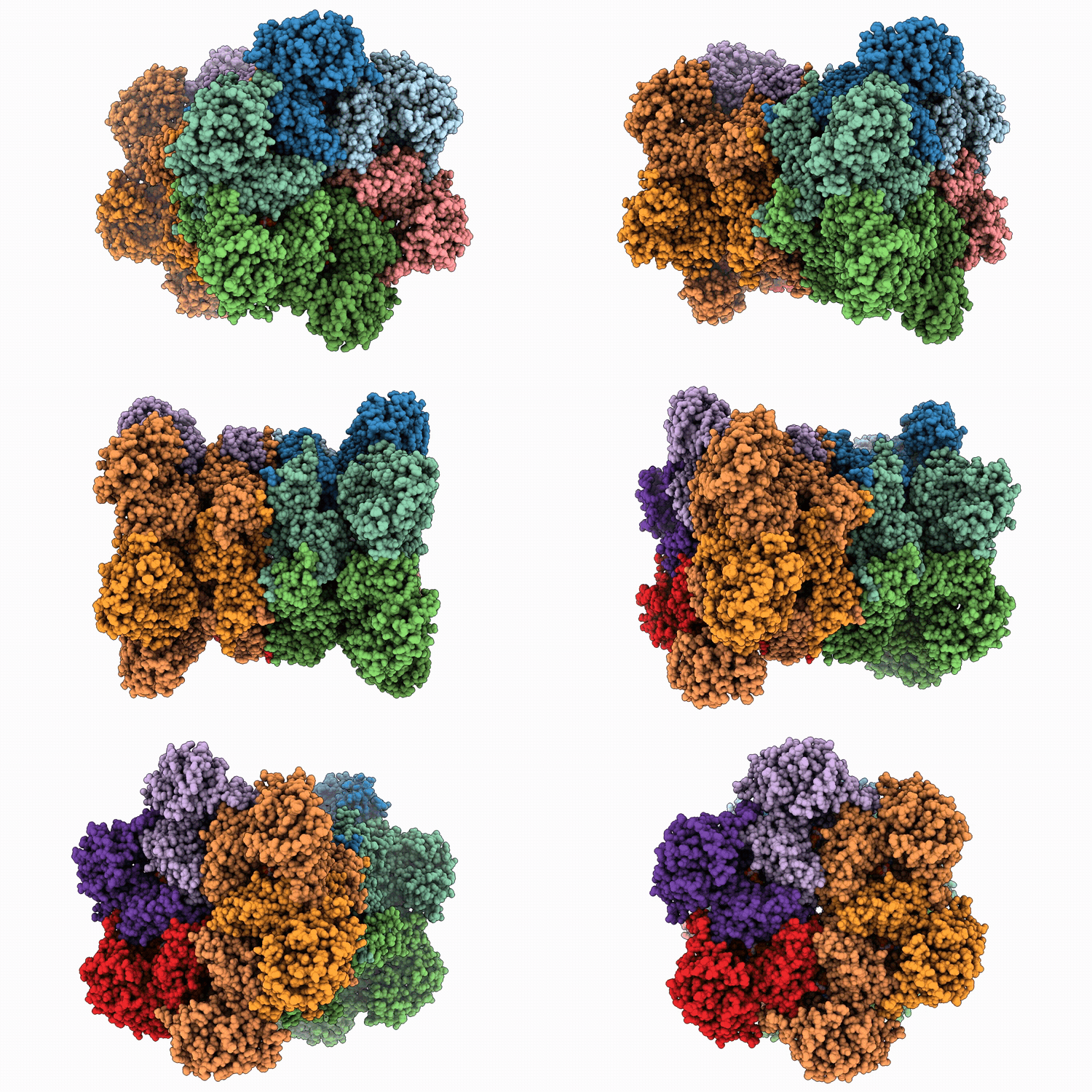
10QQ image
Deposition Date 2026-02-02
Release Date 2026-03-18
Last Version Date 2026-05-13
Entry Detail
PDB ID:
10QQ
Keywords:
Title:
Structure of human VCP/p97 dodecamer bound to ADP (DMSO control)
Biological Source:
Source Organism(s):
Homo sapiens (Taxon ID: 9606)
Expression System(s):
Method Details:
Experimental Method:
Resolution:
2.13 Å
Aggregation State:
PARTICLE
Reconstruction Method:
SINGLE PARTICLE
Macromolecular Entities
Structures with similar UniProt ID
Protein Blast
Polymer Type:polypeptide(L)
Molecule:Transitional endoplasmic reti
Gene (Uniprot):VCP
Chain IDs:A, B, C, D, E, F, G, H, I, J, K, L
Chain Length:806
Number of Molecules:12
Biological Source:Homo sapiens
Primary Citation
Development and Structural Characterization of UTE-156, a Covalent Inhibitor of the VCP/p97 AAA+ ATPase.
Adv Sci 13 e20545 e20545 (2026)
PMID: 41793187 DOI: 10.1002/advs.202520545

Abstact

The AAA+ ATPase valosin-containing protein (VCP/p97) is a central regulator of protein homeostasis that is well characterized for its role in extracting and remodeling ubiquitinated substrates. Dysregulation of VCP activity contributes to the pathogenesis of neurodegenerative diseases and cancer, making it an important therapeutic target. Here, we report the development and characterization of UTE-156, a novel covalent small-molecule inhibitor that modifies Cys522 within the D2 ATPase domain of VCP. UTE-156 potently inhibits VCP ATPase activity, while losing activity against a C522A mutant, supporting a covalent mechanism of action. High-resolution cryo-electron microscopy (cryo-EM) structures reveal that UTE-156 occupies the D2 nucleotide-binding site, sterically blocking ATP binding and inducing conformational remodeling of the pocket. Biochemical and cell-based assays demonstrate strong inhibitory potency but limited solubility and rapid metabolic turnover. These pharmacochemical limitations preclude immediate therapeutic use but underscore its value as a chemical probe. Together, these findings establish UTE-156 as a powerful tool for dissecting VCP function and provide a framework for future optimization of covalent modulators of protein homeostasis.

Legend

Protein

Chemical

Disease

Primary Citation of related structures
Feedback Form
Name
Email
Institute
Feedback