

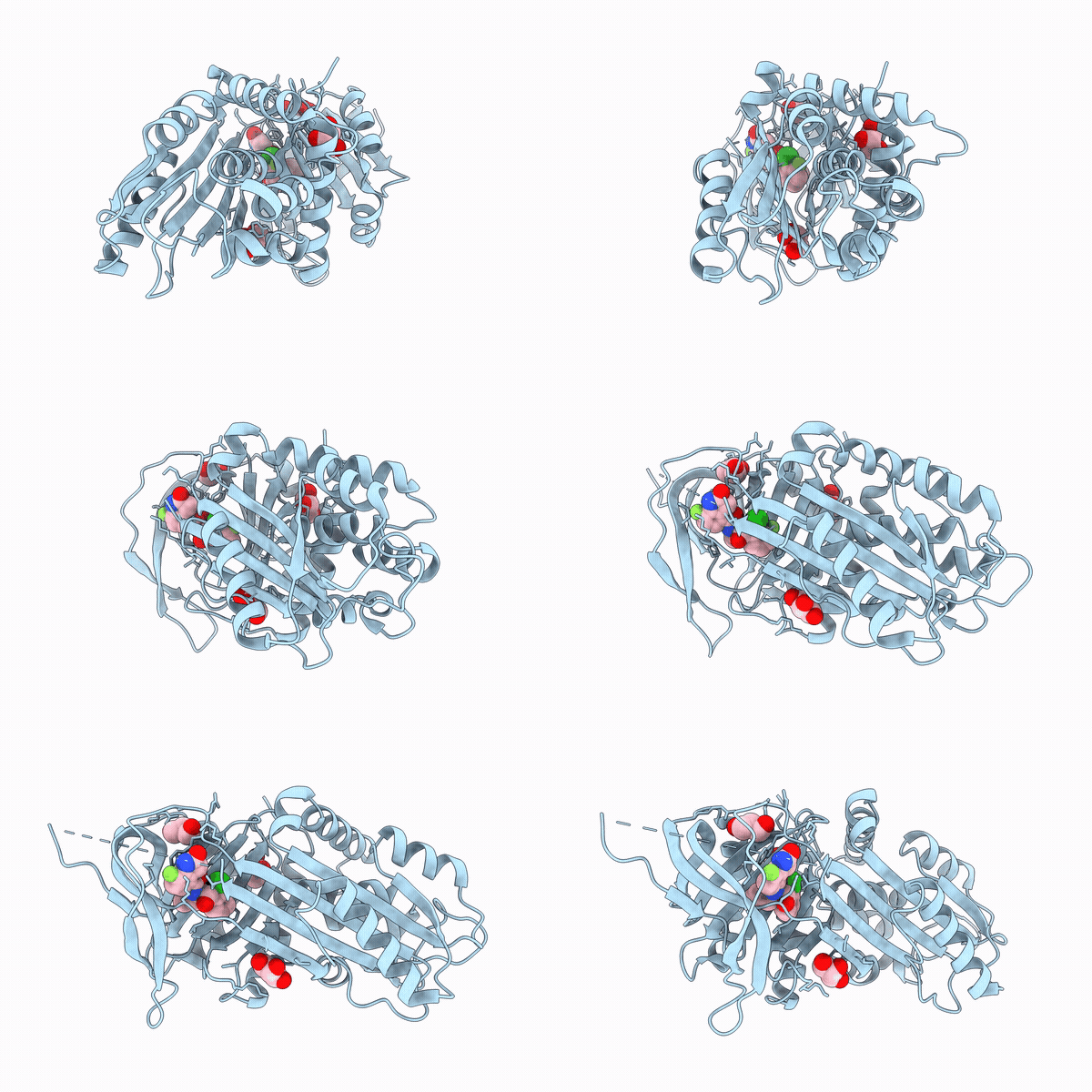
9ZRW image
Deposition Date 2025-12-21
Release Date 2026-10-28
Last Version Date 2026-10-28
Entry Detail
PDB ID:
9ZRW
Keywords:
Title:
Alpha 1-AntiTrypsin (C232S) in Complex with B211421
Biological Source:
Source Organism(s):
Homo sapiens (Taxon ID: 9606)
Expression System(s):
Method Details:
Experimental Method:
Resolution:
1.87 Å
R-Value Free:
0.24
R-Value Work:
0.19
R-Value Observed:
0.19
Space Group:
C 1 2 1
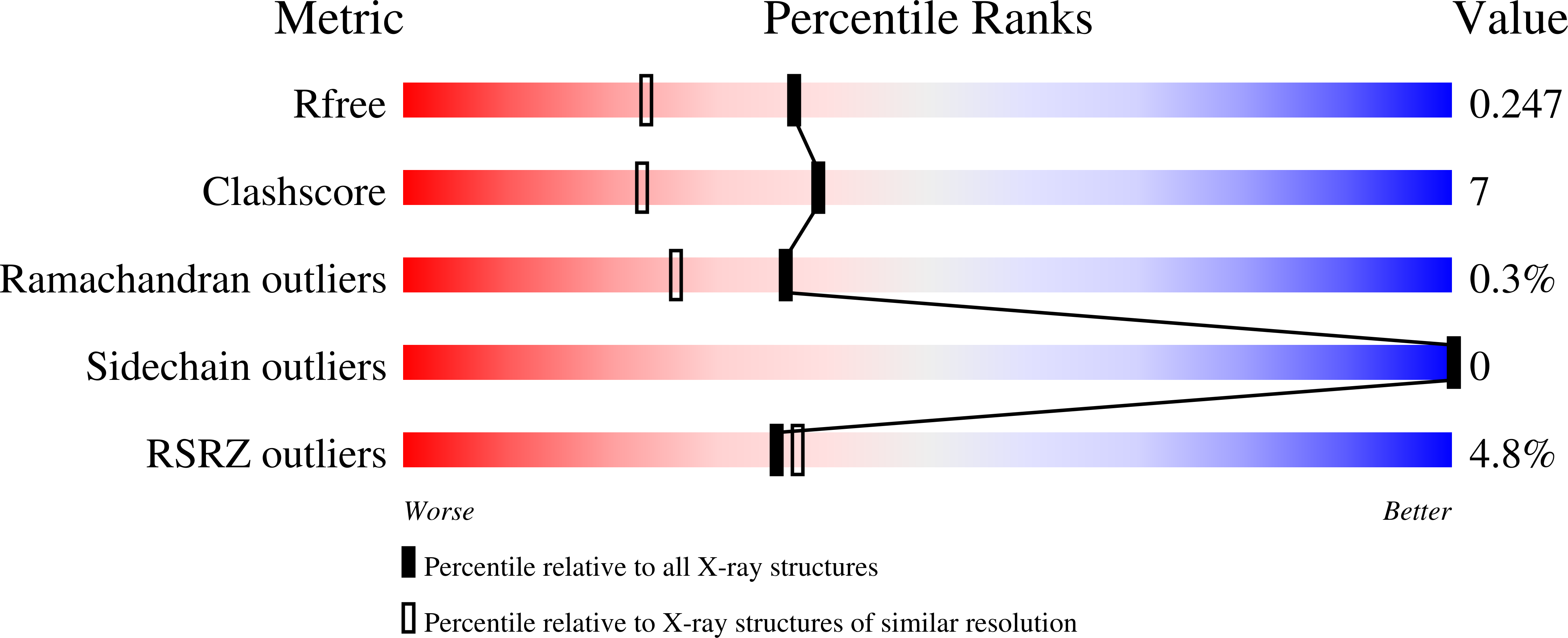
Macromolecular Entities
Polymer Type:polypeptide(L)
Molecule:Alpha-1-antitrypsin
Gene (Uniprot):SERPINA1
Mutagens:C232S
Chain IDs:A
Chain Length:404
Number of Molecules:1
Biological Source:Homo sapiens
Primary Citation
BMN 349, a small molecule inhibitor of Z alpha-1 antitrypsin polymerization, increases secretion and reduces intrahepatic inclusions in a mouse model of disease.
Hepatology ? ? ? (2026)
PMID: 42065867 DOI: 10.1097/HEP.0000000000001778

Abstact

BACKGROUND AND AIMS: Alpha-1 antitrypsin (AAT), encoded by the SERPINA1 gene, is primarily synthesized in the liver and secreted into the blood. The SERPINA1 Z allele encodes Z-AAT (Glu342Lys), a variant that self-associates into polymers that are retained in hepatocytes and trigger inflammation and hepatic injury. Targeting and preventing Z-AAT polymerization allows a therapy to directly address the pathophysiology of AAT deficiency (AATD) associated liver disease. APPROACH AND RESULTS: A structure-based design approach was used to develop BMN 349, a small-molecule polymerization blocker capable of stabilizing Z-AAT to prevent new polymerization and promote hepatic clearance. BMN 349 bound Z-AAT ~150 times faster in vitro than wild-type M-AAT and promoted secretion and reduced polymer levels in a cell model of Z-AAT deficiency. Crystallography with M-AAT showed that BMN 349 partially displaces a region involved in polymerization, the reactive center loop proximal hinge. Oral dosing in female PiZ transgenic mice with 20-200 mg/kg/day BMN 349 for 30 days was associated with dose-dependent increases in total plasma Z-AAT and a concurrent decrease in circulating and liver Z-AAT polymers relative to vehicle-treated controls. Histopathologic and proteomic assessments of liver and plasma samples from these mice showed that doses >/=100 mg/kg/day of BMN 349 reduced liver inflammation and improved liver health biomarkers after 30 days. CONCLUSIONS: This study is the first to demonstrate a reduction in Z-AAT polymer burden without altering protein expression. Improvements in liver inflammation and function following BMN 349 treatment support further investigations of its therapeutic benefits for AATD liver disease.

Legend

Protein

Chemical

Disease

Primary Citation of related structures
Feedback Form
Name
Email
Institute
Feedback