

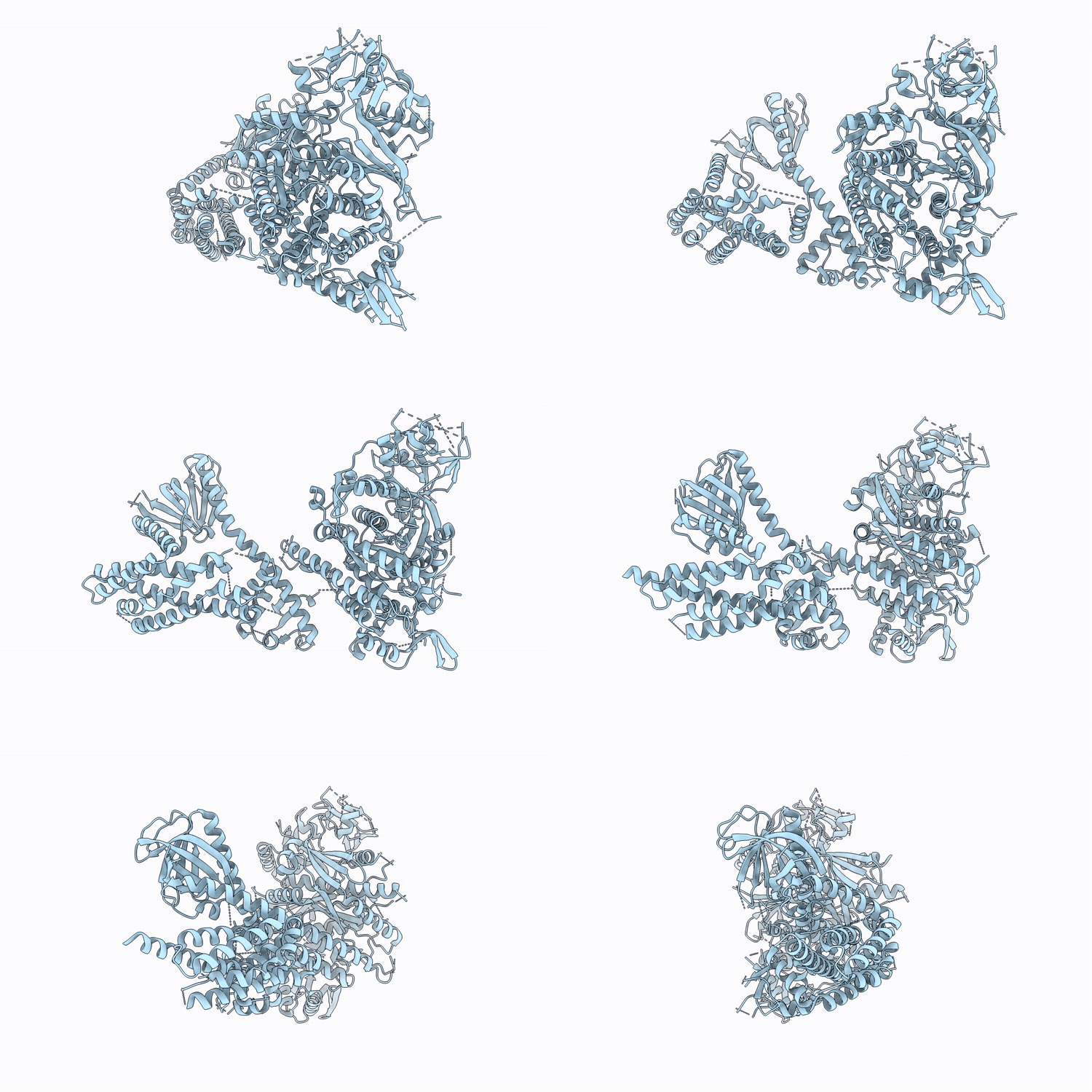
9ZQ7 image
Deposition Date 2025-12-17
Release Date 2026-07-15
Last Version Date 2026-07-15
Entry Detail
PDB ID:
9ZQ7
Title:
Autoinhibited P-Rex2
Biological Source:
Source Organism(s):
Homo sapiens (Taxon ID: 9606)
Expression System(s):
Method Details:
Experimental Method:
Resolution:
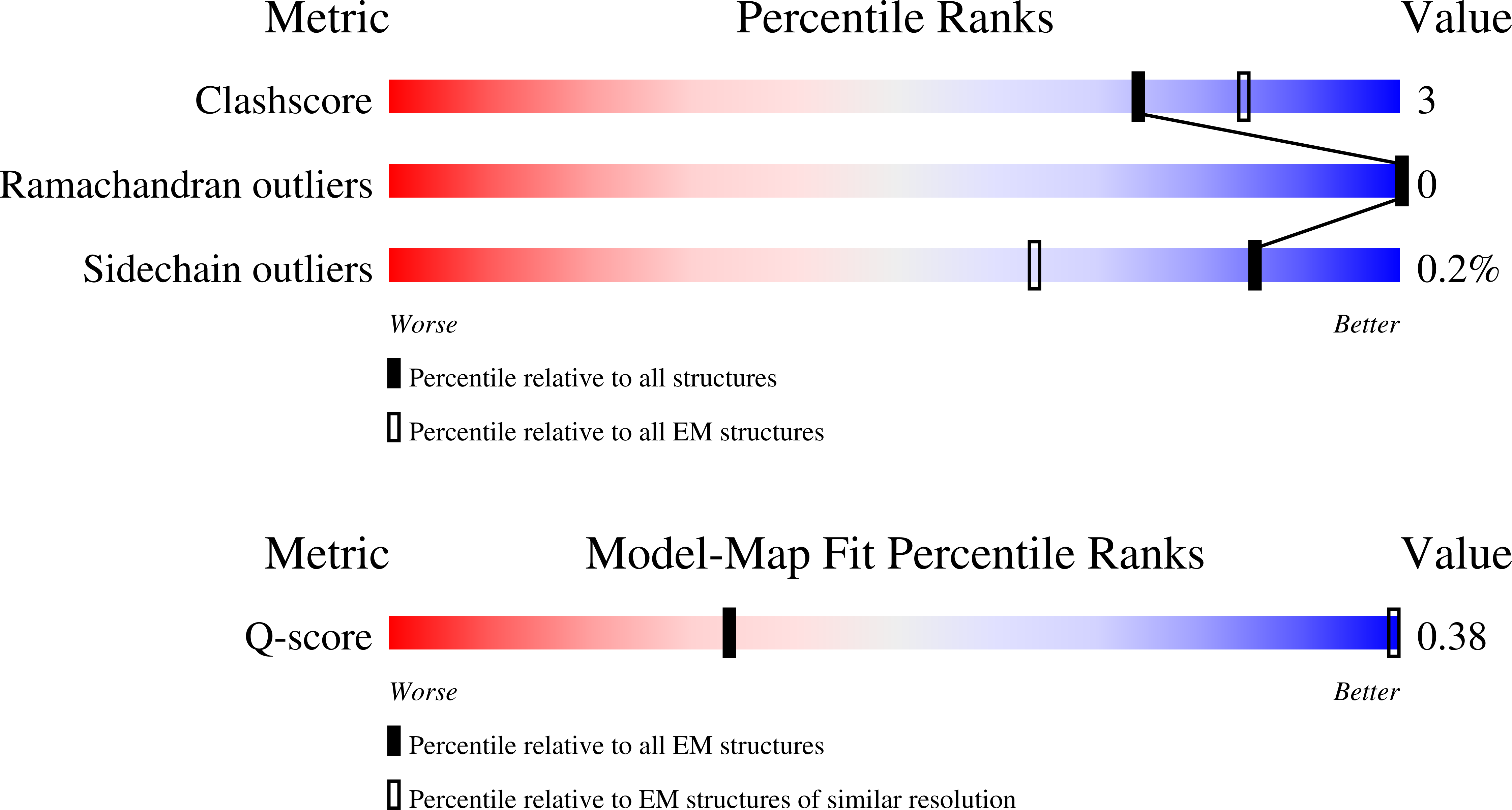
5.20 Å
Aggregation State:
PARTICLE
Reconstruction Method:
SINGLE PARTICLE
Macromolecular Entities
Polymer Type:polypeptide(L)
Molecule:Phosphatidylinositol 3,4,5-tr
Gene (Uniprot):PREX2
Chain IDs:A
Chain Length:1621
Number of Molecules:1
Biological Source:Homo sapiens
Ligand Molecules
Primary Citation
The Rho guanine-nucleotide exchange factor P-Rex2 exhibits structural and regulatory features distinct from the related RhoGEF P-Rex1.
J.Biol.Chem. 302 113229 113229 (2026)
PMID: 42248461 DOI: 10.1016/j.jbc.2026.113229

Abstact

Rho guanine-nucleotide exchange factors (RhoGEFs) activate small GTPases to drive cytoskeletal rearrangement, cell motility, and proliferation. The phosphatidylinositol-3,4,5-trisphosphate (PIP(3))-dependent Rac exchanger (P-Rex) subfamily of RhoGEFs includes P-Rex1 and P-Rex2 which, when misregulated, contribute to cancer progression and metastasis. P-Rex activity is controlled by accessory domains that maintain the protein in a cytosolic, autoinhibited state until activated by the lipid PIP(3) and G protein betagamma subunits. While P-Rex1 autoinhibition has been structurally and biochemically characterized, P-Rex2 has remained largely unexplored. Furthermore, despite high sequence similarity and domain conservation, P-Rex homologs differ in substrate specificity and regulatory interactions, and the molecular basis for these divergences is unknown. Here, we have taken an integrative structural biology approach to investigate these gaps. Using cryo-EM, we determined the first structure of full-length P-Rex2 to moderate resolution, revealing that, while the overall structure closely resembles that of P-Rex1, there is a substantial repositioning of the N-terminal module relative to the C-terminal core. This may play a key role in precluding the intramolecular interactions between the N- and C-terminal domains that are observed in autoinhibited P-Rex1. Hydrogen-deuterium exchange mass spectrometry revealed that, unlike P-Rex1, P-Rex2 dynamics are unaffected by IP(4), the headgroup of PIP(3). SEC-SAXS data support that the N-terminal module itself is less dynamic, and biochemical assays show that P-Rex2 may be differently regulated by autoinhibition, likely through a mechanism divergent from P-Rex1. These findings uncover unique features in the molecular mechanisms of P-Rex2 regulation.

Legend

Protein

Chemical

Disease

Primary Citation of related structures
Feedback Form
Name
Email
Institute
Feedback