

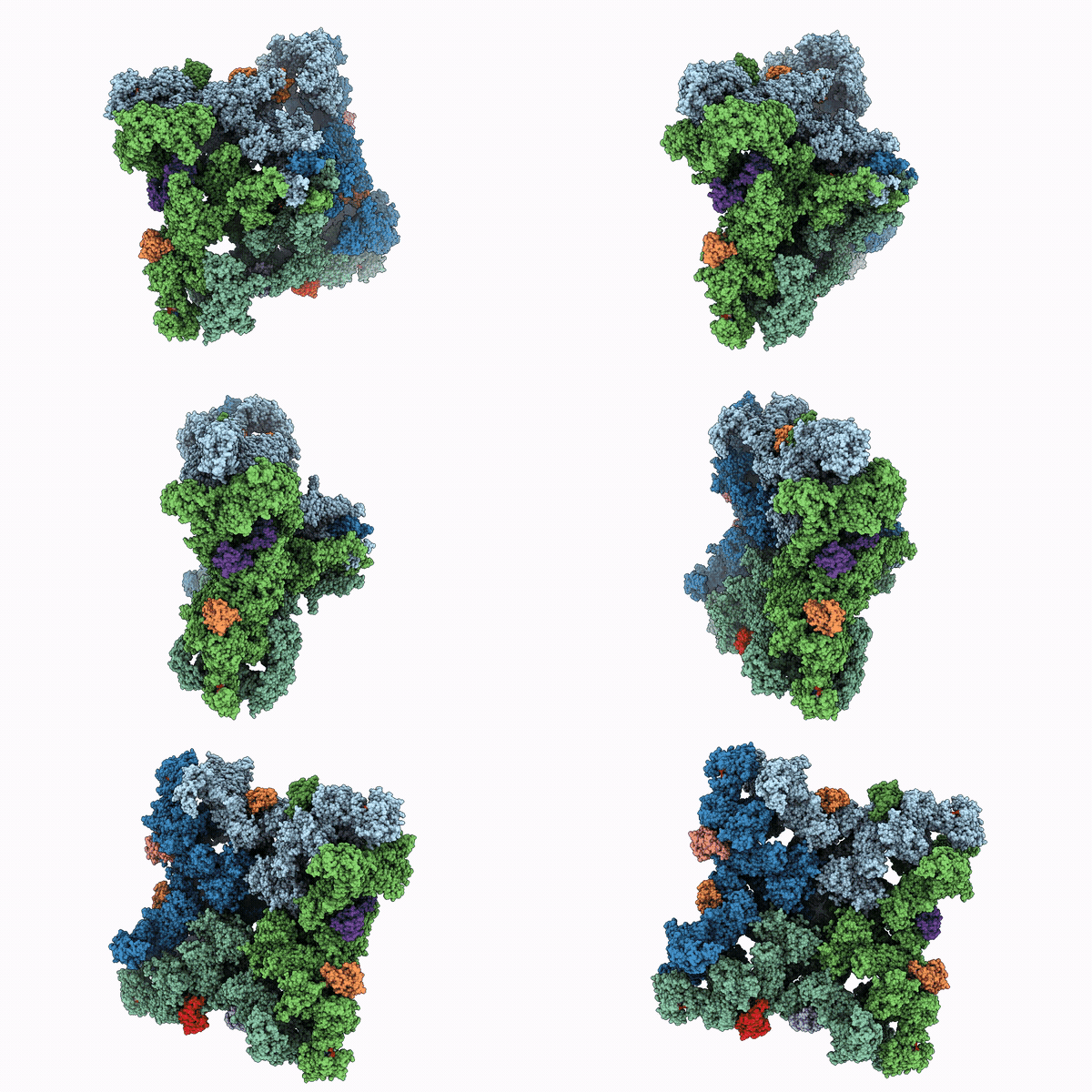
9ZN7 image
Deposition Date 2025-12-12
Release Date 2026-09-16
Last Version Date 2026-10-21
Entry Detail
PDB ID:
9ZN7
Title:
Structure of rabbit RyR1 complexed with FKBP12.6 and calmodulin in the presence of ATP, ADP, and Mg2+ (mimicking muscle fatigue)
Biological Source:
Source Organism(s):
Expression System(s):
Method Details:
Experimental Method:
Resolution:
2.23 Å
Aggregation State:
PARTICLE
Reconstruction Method:
SINGLE PARTICLE
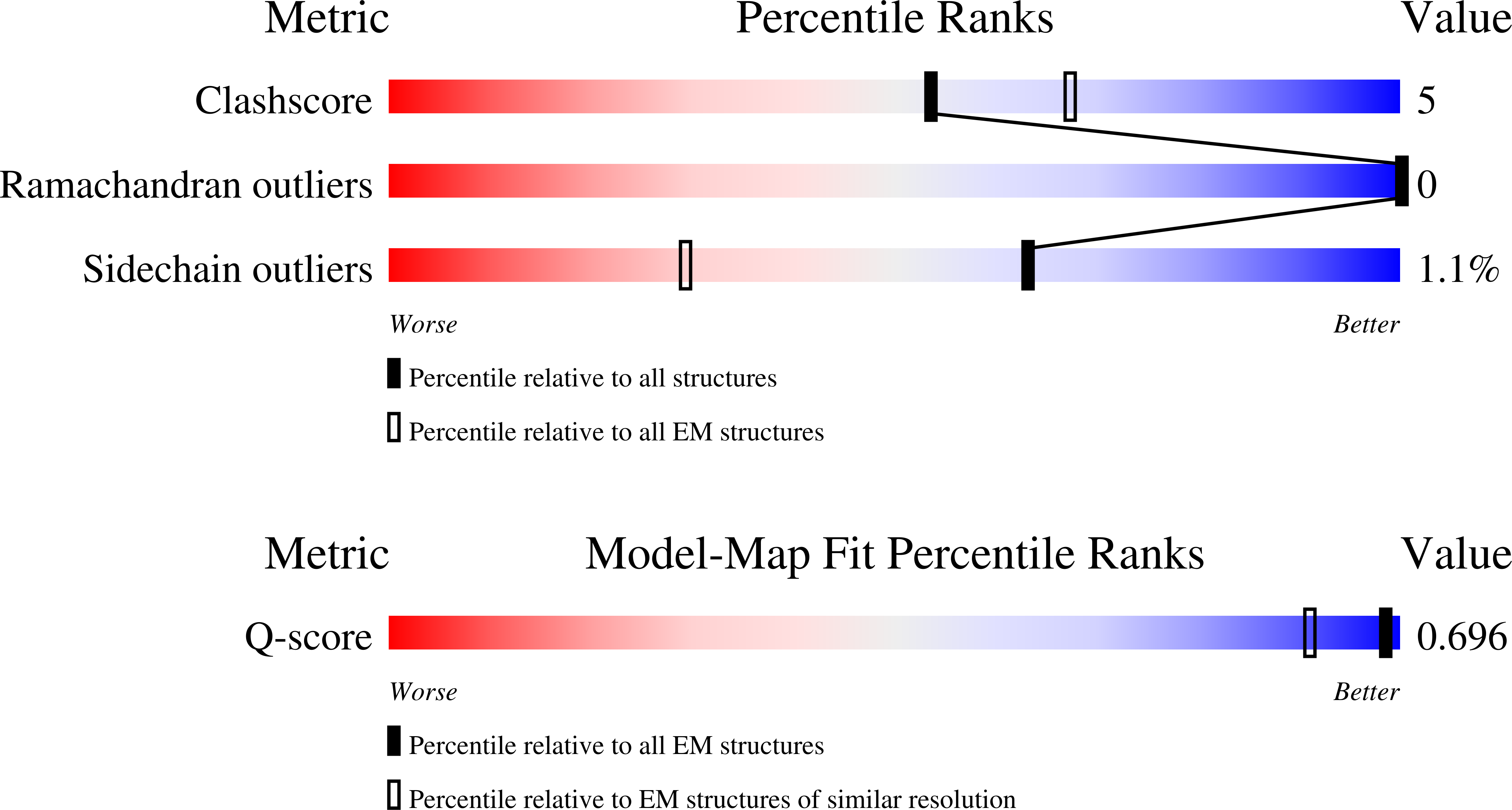
Macromolecular Entities
Polymer Type:polypeptide(L)
Molecule:Ryanodine receptor 1
Gene (Uniprot):RYR1
Chain IDs:I (auth: D), J (auth: A), K (auth: B), L (auth: C)
Chain Length:5037
Number of Molecules:4
Biological Source:Oryctolagus cuniculus
Polymer Type:polypeptide(L)
Molecule:Peptidyl-prolyl cis-trans iso
Gene (Uniprot):FKBP1B
Chain IDs:A (auth: E), B (auth: F), C (auth: G), D (auth: H)
Chain Length:107
Number of Molecules:4
Biological Source:Homo sapiens
Polymer Type:polypeptide(L)
Molecule:Calmodulin-1
Gene (Uniprot):CALM1
Chain IDs:E (auth: I), F (auth: J), G (auth: K), H (auth: L)
Chain Length:148
Number of Molecules:4
Biological Source:Homo sapiens
Primary Citation
Structural identification of the RY12 domain of RyR1 as an ADP sensor and the target of the malignant hyperthermia therapeutic dantrolene.
Nat Commun 17 ? ? (2026)
PMID: 42838934 DOI: 10.1038/s41467-026-76519-y

Abstact

Malignant hyperthermia (MH) is a pharmacogenetic condition triggered by volatile anesthetics, which activate MH susceptible mutants of ryanodine receptor 1 (RyR1). The precise binding sites and mechanisms of the therapeutic dantrolene and MH triggers have remained unclear. Here, we present structures of RyR1 bound to dantrolene and the MH trigger 4-chloro-m-cresol (4CmC), revealing the dantrolene and 4CmC binding sites in atomic detail. Dantrolene binds stacked with ATP or ADP in the RY12 domain at the corner of the receptor, inducing a conformational change. Functional analyses confirm ATP or ADP is required for dantrolene inhibition, and a single point mutation disrupting this peripheral ATP site abolishes this ATP/ADP-dependent inhibition. Strikingly, in the absence of dantrolene, this site selectively binds two ADP molecules even in the presence of excess ATP, indicating a role in ATP/ADP ratio sensing. Additionally, we identified four 4CmC binding sites, revealing one primary binding site in an amphipathic cavity in the core solenoid, and three auxiliary binding sites in the EF-hand, transmembrane, and RY12 domains. These findings offer insights into the binding modes and mechanisms of MH-linked molecules, and reveal the RY12 domain's regulatory role as a promiscuous sensor for adenine nucleotides and small ligands.

Legend

Protein

Chemical

Disease

Primary Citation of related structures
Feedback Form
Name
Email
Institute
Feedback