

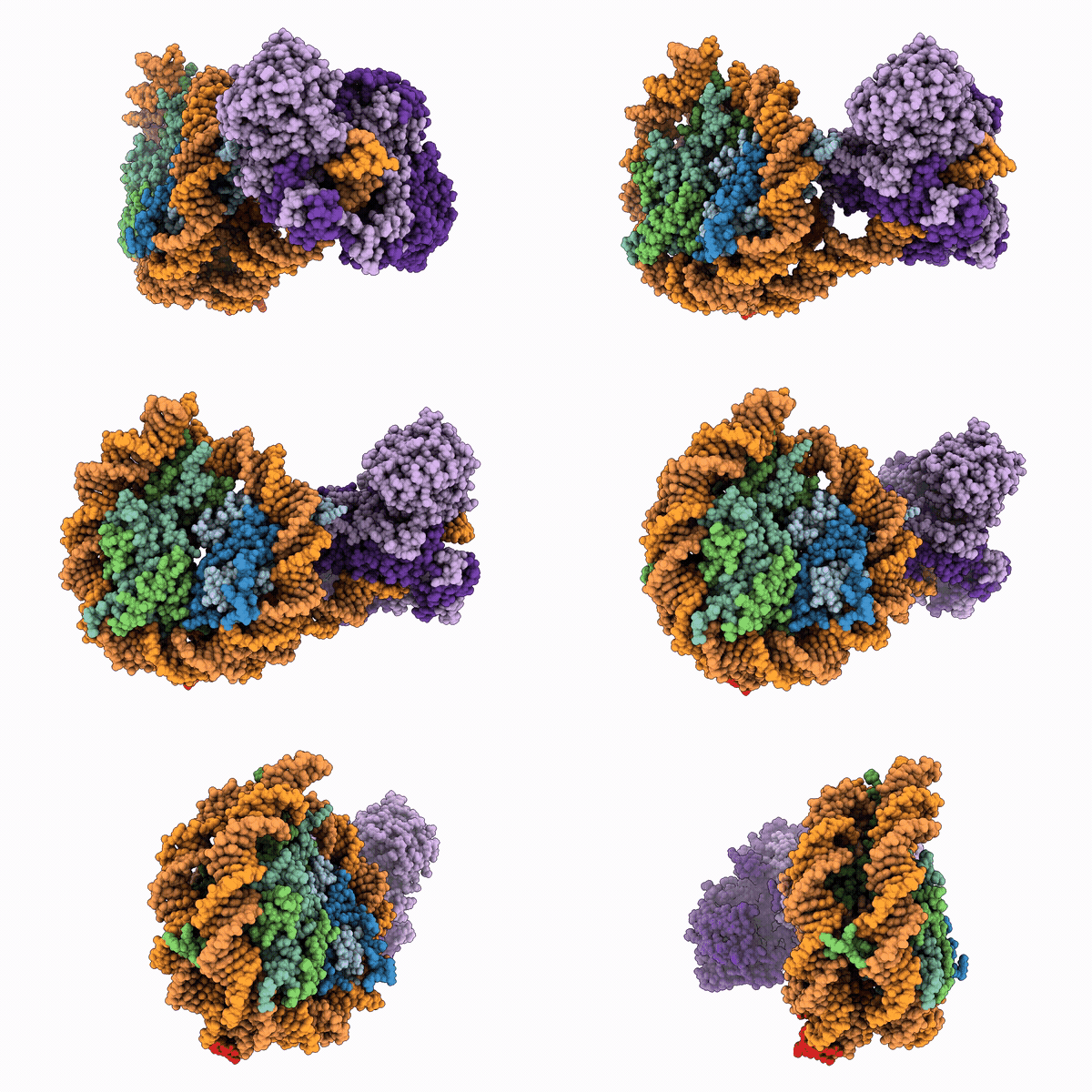
9ZMM image
Deposition Date 2025-12-10
Release Date 2026-09-16
Last Version Date 2026-10-21
Entry Detail
PDB ID:
9ZMM
Title:
CryoEM structure of Ku heterodimer bound to N7 nucleosome
Biological Source:
Source Organism(s):
Xenopus laevis (Taxon ID: 8355)
Homo sapiens (Taxon ID: 9606)
Method Details:
Experimental Method:
Resolution:
3.89 Å
Aggregation State:
PARTICLE
Reconstruction Method:
SINGLE PARTICLE
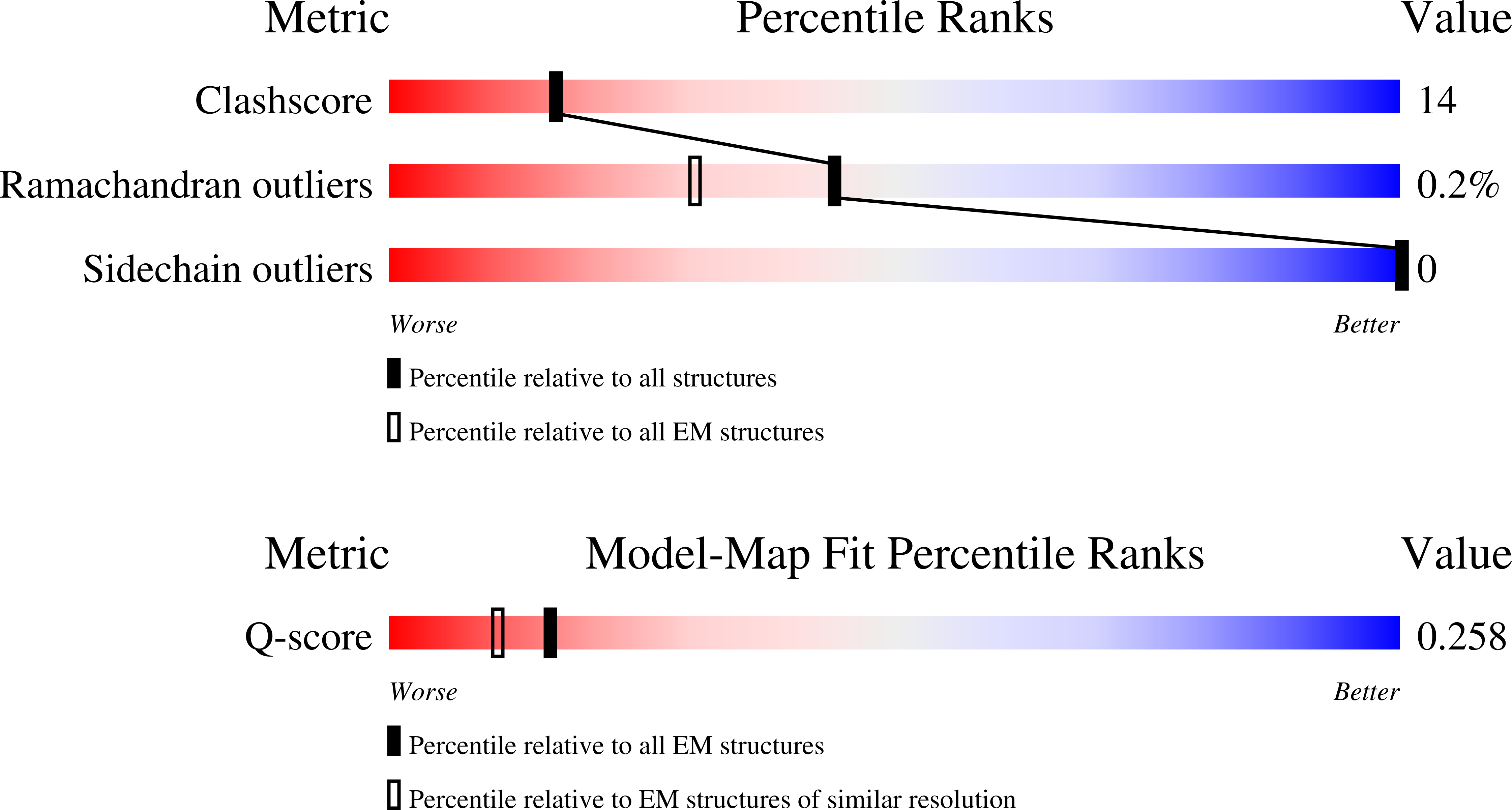
Macromolecular Entities
Polymer Type:polypeptide(L)
Molecule:Histone H3
Gene (Uniprot):LOC121398065
Chain IDs:C (auth: E), G (auth: A)
Chain Length:101
Number of Molecules:2
Biological Source:Xenopus laevis
Polymer Type:polypeptide(L)
Molecule:Histone H4
Chain IDs:D (auth: F), H (auth: B)
Chain Length:87
Number of Molecules:2
Biological Source:Xenopus laevis
Structural Superimposition Protein Blast
Polymer Type:polypeptide(L)
Molecule:Histone H2A
Chain IDs:E (auth: G), I (auth: C)
Chain Length:229
Number of Molecules:2
Biological Source:Xenopus laevis
Polymer Type:polypeptide(L)
Molecule:Histone H2B
Gene (Uniprot):LOC121398078
Chain IDs:F (auth: H), J (auth: D)
Chain Length:99
Number of Molecules:2
Biological Source:Xenopus laevis
Polymer Type:polydeoxyribonucleotide
Molecule:DNA (154-mer)
Chain IDs:A (auth: I)
Chain Length:154
Number of Molecules:1
Biological Source:Homo sapiens
Polymer Type:polydeoxyribonucleotide
Molecule:DNA (154-mer)
Chain IDs:B (auth: J)
Chain Length:154
Number of Molecules:1
Biological Source:Homo sapiens
Polymer Type:polypeptide(L)
Molecule:X-ray repair cross-complement
Gene (Uniprot):XRCC6
Chain IDs:K
Chain Length:504
Number of Molecules:1
Biological Source:Homo sapiens
Polymer Type:polypeptide(L)
Molecule:X-ray repair cross-complement
Gene (Uniprot):XRCC5
Chain IDs:L
Chain Length:536
Number of Molecules:1
Biological Source:Homo sapiens
Primary Citation
DNA-PK driven nucleosome unwrapping enables NHEJ in chromatin.
Nat Commun 17 ? ? (2026)
PMID: 42838959 DOI: 10.1038/s41467-026-77534-9

Abstact

DNA double-strand breaks, one of the most cytotoxic forms of DNA damage, are primarily repaired by non-homologous end joining (NHEJ) in human cells. NHEJ is initiated by the Ku70/80 heterodimer (Ku) and DNA-dependent protein kinase catalytic subunit (DNA-PKcs), followed by factors that bridge and ligate DNA ends. Ku and DNA-PKcs require ~28 base pairs of free duplex DNA, which is often unavailable in chromatin with nucleosomes acting as barriers. The role of DNA-PKcs remains unclear, as previous in vitro studies mainly used naked DNA. Here, in vitro ligation assays show that DNA-PKcs promotes NHEJ on nucleosomes with limited DNA accessibility. Cryo-EM structures of nucleosome-bound Ku and DNA-PKcs reveal that Ku encounters nucleosomal barriers and overcomes them with DNA-PKcs. Distinct structural states support a stepwise model of DNA-PK progressive translocating along nucleosomal DNA, highlighting DNA-PKcs function in chromatin-associated NHEJ in vivo.

Legend

Protein

Chemical

Disease

Primary Citation of related structures
Feedback Form
Name
Email
Institute
Feedback