

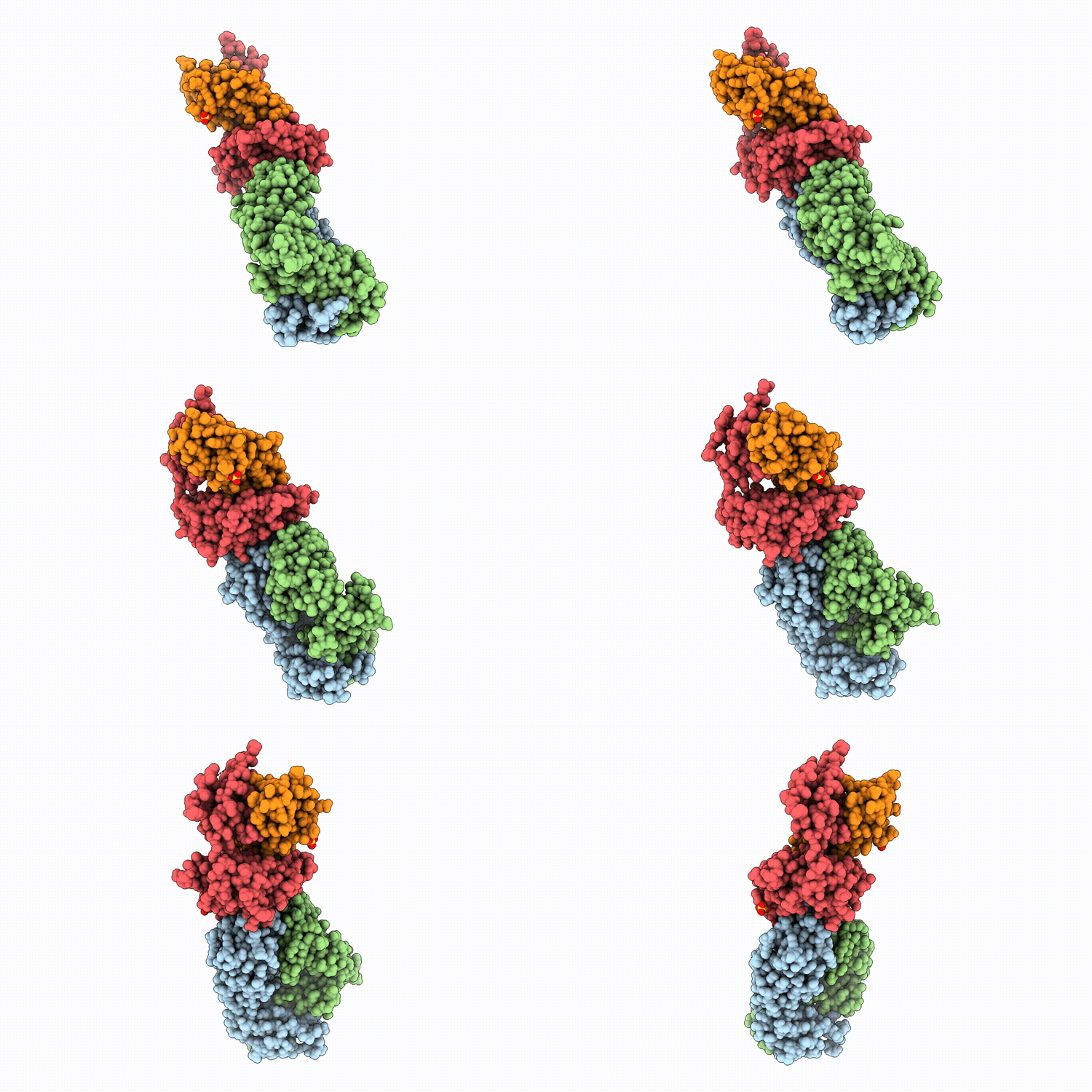
9ZCL image
Deposition Date 2025-11-23
Release Date 2026-06-17
Last Version Date 2026-09-16
Entry Detail
PDB ID:
9ZCL
Keywords:
Title:
N17.3.2 NRASQ61K HLA A1 complex
Biological Source:
Source Organism(s):
Homo sapiens (Taxon ID: 9606)
Expression System(s):
Method Details:
Experimental Method:
Resolution:
2.30 Å
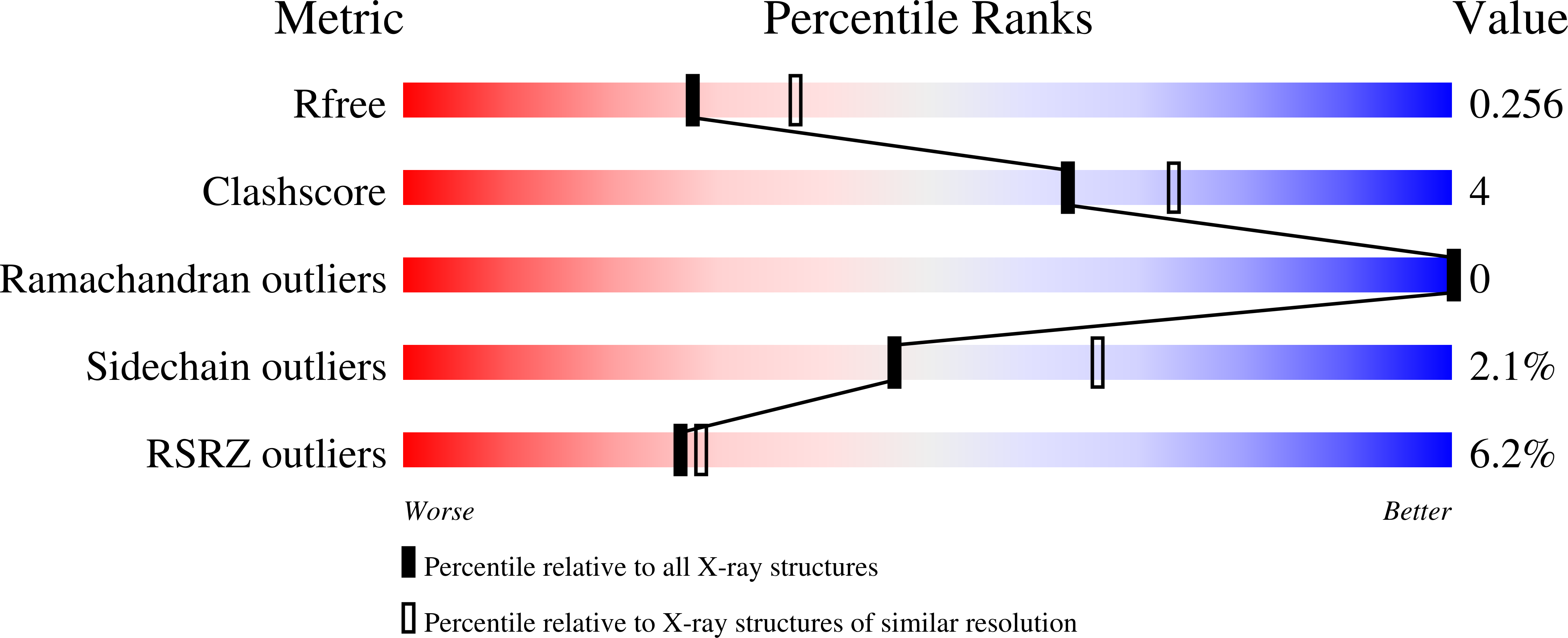
R-Value Free:
0.25
R-Value Work:
0.20
R-Value Observed:
0.20
Space Group:
P 43 21 2
Macromolecular Entities
Polymer Type:polypeptide(L)
Molecule:N17.3.2 TCR alpha
Chain IDs:D (auth: A)
Chain Length:0
Number of Molecules:1
Biological Source:Homo sapiens
Polymer Type:polypeptide(L)
Molecule:N17.3.2 TCR beta
Chain IDs:E (auth: B)
Chain Length:0
Number of Molecules:1
Biological Source:Homo sapiens
Polymer Type:polypeptide(L)
Molecule:HLA class I histocompatibilit
Chain IDs:B (auth: C)
Chain Length:0
Number of Molecules:1
Biological Source:Homo sapiens
Polymer Type:polypeptide(L)
Molecule:Beta-2-microglobulin
Gene (Uniprot):B2M
Chain IDs:C (auth: D)
Chain Length:0
Number of Molecules:1
Biological Source:Homo sapiens
Polymer Type:polypeptide(L)
Molecule:ILE-LEU-ASP-THR-ALA-GLY-LYS-G
Gene (Uniprot):KRAS
Chain IDs:A (auth: P)
Chain Length:0
Number of Molecules:1
Biological Source:Homo sapiens
Ligand Molecules
Primary Citation
Structural basis for oligoclonal T cell recognition of a shared NRAS cancer neoantigen.
Structure 34 1211 ? (2026)
PMID: 42476141 DOI: 10.1016/j.str.2026.06.008

Abstact

T cell receptors (TCRs) specific for cancer neoantigens are important for anti-tumor immunity and immunotherapy. To understand the structural basis for T cell recognition of cancer neoantigens, we studied oligoclonal TCRs from patients with melanoma that recognize a neoepitope arising from a driver mutation in NRAS (NRAS(Q61K)) presented by HLA-A1. Structures of these TCRs in unbound form and bound to NRAS(Q61K)-HLA-A1 revealed that they employ chemically distinct strategies and engagement modes to distinguish between mutant and wild-type NRAS. The structures explain how the NRAS(Q61K) mutation rendered a self-antigen visible to T cells. We additionally benchmarked AlphaFold-based modeling of these complexes, showing that predictive accuracy varies markedly across TCR-peptide-MHC targets. We found that conformational plasticity can dramatically impact complex assembly accuracy. These findings define the basis for TCR recognition of a cancer neoantigen and provide stringent tests for computational modeling of TCR-peptide-MHC interactions relevant to cancer immunotherapy.

Legend

Protein

Chemical

Disease

Primary Citation of related structures
Feedback Form
Name
Email
Institute
Feedback