

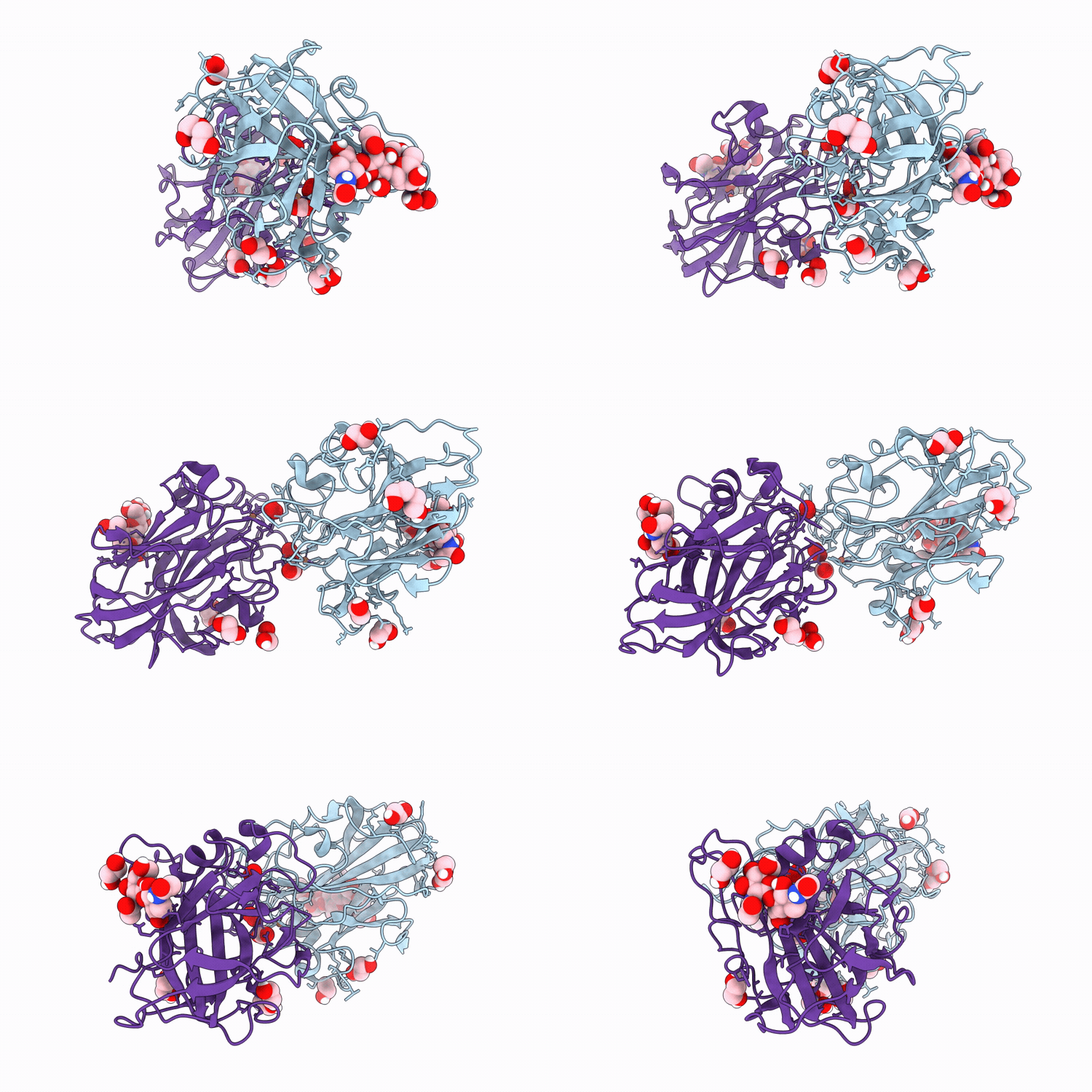
9Z8Q image
Deposition Date 2025-11-18
Release Date 2026-08-12
Last Version Date 2026-08-12
Entry Detail
PDB ID:
9Z8Q
Keywords:
Title:
Neurospora crassa polysaccharide monooxygenase 9D dose series - pseudohelix 3 (2.07 MGy)
Biological Source:
Source Organism(s):
Expression System(s):
Method Details:
Experimental Method:
Resolution:
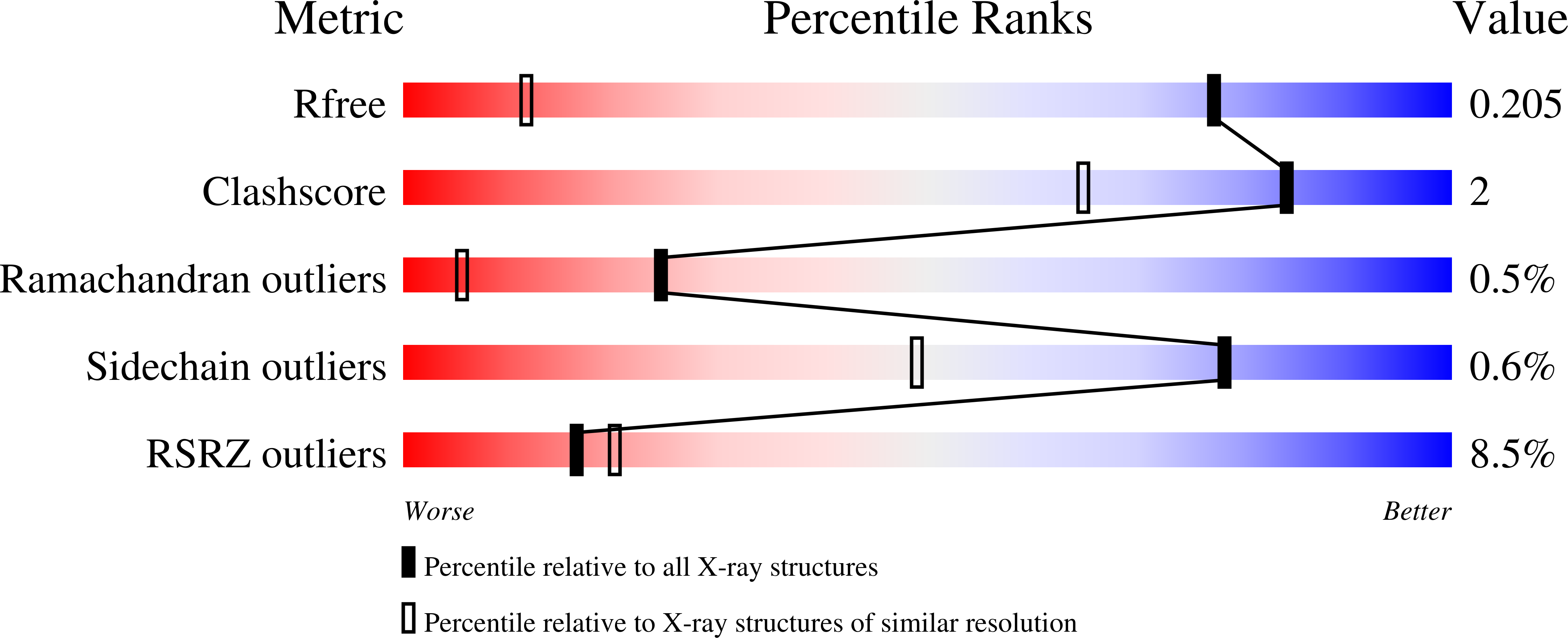
1.10 Å
R-Value Free:
0.20
R-Value Work:
0.17
R-Value Observed:
0.17
Space Group:
P 1 21 1
Macromolecular Entities
Polymer Type:polypeptide(L)
Molecule:Lytic polysaccharide monooxyg
Gene (Uniprot):gh61-4
Chain IDs:A, B
Chain Length:0
Number of Molecules:2
Biological Source:Neurospora crassa
Primary Citation
Dose-dependent structural and electron-density features in the lytic polysaccharide monooxygenase NcAA9D.
Acta Crystallogr D Struct Biol 82 900 914 (2026)
PMID: 42517195 DOI: 10.1107/S205979832600639X

Abstact

Structural studies of copper-containing lytic polysaccharide monooxygenases (LPMOs) by X-ray crystallography are often complicated by radiation damage. In this study, we analyze a series of 36 X-ray crystal structures of NcAA9D, a Neurospora crassa AA9-family LPMO, determined from data collected at cryogenic temperature from a single crystal to investigate the progressive effects of radiation damage at the active site of this enzyme. We report new insights into the dose-dependence of active-site geometry in LPMOs and utilize the unique pre-bound dioxygen site of NcAA9D to analyze the impact of X-ray dose on the electron density of this species. It is well established that photoreduction of the LPMO active-site copper(II) leads to expulsion of its water ligands. We further characterize this displacement and the corresponding electron-density smearing, a phenomenon that can lead to the erroneous modeling of copper-bound dioxygen species. These findings suggest that radiation-dose series collected from a single crystal provide invaluable data to support unambiguous assignment of radiation-sensitive intermediates at the active site of LPMOs and other radiation-sensitive redox enzymes.

Legend

Protein

Chemical

Disease

Primary Citation of related structures
Feedback Form
Name
Email
Institute
Feedback