

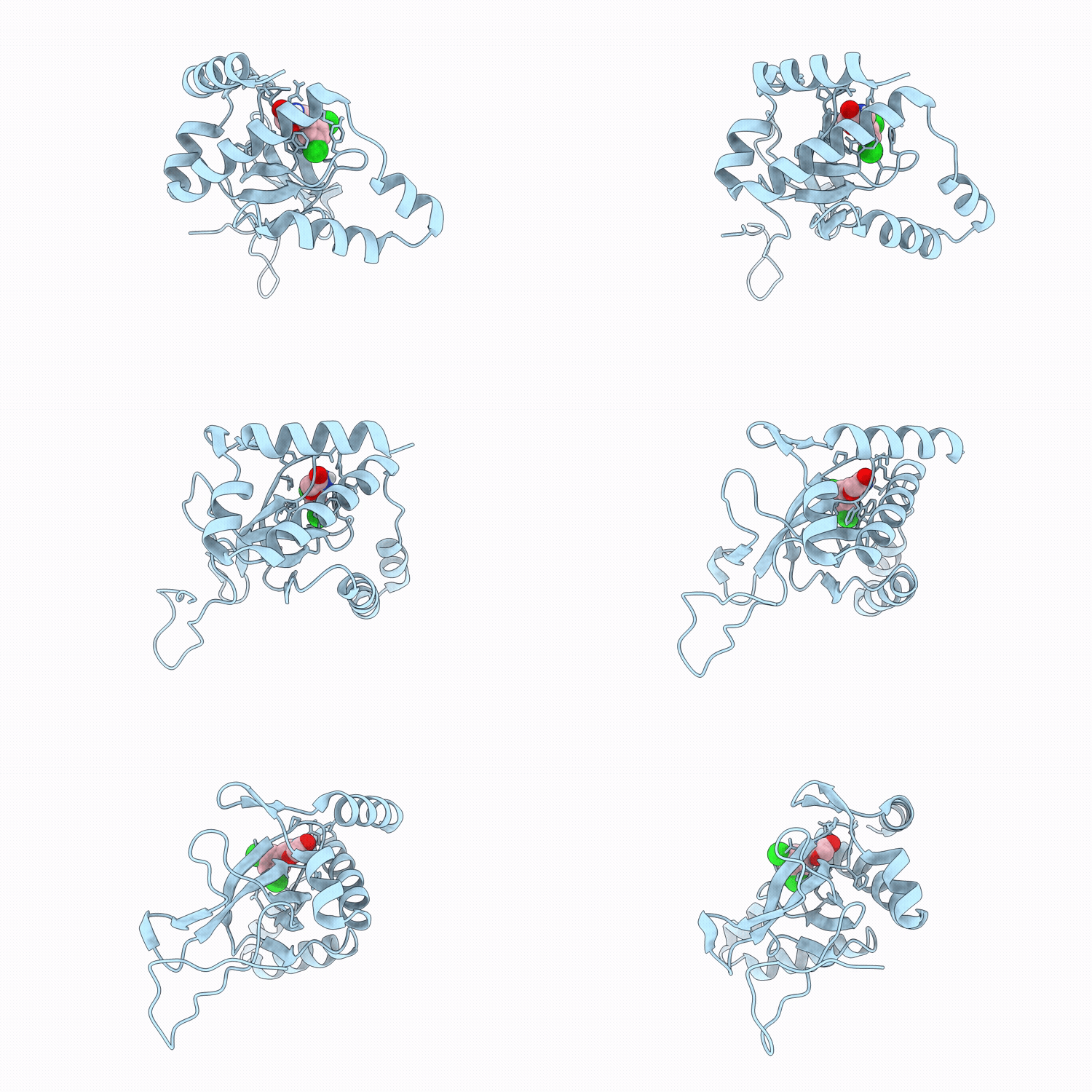
9Y60 image
Deposition Date 2025-09-06
Release Date 2026-07-15
Last Version Date 2026-07-15
Entry Detail
PDB ID:
9Y60
Keywords:
Title:
Crystal structure of NSD2 PWWP1 domain in complex with (6R)-6-(3,5-dichlorophenyl)morpholin-3-one (ligand 2)
Biological Source:
Source Organism(s):
Homo sapiens (Taxon ID: 9606)
Expression System(s):
Method Details:
Experimental Method:
Resolution:
2.02 Å
R-Value Free:
0.27
R-Value Work:
0.22
R-Value Observed:
0.22
Space Group:
P 43 21 2

Macromolecular Entities
Polymer Type:polypeptide(L)
Molecule:Histone-lysine N-methyltransf
Gene (Uniprot):NSD2
Chain IDs:A
Chain Length:174
Number of Molecules:1
Biological Source:Homo sapiens
Ligand Molecules
Primary Citation

Abstact

The t(4;14) chromosomal translocation drives overexpression of the histone methyltransferase NSD2 and defines a high-risk segment of multiple myeloma (MM) patients. Herein, we report the discovery of NSD2-LDD, a cereblon-recruiting and PWWP1-mediated ligand directed degrader (LDD) that selectively and potently eliminates full length and PWWP1 domain containing NSD2 protein isoforms. NSD2-LDD treatment induces global loss of H3K36me2 leading to promoter-proximal spreading of H3K27me3 and re-wiring of cis-regulatory interactions that reverse t(4;14) transcriptional programs. These effects suppress MM disease-associated phenotypes including stromal adhesion, three-dimensional colony growth and paracrine signaling. By integrating patient single cell profiles with model 3D epigenomic and spatial transcriptomics, we delineate t(4;14) disease state together with the tumor-intrinsic reprogramming and resultant remodeling of the bone marrow microenvironment upon NSD2 degradation. In cell line derived xenografts and genetically engineered mouse models of t(4;14), NSD2-LDD extends median survival accompanied by tumoral H3K36me2 loss and niche re-modelling. Although the NSD2-LDD response is restricted to PWWP1-containining models, collectively this work validates NSD2 as a tractable dependency and supports clinical development of NSD2 degradation as a novel, targeted therapeutic strategy in high-risk MM.

Legend

Protein

Chemical

Disease

Primary Citation of related structures
Feedback Form
Name
Email
Institute
Feedback