

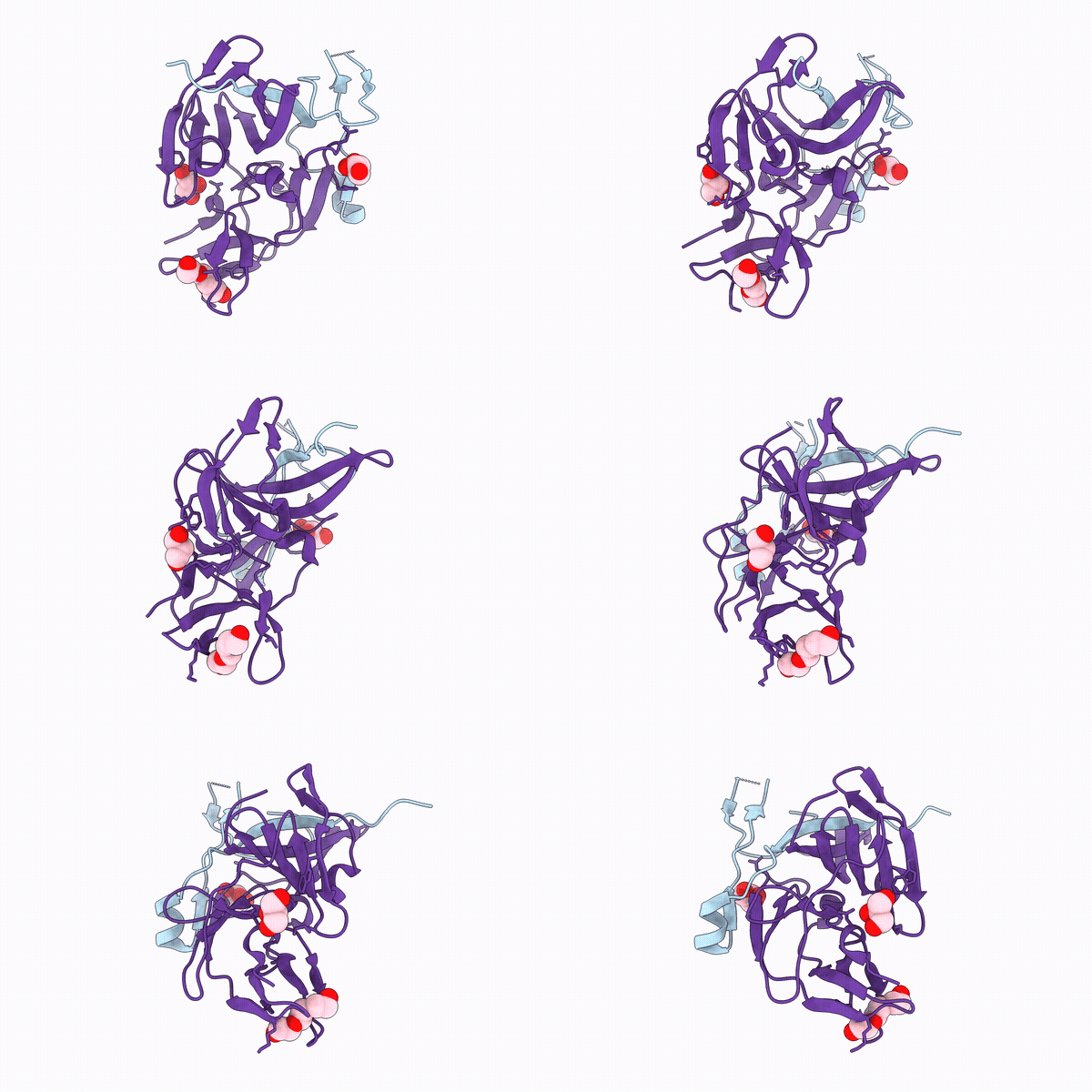
9XVJ image
Deposition Date 2025-11-26
Release Date 2026-10-28
Last Version Date 2026-10-28
Entry Detail
PDB ID:
9XVJ
Keywords:
Title:
Crystal structure of Dengue 2 Virus NS2B/NS3 Protease
Biological Source:
Source Organism(s):
Expression System(s):
Method Details:
Experimental Method:
Resolution:
2.25 Å
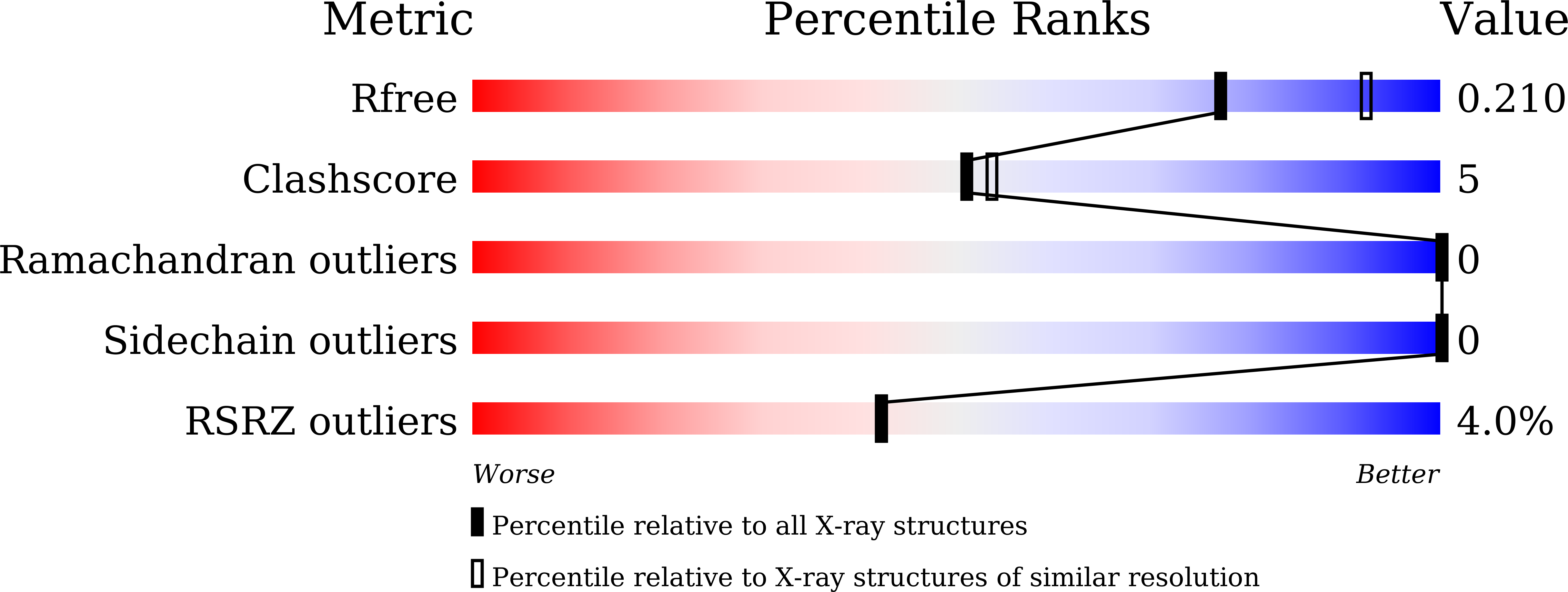
R-Value Free:
0.21
R-Value Work:
0.17
R-Value Observed:
0.17
Space Group:
C 2 2 21
Macromolecular Entities
Polymer Type:polypeptide(L)
Molecule:non-structural protein 2B
Chain IDs:A
Chain Length:51
Number of Molecules:1
Biological Source:dengue virus type 2
Polymer Type:polypeptide(L)
Molecule:non-structural protein 3 prot
Chain IDs:B
Chain Length:185
Number of Molecules:1
Biological Source:dengue virus type 2
Primary Citation
Structural insights into DENV-2 NS2B-NS3 protease and inhibition by glutathione-coated gold nanocluster.
Arch Virol 171 ? ? (2026)
PMID: 42337180 DOI: 10.1007/s00705-026-06662-w

Abstact

Dengue virus (DENV) continues to pose a significant global health threat, with increasing infection rates and limited treatment options. The viral NS2B-NS3 protease (NS2B-NS3pro), a highly conserved two-component enzyme essential for polyprotein processing and replication, is a key target for antiviral drug development. Here, we report the 2.25 A-resolution crystal structure of DENV serotype 2 (DENV-2) NS2B-NS3pro, in which a PEG fragment is bound within a solvent-exposed pocket between beta10, beta11, beta14 and beta15 of NS3. This structure reveals a previously unrecognized solvent-exposed PEG-binding pocket, which may represent a putative ligand-binding surface for future validation and inhibitor-design studies. We also show that the glutathione-coated gold nanocluster (GSH-AuNC) directly inhibits DENV-2 NS2B-NS3pro. Bio-layer interferometry and fluorescence-based protease assays indicate that the nanocluster binds NS2B-NS3pro with a dissociation constant of 15.64 microM and inhibits its catalytic activity with an IC(50) of 16.04 microM, consistent with a direct inhibitory effect at the in vitro enzymatic level. Molecular dynamics simulations further suggest that GSH-AuNC is predicted to interact with the catalytic triad of NS2B-NS3pro, forming stable electrostatic and van der Waals interactions that may interfere with substrate access. Collectively, these findings provide an in vitro structural and biochemical basis for targeting DENV-2 NS2B-NS3pro and may inform future development of small-molecule or nanomedicine-based inhibitors, although cell-based antiviral efficacy, cytotoxicity, and cellular uptake remain to be evaluated.

Legend

Protein

Chemical

Disease

Primary Citation of related structures
Feedback Form
Name
Email
Institute
Feedback