

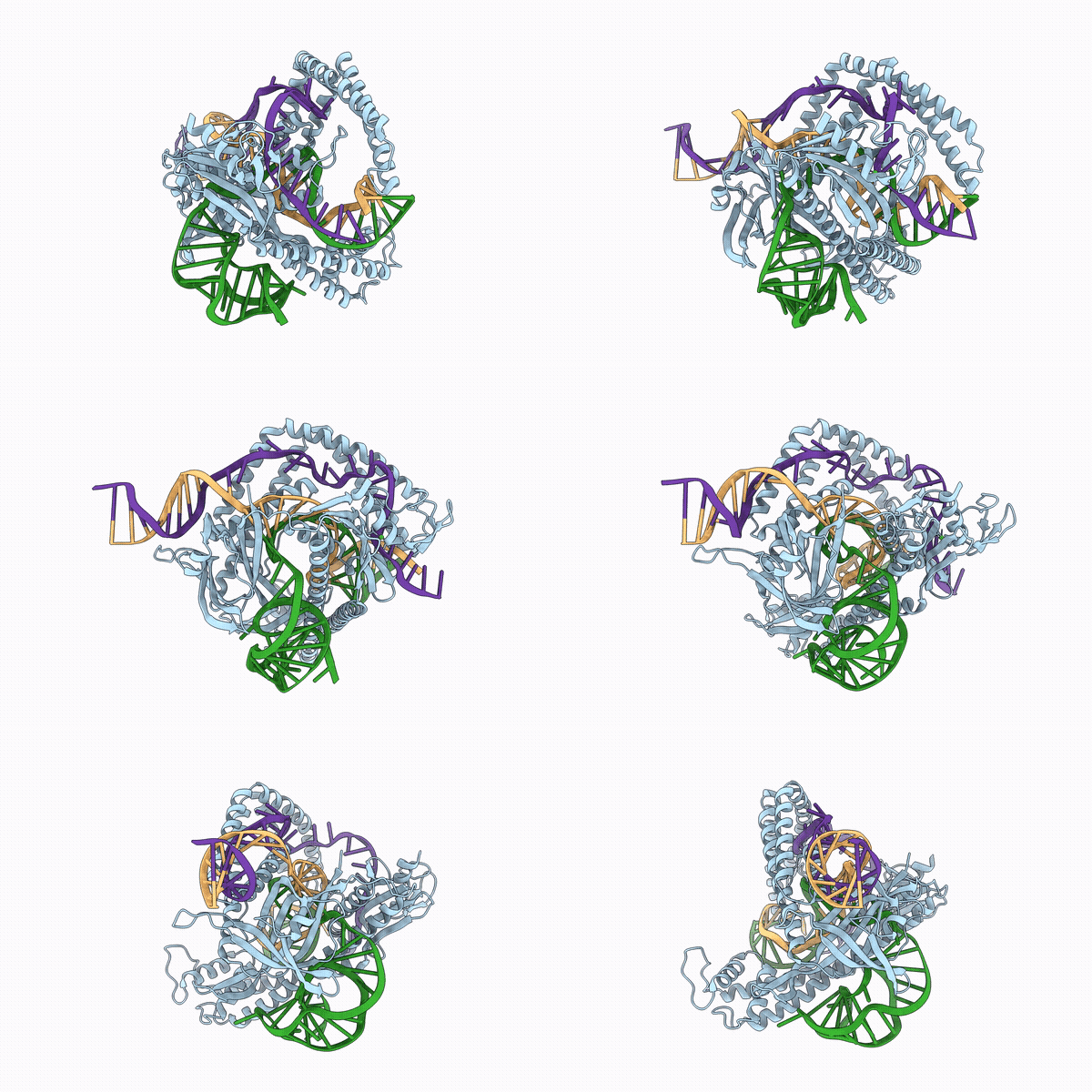
9WZR image
Deposition Date 2025-09-29
Release Date 2026-09-23
Last Version Date 2026-09-30
Entry Detail
PDB ID:
9WZR
Title:
PmCas12m-crRNA-target DNA complex
Biological Source:
Source Organism(s):
Expression System(s):
Method Details:
Experimental Method:
Resolution:
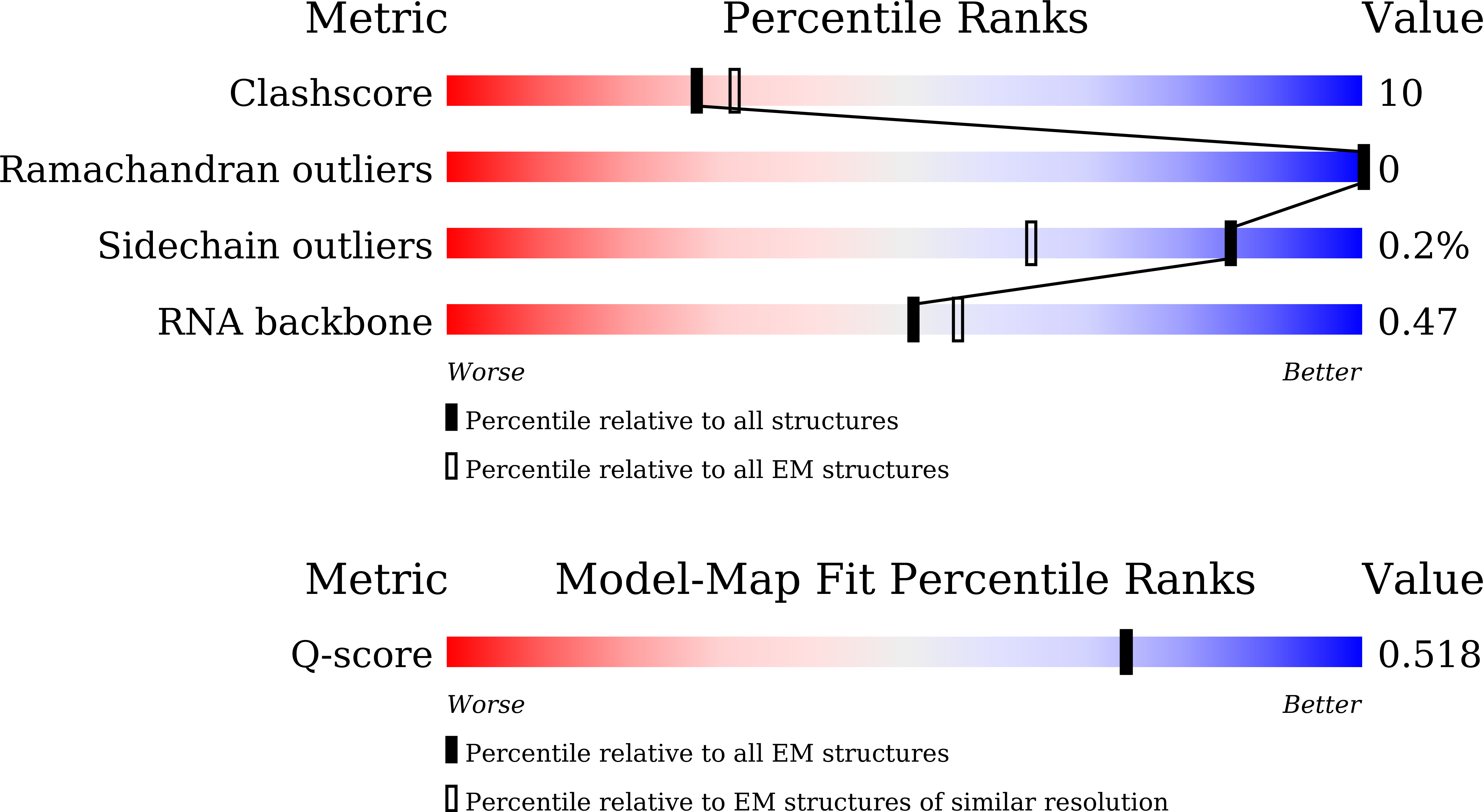
3.21 Å
Aggregation State:
PARTICLE
Reconstruction Method:
SINGLE PARTICLE
Macromolecular Entities
Polymer Type:polypeptide(L)
Molecule:Transposase
Gene (Uniprot):FR698_00030
Chain IDs:A
Chain Length:601
Number of Molecules:1
Biological Source:Pelomicrobium methylotrophicum
Polymer Type:polyribonucleotide
Molecule:RNA
Chain IDs:B
Chain Length:56
Number of Molecules:1
Biological Source:Pelomicrobium methylotrophicum
Polymer Type:polydeoxyribonucleotide
Molecule:DNA(TS)
Chain IDs:C
Chain Length:36
Number of Molecules:1
Biological Source:Pelomicrobium methylotrophicum
Polymer Type:polydeoxyribonucleotide
Molecule:DNA(NTS)
Chain IDs:D
Chain Length:36
Number of Molecules:1
Biological Source:Pelomicrobium methylotrophicum
Ligand Molecules
Primary Citation
Structure-guided discovery and engineering of miniature CRISPR-Cas12m for epigenome editing.
Nat.Struct.Mol.Biol. ? ? ? (2026)
PMID: 42749924 DOI: 10.1038/s41594-026-01890-9

Abstact

CRISPR-based epigenome editing represents a programmable strategy to precisely modulate gene expression, holding promise for therapeutic applications. However, the large size of dCas proteins substantially impedes delivery using adeno-associated virus (AAV) vectors. Here, through iterative bioinformatics analysis, structure-guided predictions and functional assays, we identified and characterized a miniature subtype V-M CRISPR-Cas12m from Pelomicrobium methylotrophicum. PmCas12m exhibited flexible 5'-YTN-3' PAM-dependent recognition and robust double-stranded DNA-binding properties while lacking DNA cleavage activity, thus rendering it a valuable tool for epigenome editing. Cryo-electron microscopy structures of PmCas12m unveiled its molecular mechanism of target DNA binding. Guided by these structural insights, we used deep mutational scanning and protein engineering to develop xCas12m, a hypercompact variant with highly potent and specific epigenome-editing capabilities in human cells. We further constructed the xCas12m-CRISPRoff platform in a single AAV vector, which achieved durable epigenetic silencing and effective inhibition of hepatitis B virus infection in a mouse model. Collectively, these findings establish xCas12m as a versatile epigenome-editing platform with notable potential for treating diseases, paving the way for clinical translation of epigenetic therapies.

Legend

Protein

Chemical

Disease

Primary Citation of related structures
Feedback Form
Name
Email
Institute
Feedback