

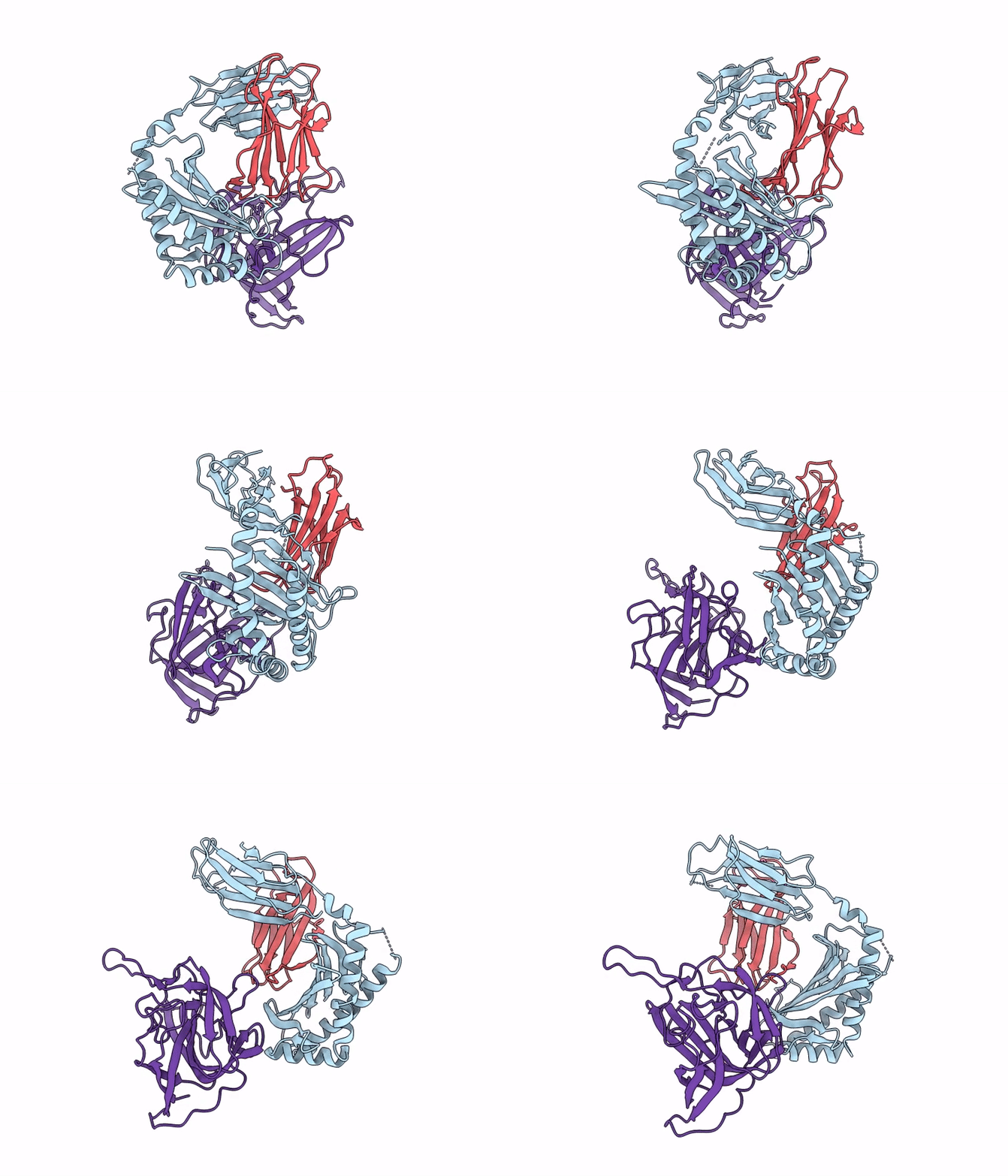
9WYD image
Deposition Date 2025-09-26
Release Date 2026-02-11
Last Version Date 2026-09-16
Entry Detail
PDB ID:
9WYD
Keywords:
Title:
Crystal structure of HAstV8 spike and FcRn
Biological Source:
Source Organism(s):
Homo sapiens (Taxon ID: 9606)
Human astrovirus-8 (Taxon ID: 43358)
Method Details:
Experimental Method:
Resolution:
2.65 Å
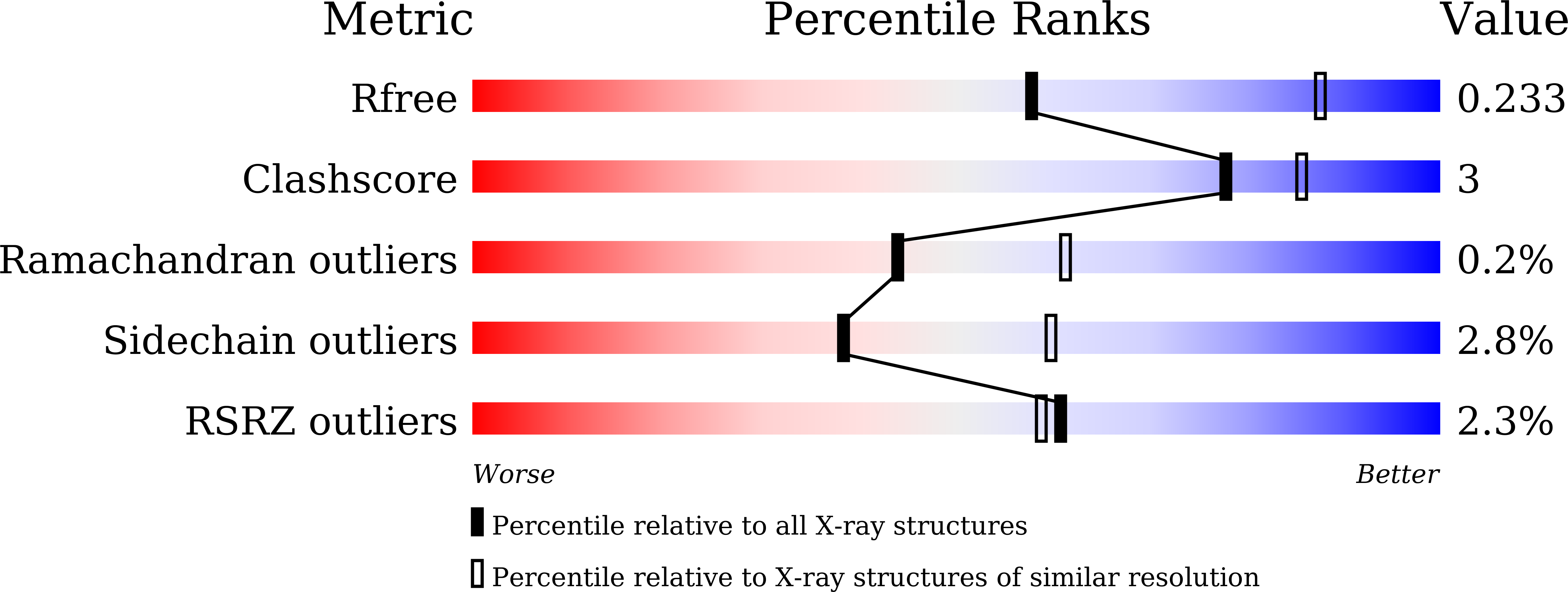
R-Value Free:
0.23
R-Value Work:
0.18
R-Value Observed:
0.18
Space Group:
C 1 2 1
Macromolecular Entities
Polymer Type:polypeptide(L)
Molecule:IgG receptor FcRn large subun
Gene (Uniprot):FCGRT
Chain IDs:A
Chain Length:274
Number of Molecules:1
Biological Source:Homo sapiens
Polymer Type:polypeptide(L)
Molecule:Beta-2-microglobulin
Gene (Uniprot):B2M
Chain IDs:B
Chain Length:99
Number of Molecules:1
Biological Source:Homo sapiens
Polymer Type:polypeptide(L)
Molecule:Spike protein VP27
Gene (Uniprot):ORF2
Chain IDs:C
Chain Length:232
Number of Molecules:1
Biological Source:Human astrovirus-8
Primary Citation
The conserved human astrovirus-receptor interface reveals a targetable vulnerability for antiviral development.
Nat Commun 17 ? ? (2026)
PMID: 41813687 DOI: 10.1038/s41467-026-70465-5

Abstact

Human astrovirus (HAstV) is a major cause of viral enteritis in children and the older adults worldwide. The eight serotypes of classical HAstVs (HAstV1-8), employ the neonatal Fc receptor (FcRn) as an entry receptor. To elucidate the receptor binding mechanism of HAstVs, we determined the crystal structure of the HAstV8 spike protein complexed with human FcRn. The structure reveals that the HAstV8 spike protein engaged FcRn via a conserved surface depression, which is also present across the other seven classical HAstVs serotypes. The binding interface of HAstV8 spike protein on FcRn largely overlaps with the footprints of three clinically approved FcRn blockers to treat an autoimmune disease. Accordingly, these FcRn inhibitors potently suppress astrovirus infection, significantly reducing viral RNA levels in astrovirus permissive Caco2 cells. Therefore, our study reports a conserved receptor recognition mechanism among human astroviruses and suggests the potential of repurposing clinically approved therapeutics to treat astrovirus infection.

Legend

Protein

Chemical

Disease

Primary Citation of related structures
Feedback Form
Name
Email
Institute
Feedback