

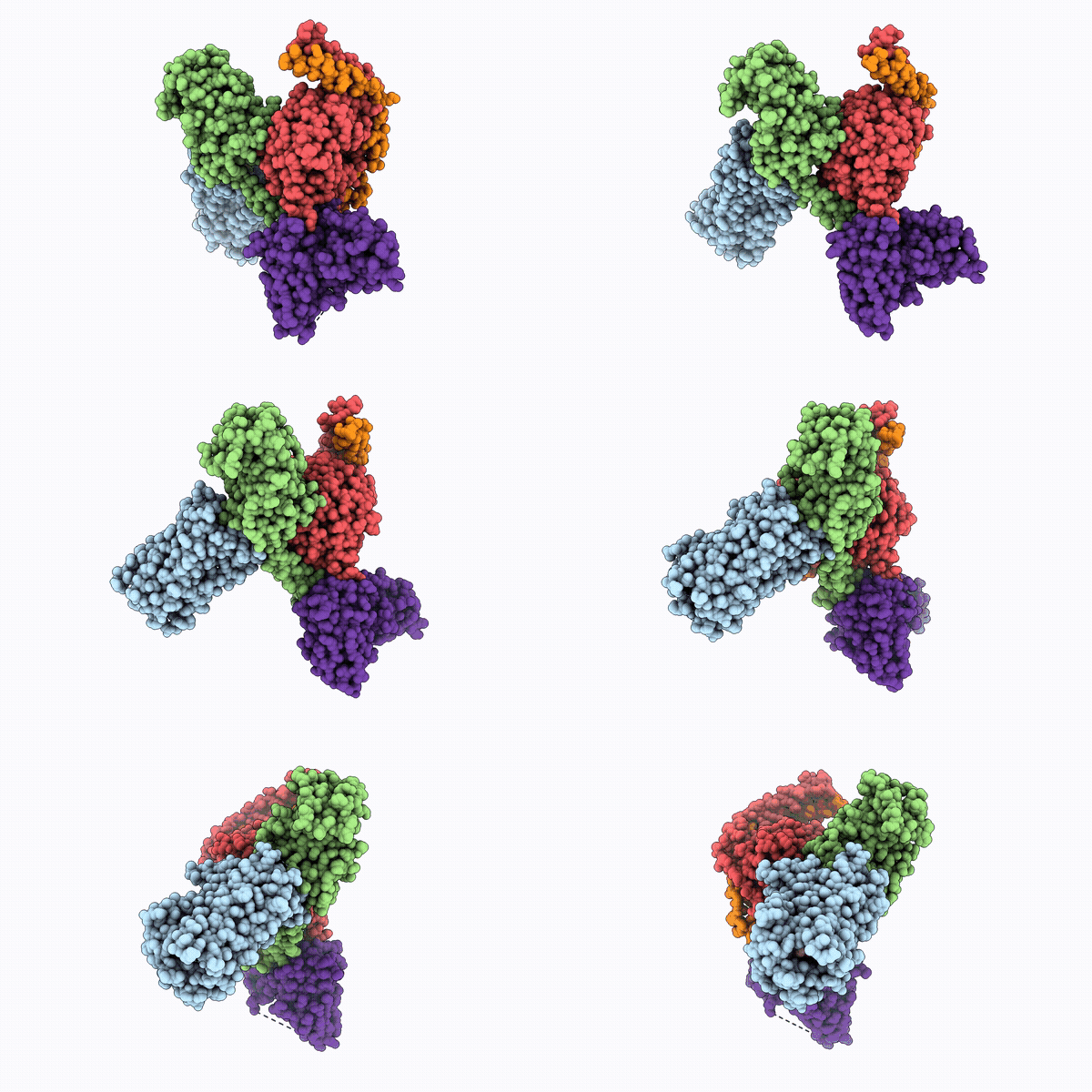
9WPQ image
Deposition Date 2025-09-09
Release Date 2026-09-16
Last Version Date 2026-09-30
Entry Detail
PDB ID:
9WPQ
Title:
5-HT2AR bound to LSD in complex with mini-Gq and scFv16 obtained by cryo-electron microscopy (cryoEM)
Biological Source:
Source Organism(s):
Homo sapiens (Taxon ID: 9606)
Expression System(s):
Method Details:
Experimental Method:
Resolution:
3.15 Å
Aggregation State:
PARTICLE
Reconstruction Method:
SINGLE PARTICLE
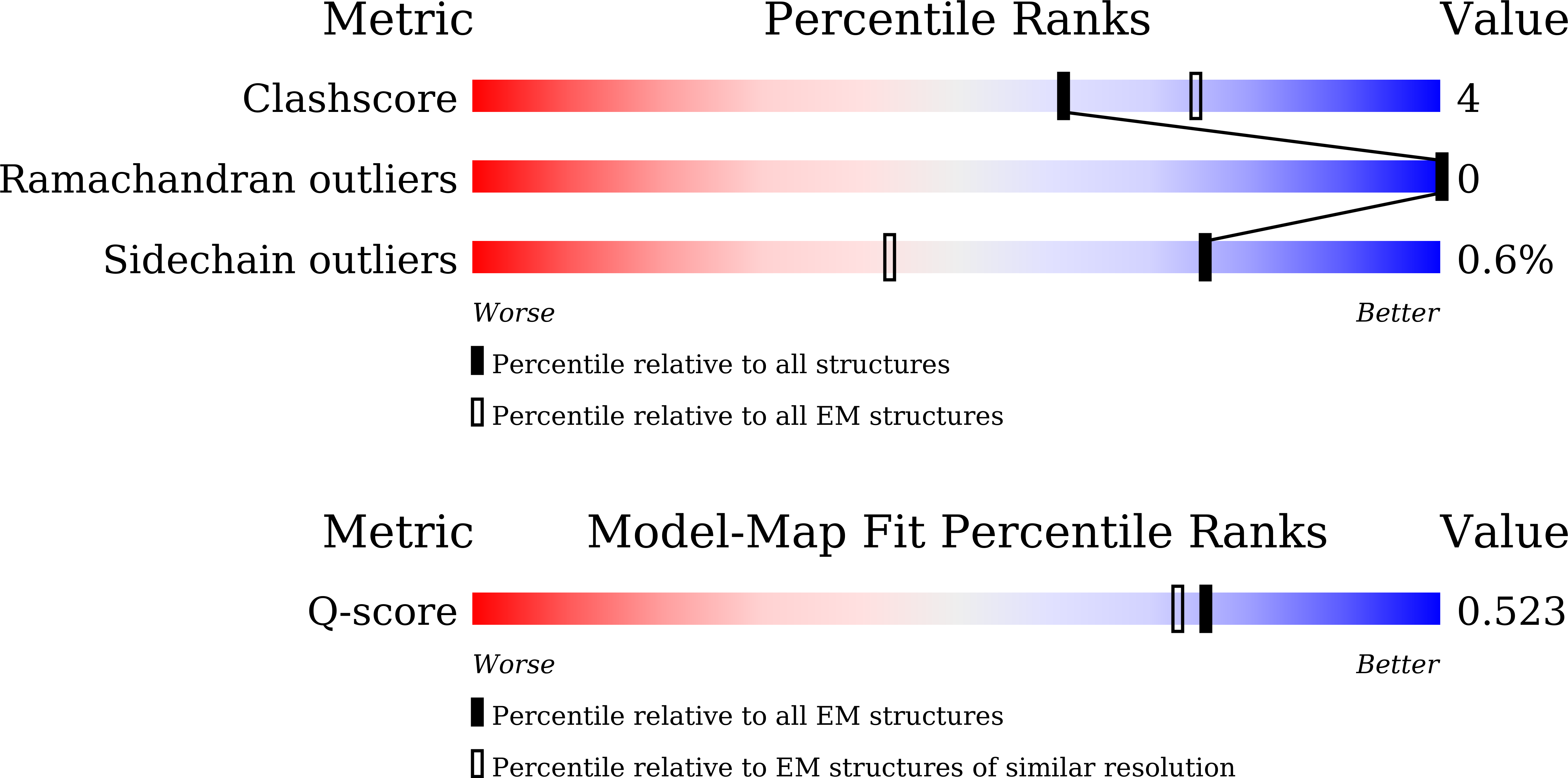
Macromolecular Entities
Polymer Type:polypeptide(L)
Molecule:5-hydroxytryptamine receptor
Gene (Uniprot):HTR2A
Chain IDs:A
Chain Length:339
Number of Molecules:1
Biological Source:Homo sapiens
Structural Superimposition Protein Blast
Polymer Type:polypeptide(L)
Molecule:G protein subunit q (Gi2-mini
Chain IDs:C (auth: B)
Chain Length:246
Number of Molecules:1
Biological Source:Homo sapiens
Polymer Type:polypeptide(L)
Molecule:Guanine nucleotide-binding pr
Gene (Uniprot):GNB1
Chain IDs:B (auth: C)
Chain Length:340
Number of Molecules:1
Biological Source:Homo sapiens
Polymer Type:polypeptide(L)
Molecule:Guanine nucleotide-binding pr
Gene (Uniprot):GNG2
Chain IDs:D
Chain Length:71
Number of Molecules:1
Biological Source:Homo sapiens
Structural Superimposition Protein Blast
Polymer Type:polypeptide(L)
Molecule:single-chain variable fragmen
Chain IDs:E
Chain Length:287
Number of Molecules:1
Biological Source:Homo sapiens
Ligand Molecules
Primary Citation
Structure-based design of subtype-selective psychedelic analogs.
Nat Commun 17 ? ? (2026)
PMID: 42754591 DOI: 10.1038/s41467-026-77658-y

Abstact

Classical psychedelics exert hallucinogenic and therapeutic effects primarily through activation of serotonin 2 A receptor (5-HT(2A)R), offering promise as transformative treatments for neuropsychiatric disorders. However, their concurrent activation of 5-HT(2B)R-associated with cardiac valvulopathy-raises serious safety concerns, underscoring the need for subtype-selective psychedelics. To address this, we determine the cryo-EM structure of 5-HT(2A)R and perform a comparative structural analysis of the orthosteric binding pockets (OBPs) of 5-HT(2A)R and 5-HT(2B)R. Guided by key residue differences, we develop a trigonal pharmacophore model to inform the design of 5-HT(2A)R-selective agonists that avoid 5-HT(2B)R activation. Using this model, we design and synthesize two compound series that selectively activate 5-HT(2A)R while antagonizing 5-HT(2B)R. Molecular basis of subtype selectivity is confirmed by five additional cryo-EM structures of receptor-ligand complexes. Selected compounds also exhibit antidepressant-like efficacy in animal models. Our findings provide a strategy for the development of safer, subtype-selective psychedelic analogs with therapeutic potential.

Legend

Protein

Chemical

Disease

Primary Citation of related structures
Feedback Form
Name
Email
Institute
Feedback