

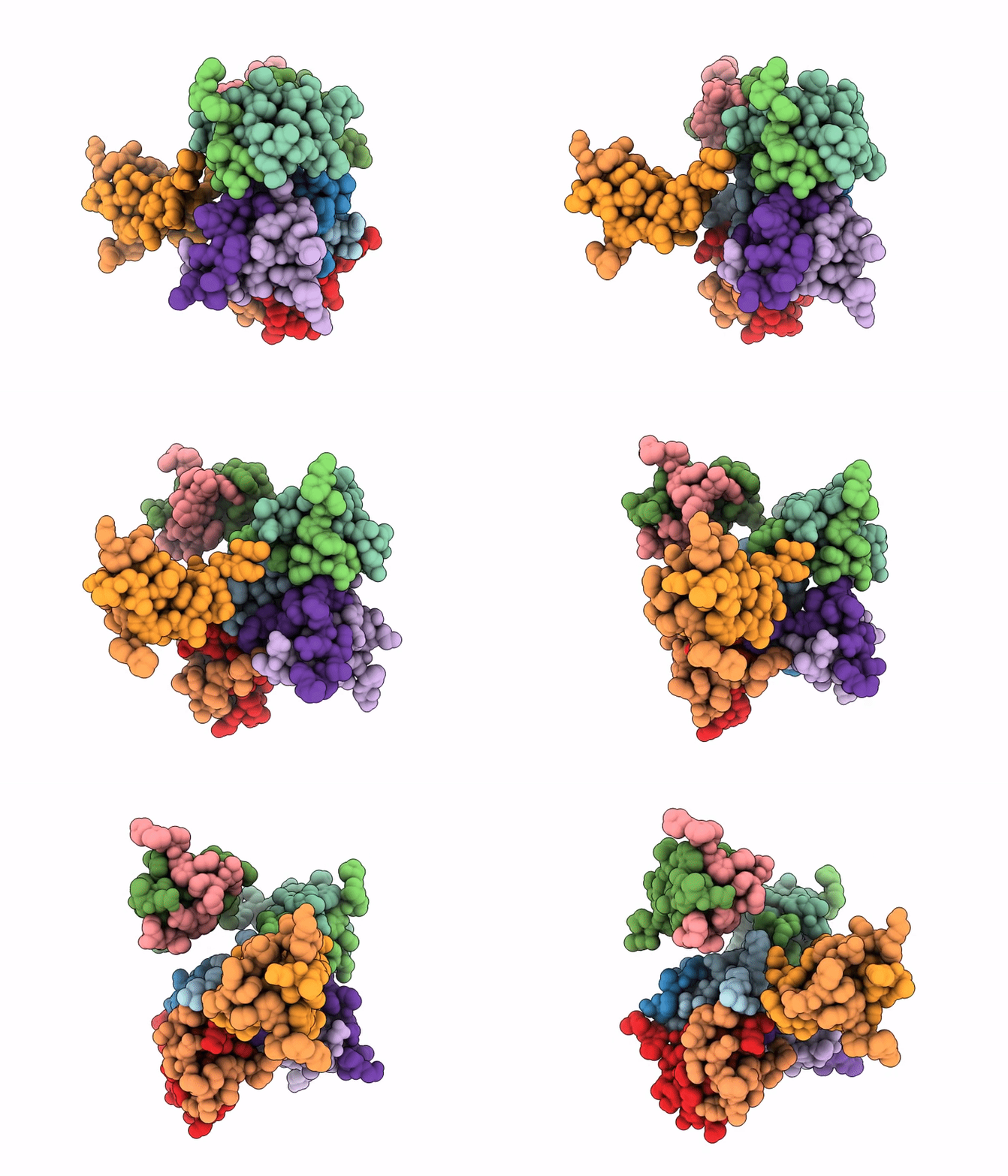
9W5C image
Deposition Date 2025-08-01
Release Date 2026-02-25
Last Version Date 2026-04-22
Entry Detail
PDB ID:
9W5C
Keywords:
Title:
Complex structure of MAGI3 WW1 and IQSEC3 PPxY motif
Biological Source:
Source Organism(s):
Rattus norvegicus (Taxon ID: 10116)
Mus musculus (Taxon ID: 10090)
Expression System(s):
Method Details:
Experimental Method:
Resolution:
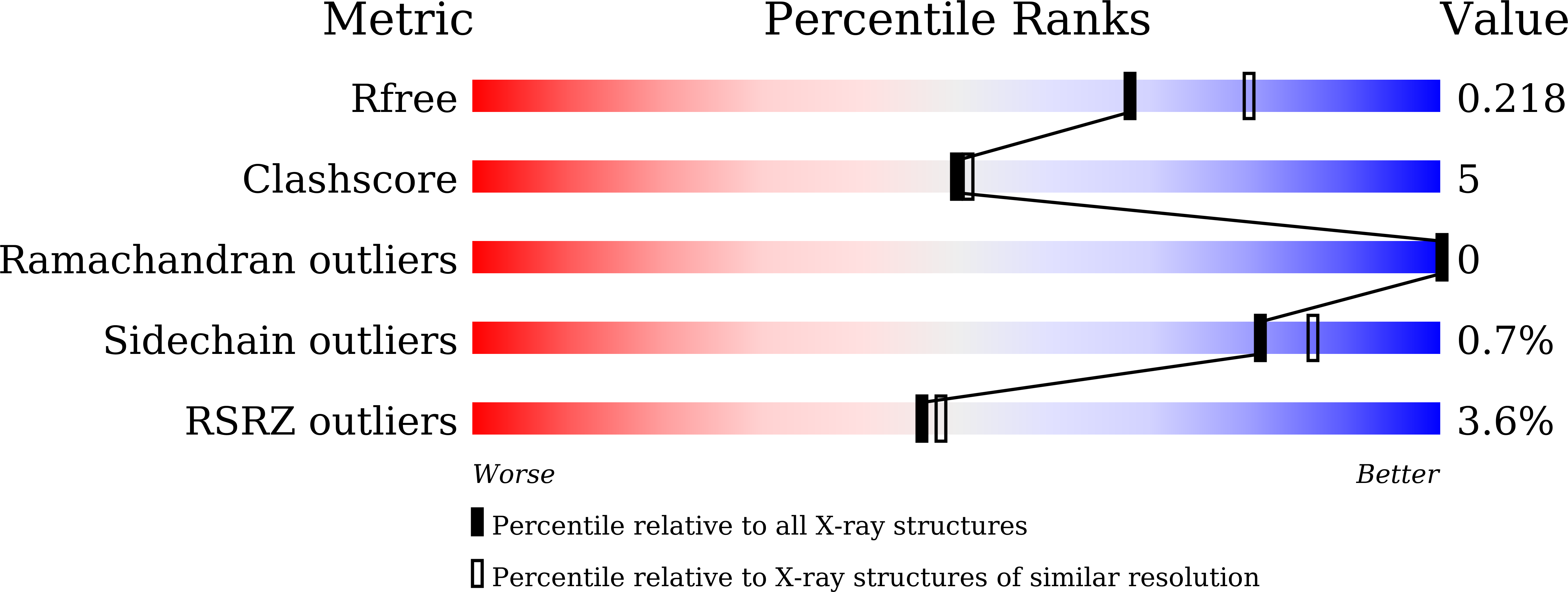
2.10 Å
R-Value Free:
0.21
R-Value Work:
0.17
R-Value Observed:
0.18
Space Group:
C 1 2 1
Macromolecular Entities
Structures with similar UniProt ID
Protein Blast
Polymer Type:polypeptide(L)
Molecule:Membrane-associated guanylate
Gene (Uniprot):Magi3
Chain IDs:A, C, E, G, I, K
Chain Length:44
Number of Molecules:6
Biological Source:Rattus norvegicus
Structures with similar UniProt ID
Protein Blast
Polymer Type:polypeptide(L)
Molecule:IQ motif and SEC7 domain-cont
Gene (Uniprot):Iqsec3
Chain IDs:B, D, F, H, J, L
Chain Length:18
Number of Molecules:6
Biological Source:Mus musculus
Primary Citation
Extended motif recognition tunes WW domain affinity in MAGI-IQSEC complexes.
FEBS J. ? ? ? (2026)
PMID: 41870210 DOI: 10.1111/febs.70509

Abstact

Many proteins containing WW domains interact with proline-rich PPxY motifs, raising questions regarding how they achieve specificity in cellular contexts. Here, we characterize the WW domain-mediated interactions between the MAGI and IQSEC protein families, which play critical roles in neurodevelopment and synaptic signaling. The high-resolution crystal structure of the MAGI3-IQSEC3 complex reveals that an extended sequence C terminus to the canonical PPxY motif in IQSEC3 engages a previously uncharacterized binding site on the WW1 domain of MAGI3. This extension interface enhances binding affinity by dozens-fold, and mutagenesis of key residues within this site abrogates complex formation, demonstrating its functional necessity. This bipartite recognition mode is evolutionarily conserved across MAGI and IQSEC family members. Our work elucidates the structural basis governing MAGI-IQSEC assembly and establishes a generalizable model whereby motif extensions enable high-affinity, specific target selection by WW domains, with broad implications for modular domain-mediated signaling networks.

Legend

Protein

Chemical

Disease

Primary Citation of related structures
Feedback Form
Name
Email
Institute
Feedback