

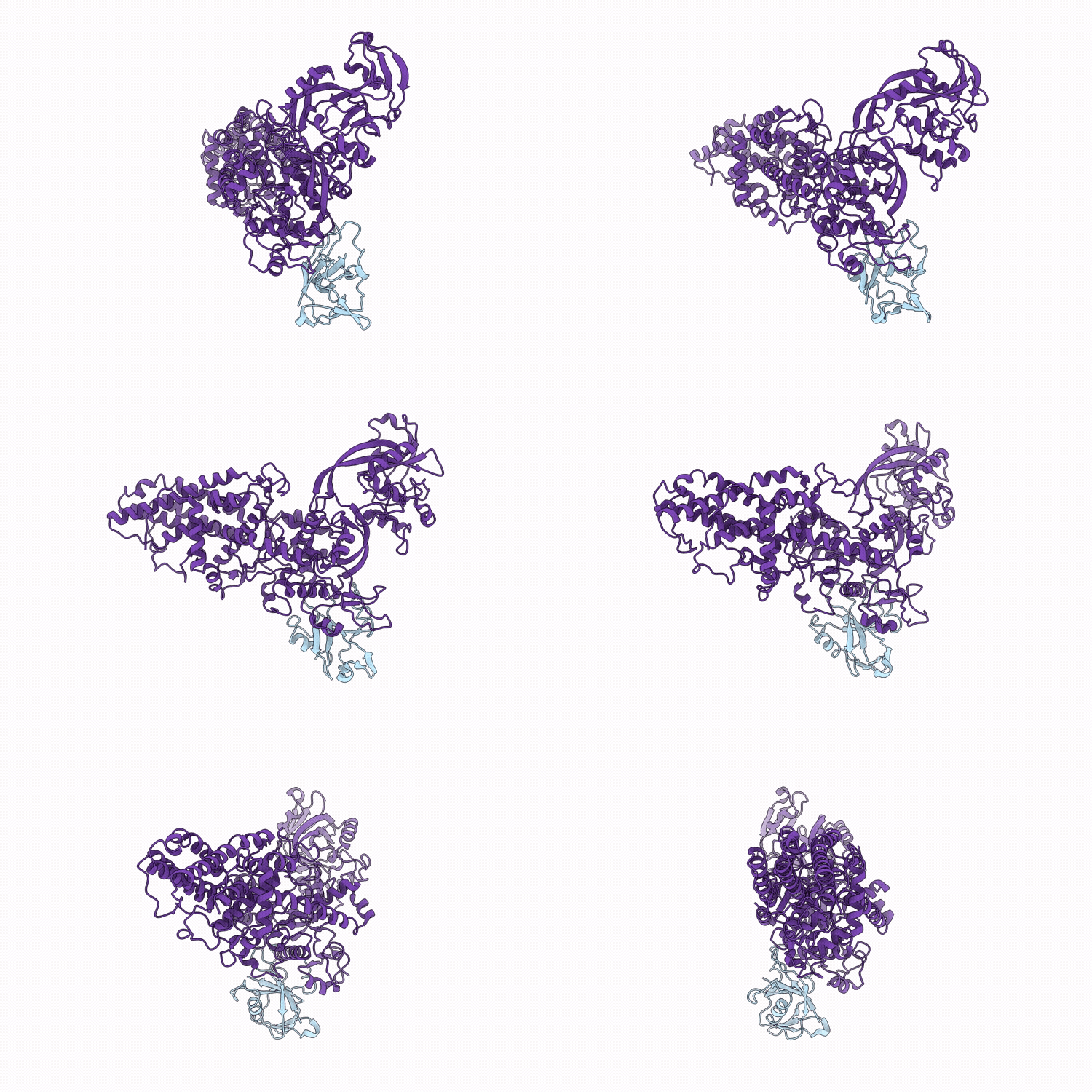
9W01 image
Deposition Date 2025-07-23
Release Date 2026-07-29
Last Version Date 2026-08-12
Entry Detail
PDB ID:
9W01
Keywords:
Title:
Cryo-EM structure of LARS1:IARS1 complex
Biological Source:
Source Organism(s):
Homo sapiens (Taxon ID: 9606)
Expression System(s):
Method Details:
Experimental Method:
Resolution:
3.16 Å
Aggregation State:
PARTICLE
Reconstruction Method:
SINGLE PARTICLE

Macromolecular Entities
Polymer Type:polypeptide(L)
Molecule:Leucine--tRNA ligase, cytopla
Gene (Uniprot):LARS1
Chain IDs:A
Chain Length:0
Number of Molecules:1
Biological Source:Homo sapiens
Polymer Type:polypeptide(L)
Molecule:Isoleucine--tRNA ligase, cyto
Gene (Uniprot):IARS1
Chain IDs:B
Chain Length:0
Number of Molecules:1
Biological Source:Homo sapiens
Ligand Molecules
Primary Citation
Cryo-EM structure of the LARS1:IARS1 complex reveals a nutrient-responsive switch controlling mTORC1 signaling.
Nat Commun 17 ? ? (2026)
PMID: 42276995 DOI: 10.1038/s41467-026-74085-x

Abstact

Aminoacyl-tRNA synthetases (ARSs) assemble into the multi-tRNA synthetase complex (MSC) to mediate noncanonical functions in cell signaling and stress responses. Among them, human cytosolic leucyl-tRNA synthetase 1 (LARS1) plays a central role in sensing leucine and activating mTORC1, thereby linking nutrient availability to metabolic regulation. Despite recent progress, fundamental questions remain unresolved about the regulatory mechanisms governing LARS1's non-canonical functions, particularly its structural organization within the MSC. Here, we employ an integrated approach combining structural, biochemical, and cellular analyses to investigate the noncanonical roles of LARS1. The cryo-EM structure of the LARS1:isoleucyl-tRNA synthetase 1 (IARS1) complex reveals that LARS1 binds to IARS1, its anchoring partner in the MSC, via its UNE-L domain. Amino acid stimulation induces LARS1 phosphorylation at Ser1070, Ser1077, and Ser1082, which are located at the interface with IARS1. These modifications disrupt the interaction, promote LARS1 dissociation from the MSC, and enable mTORC1 activation. This study highlights phosphorylation as a conserved and critical molecular switch that orchestrates the non-canonical functions of MSC by dynamically modulating the assembly and activity of its components in response to external stimuli.

Legend

Protein

Chemical

Disease

Primary Citation of related structures
Feedback Form
Name
Email
Institute
Feedback