

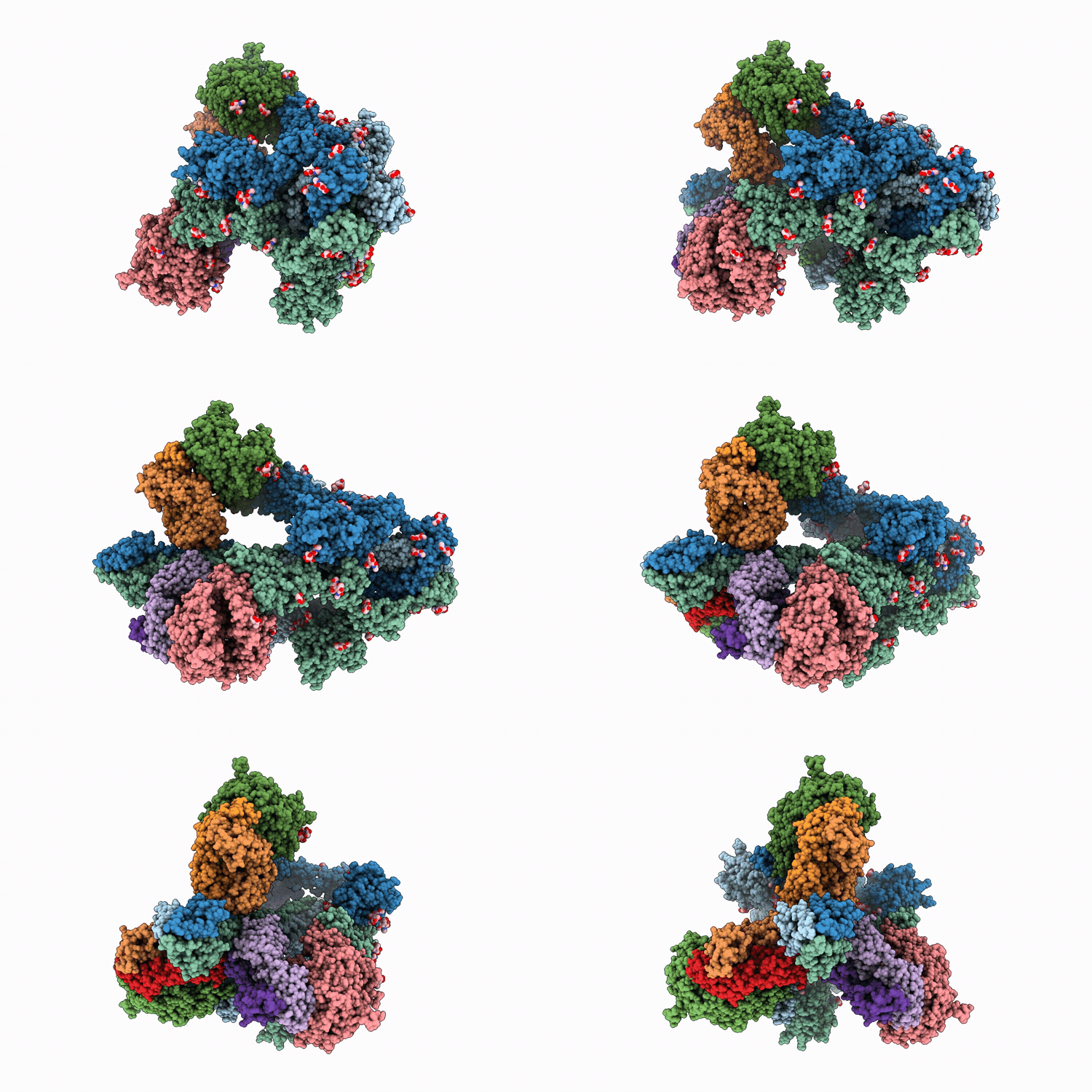
9VLT image
Deposition Date 2025-06-26
Release Date 2026-04-22
Last Version Date 2026-05-20
Entry Detail
PDB ID:
9VLT
Title:
Cryo-EM structure of SARS-CoV-2 XBB.1.5 S trimer in the early fusion intermediate conformation (E-FIC) complexed with ACE2 and 76E1-Fab
Biological Source:
Expression System(s):
Method Details:
Experimental Method:
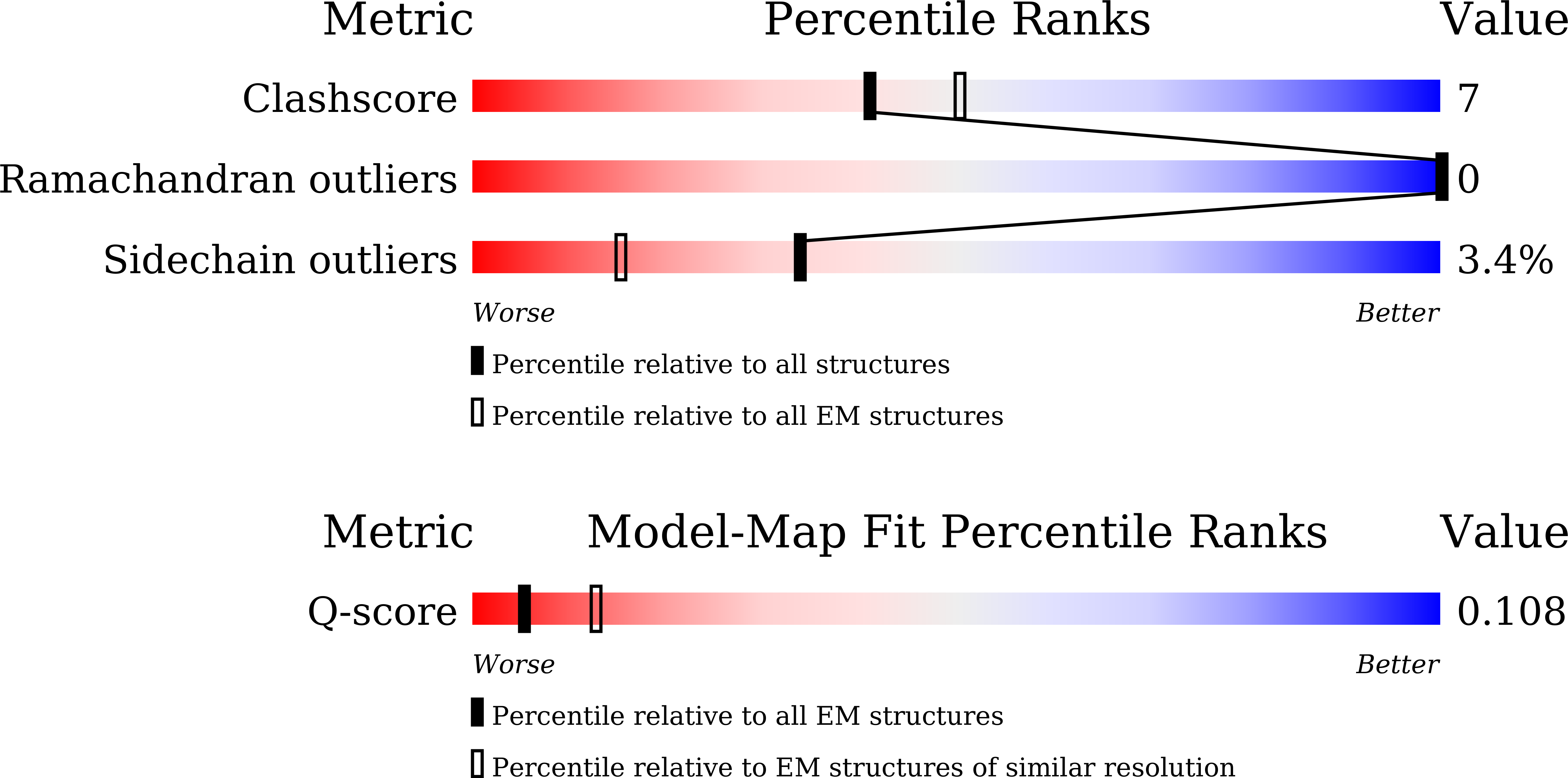
Resolution:
5.65 Å
Aggregation State:
PARTICLE
Reconstruction Method:
SINGLE PARTICLE
Macromolecular Entities
Structures with similar UniProt ID
Protein Blast
Polymer Type:polypeptide(L)
Molecule:Spike glycoprotein
Gene (Uniprot):S
Chain IDs:A, E (auth: B), I (auth: C)
Chain Length:1284
Number of Molecules:3
Biological Source:Severe acute respiratory syndrome coronavirus 2
Structures with similar UniProt ID
Protein Blast
Polymer Type:polypeptide(L)
Molecule:Angiotensin-converting enzyme
Gene (Uniprot):ACE2
Chain IDs:B (auth: D), F (auth: E), J (auth: F)
Chain Length:631
Number of Molecules:3
Biological Source:Homo sapiens
Protein Blast
Polymer Type:polypeptide(L)
Molecule:heavy chain of 76E1 Fab
Chain IDs:C (auth: G), G (auth: I), K
Chain Length:221
Number of Molecules:3
Biological Source:Homo sapiens
Protein Blast
Polymer Type:polypeptide(L)
Molecule:light chain of 76E1 Fab
Chain IDs:D (auth: H), H (auth: J), L
Chain Length:216
Number of Molecules:3
Biological Source:Homo sapiens
Ligand Molecules
Primary Citation
Steric hindrance of antibody binding in an Omicron spike fusion intermediate.
Nature ? ? ? (2026)
PMID: 42092153 DOI: 10.1038/s41586-026-10462-2

Abstact

Understanding conformational changes of the coronavirus spike protein is critical for developing broad-spectrum therapies. The pan-coronavirus epitope spike residues 815-825 (centred on the S2' site) are buried in the prefusion spike but are transiently exposed upon ACE2 binding(1,2). Here, using integrated functional and structural analyses, we demonstrate that 76E1, an antibody targeting spike residues 815-825, specifically recognizes an open early fusion intermediate conformation in which this epitope adopts a helical conformation, designated the S2'-helix. SARS-CoV-2 Omicron variants evade such antibodies via steric hindrance resulting from S2'-helix shifts and restricted S1-ACE2 distancing in the early fusion intermediate conformation, together with increased reliance on cathepsin-mediated entry that impairs 76E1 inhibition of S2' cleavage. The H655Y mutation is central to this evasion. Antibody size directly affects its access to the S2'-helix. Crucially, antibody size minimization reversed the evasion mechanisms and significantly enhanced neutralizing activity against authentic Omicron variants and other human coronaviruses, including SARS-CoV-1 and HCoV-229E. These findings establish small-molecule targeting of the S2'-helix as a strategy for pan-coronavirus therapies.

Legend

Protein

Chemical

Disease

Primary Citation of related structures
Feedback Form
Name
Email
Institute
Feedback