

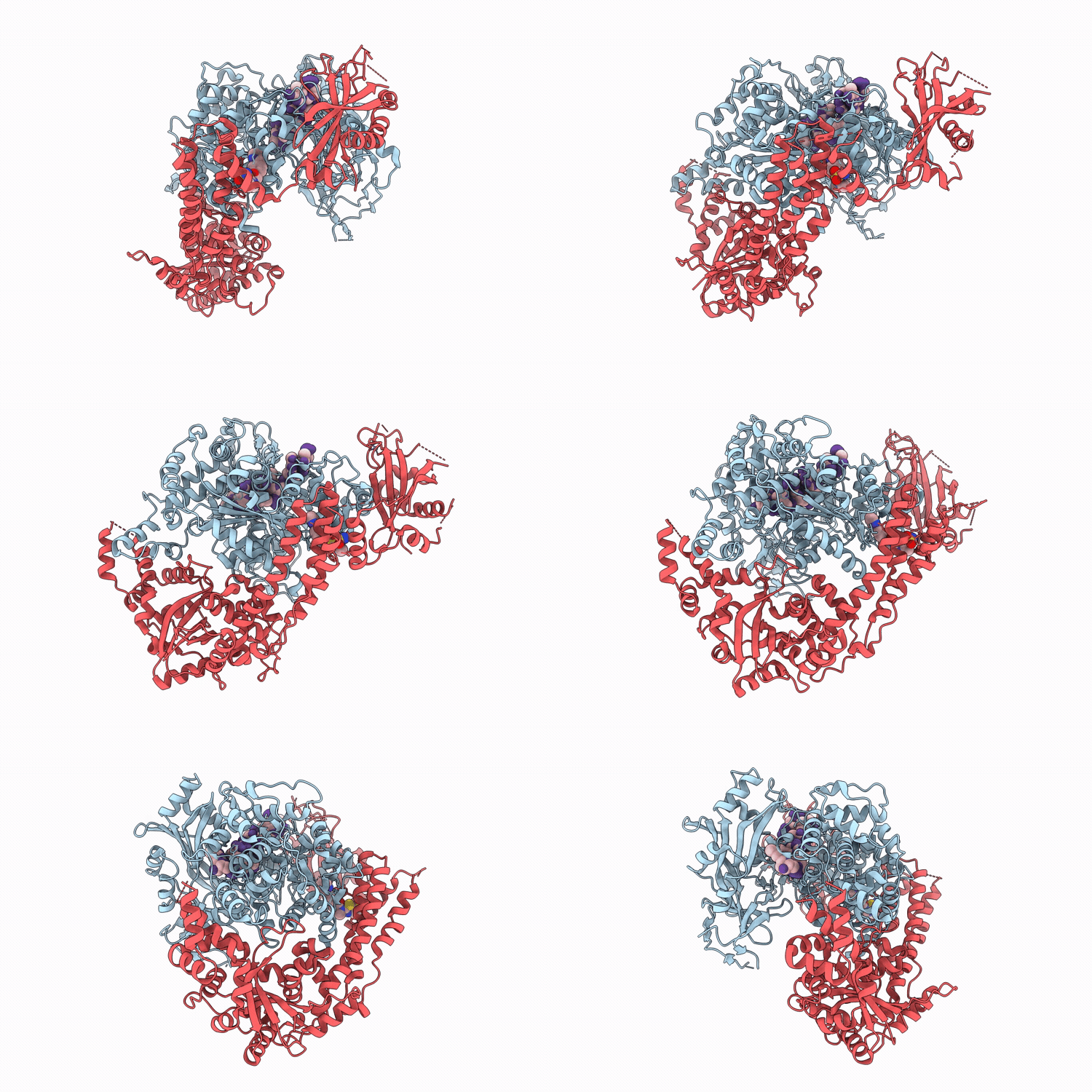
9UT6 image
Deposition Date 2025-05-02
Release Date 2026-04-08
Last Version Date 2026-10-28
Entry Detail
PDB ID:
9UT6
Keywords:
Title:
The helicase module of the helicase-primase complex from HHV1 bound with ssDNA and pritelivir
Biological Source:
Expression System(s):
Method Details:
Experimental Method:
Resolution:
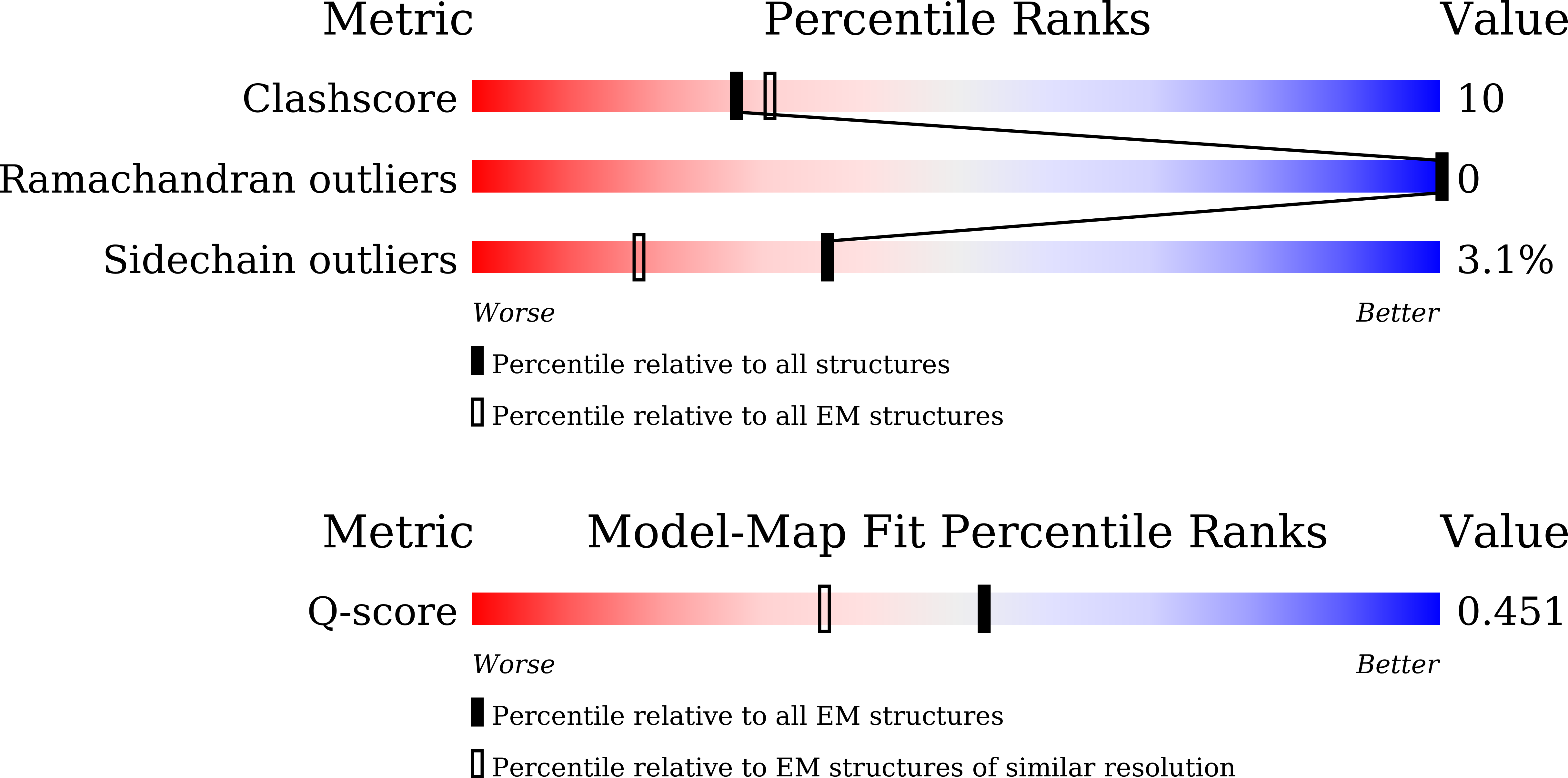
3.12 Å
Aggregation State:
PARTICLE
Reconstruction Method:
SINGLE PARTICLE
Macromolecular Entities
Polymer Type:polypeptide(L)
Molecule:DNA replication helicase
Gene (Uniprot):HELI
Chain IDs:B (auth: A)
Chain Length:934
Number of Molecules:1
Biological Source:Human alphaherpesvirus 1
Structural Superimposition Protein Blast
Polymer Type:polypeptide(L)
Molecule:Ubiquitin-like protein SMT3,D
Gene (Uniprot):UL52, SMT3
Mutagens:R64T/R71E
Chain IDs:C (auth: B)
Chain Length:1195
Number of Molecules:1
Biological Source:Saccharomyces cerevisiae S288C, Human alphaherpesvirus 1
Polymer Type:polydeoxyribonucleotide
Molecule:synthetic DNA
Chain IDs:A (auth: D)
Chain Length:6
Number of Molecules:1
Biological Source:synthetic construct
Primary Citation
Structural insights into inhibition mechanism of the helicase-primase complex from human herpesvirus 1.
Cell Chem Biol 33 720 731.e4 (2026)
PMID: 41990739 DOI: 10.1016/j.chembiol.2026.03.006

Abstact

Human herpesviruses (HHVs) are widespread pathogens causing severe diseases, especially in immunocompromised individuals, and are linked to neurodegenerative and autoimmune disorders. Current antiviral therapies primarily target the alpha-subfamily, with limited options for beta- and gamma-subfamilies. The helicase-primase complex (HPC) is essential for viral DNA replication and represents a key antiviral target, but its structure and inhibition mechanisms were previously unclear. Here, cryo-EM structures of the HHV1 (alpha-subfamily) HPC bound to single-stranded DNA and two clinical inhibitors, amenamevir and pritelivir, are reported. The HPC features flexible helicase and primase modules, with both inhibitors binding a shared allosteric pocket in the helicase module. Structural, biochemical, and molecular dynamics analyses indicate that these inhibitors lock the helicase in an open, inactive conformation. Combined molecular dynamics and fragment molecular orbital analyses explain the alpha-subfamily selectivity and distinct antiviral spectra of these drugs. These findings provide a structural framework to guide the development of novel inhibitors targeting beta- and gamma-subfamily herpesviruses.

Legend

Protein

Chemical

Disease

Primary Citation of related structures
Feedback Form
Name
Email
Institute
Feedback