

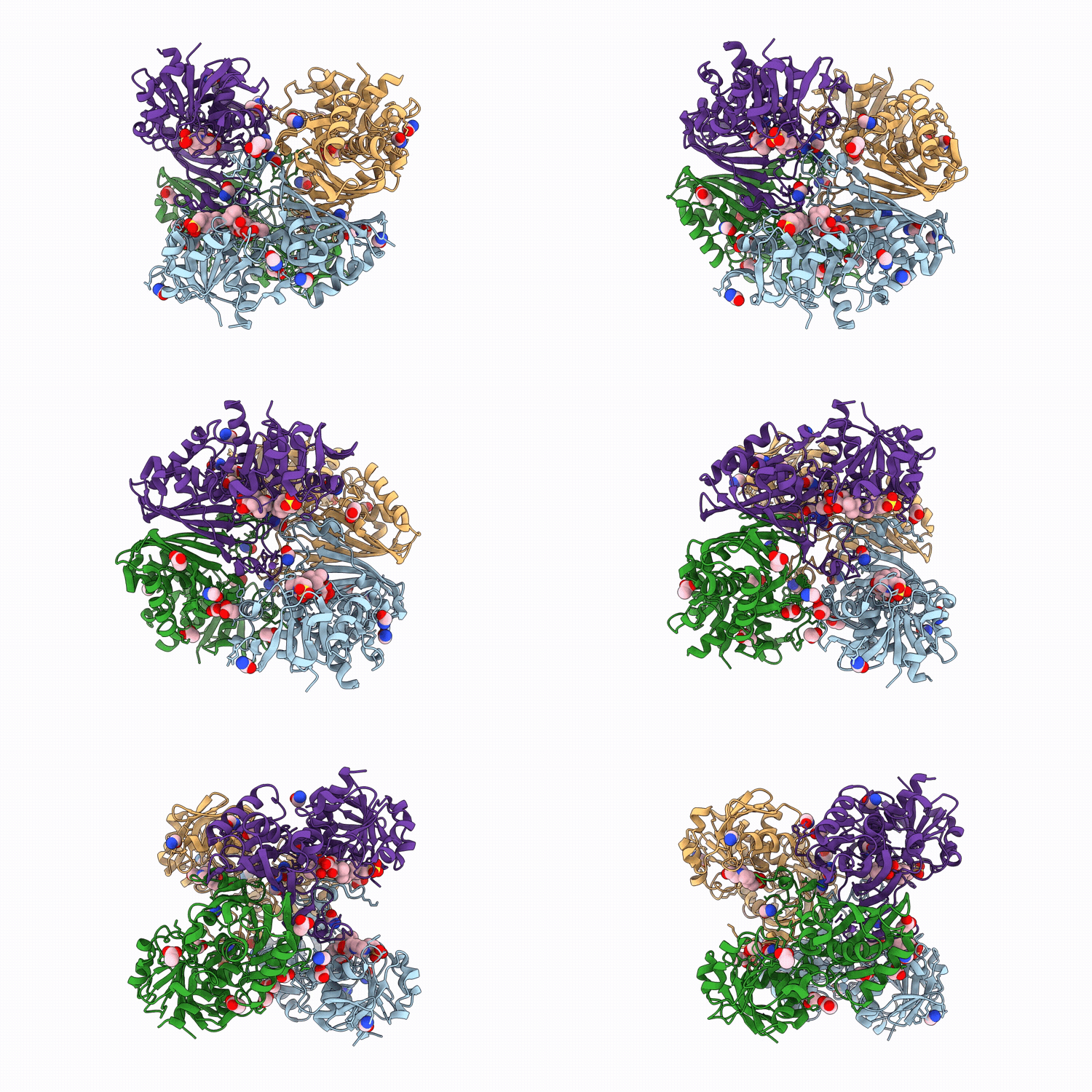
9UNY image
Deposition Date 2025-04-24
Release Date 2026-07-29
Last Version Date 2026-08-12
Entry Detail
PDB ID:
9UNY
Keywords:
Title:
Natural product inhibitor of glyceraldehyde-3-phosphate dehydrogenase(GAPDH)
Biological Source:
Source Organism(s):
Homo sapiens (Taxon ID: 9606)
Expression System(s):
Method Details:
Experimental Method:
Resolution:
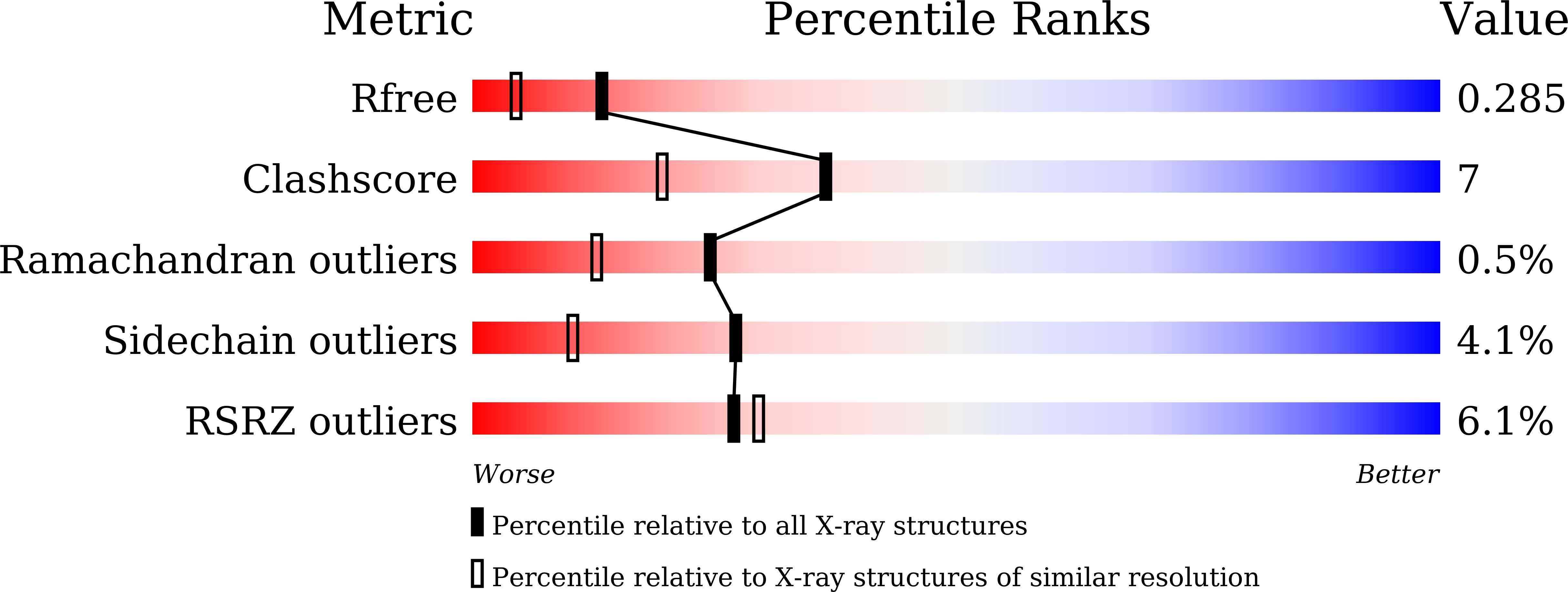
1.87 Å
R-Value Free:
0.28
R-Value Work:
0.21
R-Value Observed:
0.21
Space Group:
P 21 21 21
Macromolecular Entities
Polymer Type:polypeptide(L)
Molecule:Glyceraldehyde-3-phosphate de
Gene (Uniprot):GAPDH
Chain IDs:A (auth: P), B (auth: A), C (auth: B), D (auth: C)
Chain Length:335
Number of Molecules:4
Biological Source:Homo sapiens
Primary Citation
GAPDH inhibition by oridonin integrates glycolytic inhibition and anti-inflammation to alleviate rheumatoid arthritis synovitis.
Phytomedicine 160 158650 158650 (2026)
PMID: 42542052 DOI: 10.1016/j.phymed.2026.158650

Abstact

BACKGROUND: Current therapeutic strategies for rheumatoid arthritis (RA) synovitis rely primarily on immunosuppression, with limited options targeting the diseased synovial fibroblasts (FLSs). Modulating the metabolic state of FLSs has been proposed as a potential approach to shift them toward an anti-inflammatory phenotype and alleviate synovitis. However, the molecular mechanisms that bridge FLS metabolism to anti-inflammatory defense remain largely unexplored. PURPOSE: We aimed to identify the target of ORI in synovial cells and to elucidate the molecular mechanism by which ORI alleviates RA synovitis. METHODS: The therapeutic effects of oridonin were first assessed in an IL-1beta-induced MH7A cell model of synovitis. Its direct protein target was identified using CC-ABPP, surface plasmon resonance (SPR), pull-down, cellular thermal shift assay (CETSA), and drug affinity responsive target stability (DARTS) assays. The specific binding site was confirmed by co-crystallization, LC-MS/MS analysis, and site-directed mutagenesis of GAPDH. The underlying mechanisms were investigated using Western blot, ELISA, immunofluorescence, RT-qPCR, HPLC, and metabolomics in FLSs. Furthermore, therapeutic efficacy and pathway validation were examined in GAPDH-knockdown mice with adjuvant-induced arthritis using immunohistochemistry and hematoxylin-eosin (HE) staining for pathological assessment. RESULTS: This study identified GAPDH as the direct target of oridonin in MH7A cells. ORI covalently binds to Cys152 of GAPDH, thereby inhibiting GAPDH enzymatic activity. Metabolomics data revealed an interruption in the glycolytic process. Metabolite analysis revealed the accumulation of methylglyoxal, which further activated the KEAP1-NRF2/HO-1 signaling pathway and suppressed the NF-kappaB signaling pathway. The existence of GAPDH-KEAP1-NRF2 and NF-kappaB signal pathways were validated in both cell with GAPDH siRNA and GAPDH(+/-) mice with adjuvant-induced arthritis for the first time. CONCLUSION: GAPDH inhibition by oridonin induces intracellular accumulation of methylglyoxal, which activates KEAP1-NRF2/HO-1 signaling pathway and suppresses NF-kappaB signaling pathway.

Legend

Protein

Chemical

Disease

Primary Citation of related structures
Feedback Form
Name
Email
Institute
Feedback