

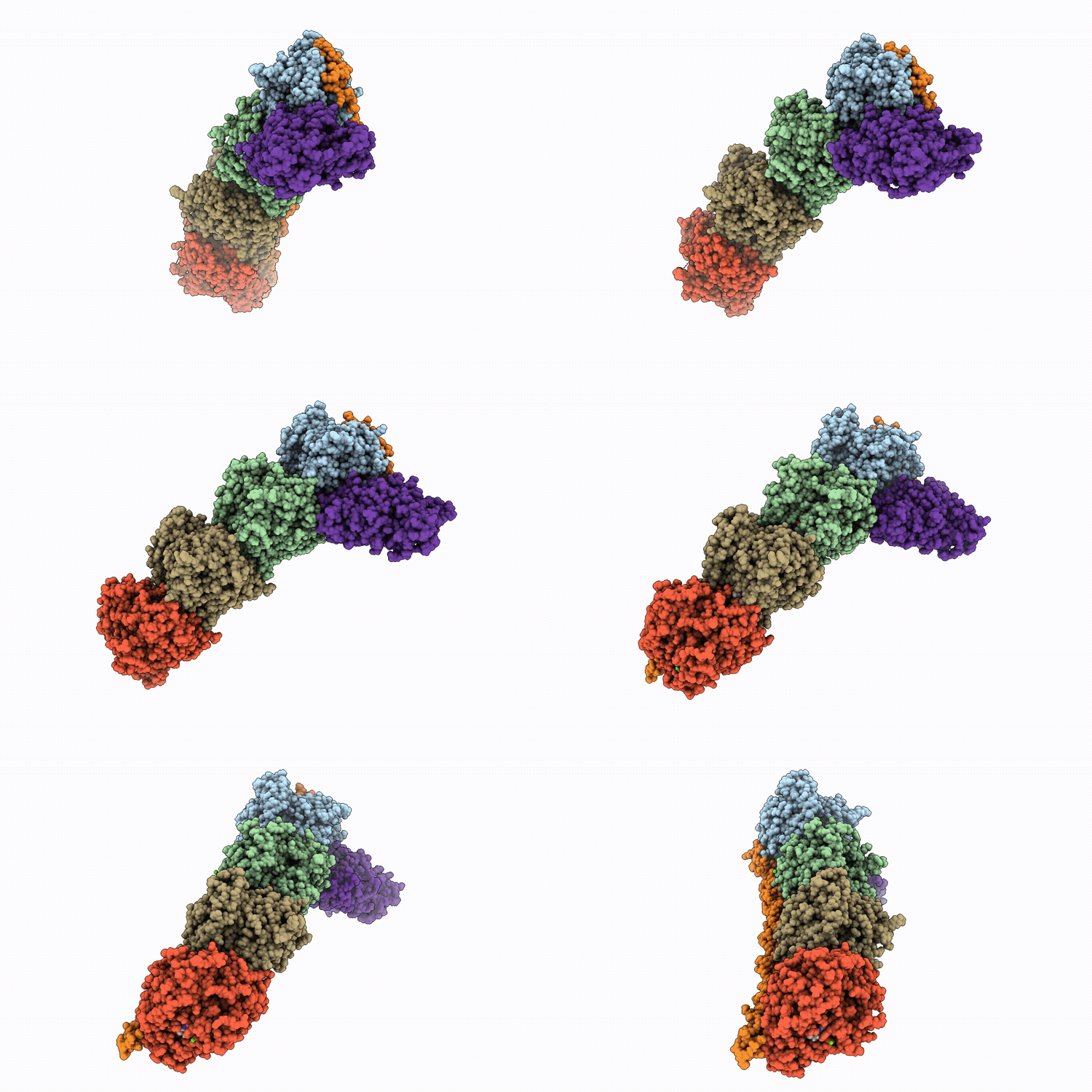
9U6D image
Deposition Date 2025-03-23
Release Date 2026-03-25
Last Version Date 2026-06-24
Entry Detail
PDB ID:
9U6D
Keywords:
Title:
Crystal structure of tubulin-RB3-TTL in complex with X8
Biological Source:
Source Organism(s):
Rattus norvegicus (Taxon ID: 10116)
Gallus gallus (Taxon ID: 9031)
Sus scrofa (Taxon ID: 9823)
Expression System(s):
Method Details:
Experimental Method:
Resolution:
2.54 Å
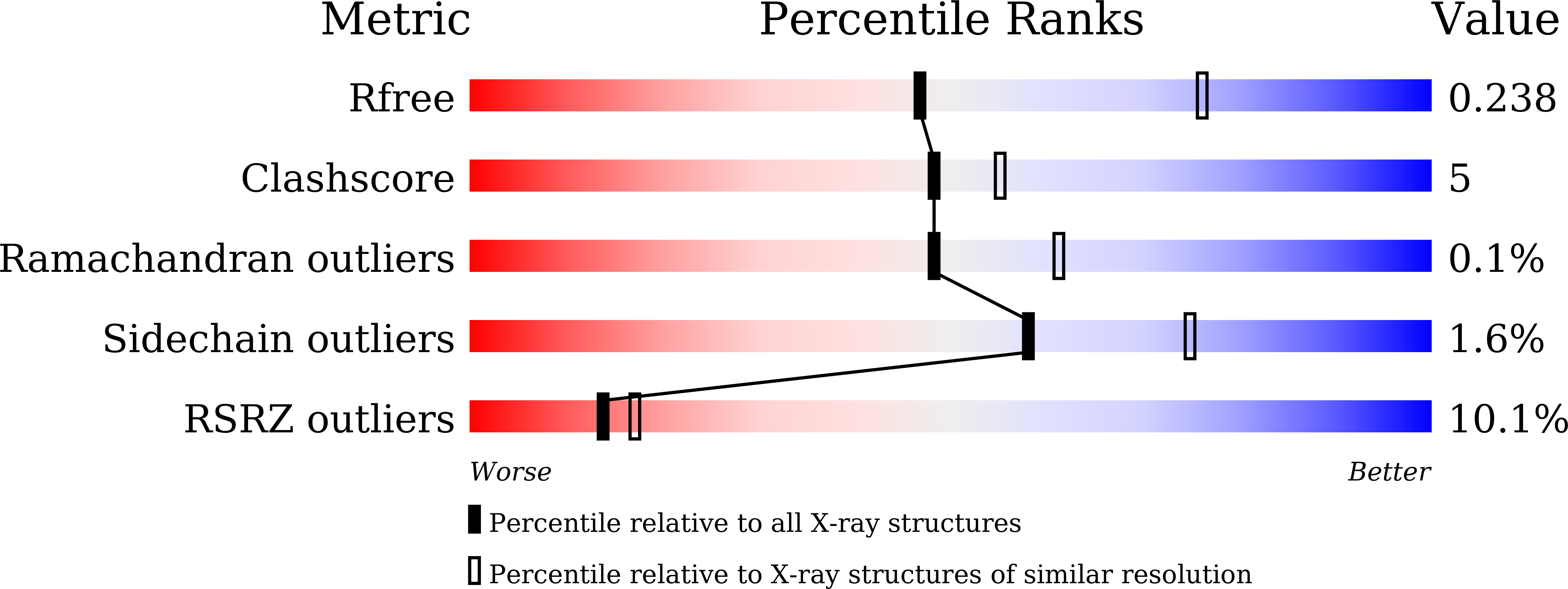
R-Value Free:
0.23
R-Value Work:
0.20
R-Value Observed:
0.21
Space Group:
P 21 21 21
Macromolecular Entities
Structures with similar UniProt ID
Protein Blast
Polymer Type:polypeptide(L)
Molecule:Tubulin alpha-1B chain
Gene (Uniprot):TUBA1B
Chain IDs:A, C
Chain Length:451
Number of Molecules:2
Biological Source:Sus scrofa
Structures with similar UniProt ID
Protein Blast
Polymer Type:polypeptide(L)
Molecule:Tubulin beta chain
Chain IDs:B, D
Chain Length:431
Number of Molecules:2
Biological Source:Sus scrofa
Structures with similar UniProt ID
Protein Blast
Polymer Type:polypeptide(L)
Molecule:Stathmin-4
Gene (Uniprot):Stmn4
Chain IDs:E
Chain Length:189
Number of Molecules:1
Biological Source:Rattus norvegicus
Structures with similar UniProt ID
Protein Blast
Polymer Type:polypeptide(L)
Molecule:Tubulin--tyrosine ligase
Gene (Uniprot):TTL
Chain IDs:F
Chain Length:384
Number of Molecules:1
Biological Source:Gallus gallus
Primary Citation
Structure-based design and synthesis of KX-01 analogs as potent antitumor agents targeting the tubulin colchicine binding site.
Eur.J.Med.Chem. 312 118849 118849 (2026)
PMID: 42001543 DOI: 10.1016/j.ejmech.2026.118849

Abstact

Our preliminary studies indicated that KX-01 inhibits tubulin polymerization in a reversible and concentration-dependent manner, resulting in dramatically low toxicity across various solid and liquid tumor types. However, KX-01 has not yet been approved as an anticancer agent due to its insufficient efficacy, and research on its derivatives remains limited. To improve its antitumor activity and investigate the structure-activity relationships (SARs), sixty-seven KX-01 analogs were designed and synthesized based on the KX-01-tubulin cocrystal structure. Among them, compound 8h exhibited the most potent antiproliferative activity, with IC(50) values of 3.5 +/- 0.6, 2.4 +/- 0.2, 15.7 +/- 3.1, 22.1 +/- 1.9, and 7.3 +/- 1.1 nM against HCT116, HeLa, A2780S, A2780T, and HT29 cells, respectively, indicating its potential to overcome multidrug resistance. Replacing the endocyclic nitrogen atom in the pyridine ring of KX-01 with an exocyclic fluorine atom directly results in the loss of Src inhibitory activity. The cocrystal of 8h-tubulin complex revealed that it simultaneously occupies the colchicine site in beta-tubulin and a cavity in alpha-tubulin. In the HT29 xenograft model, orally administered 8h (5 mg/kg, once daily) showed marginally superior in vivo antitumor efficacy than KX-01.

Legend

Protein

Chemical

Disease

Primary Citation of related structures
Feedback Form
Name
Email
Institute
Feedback