

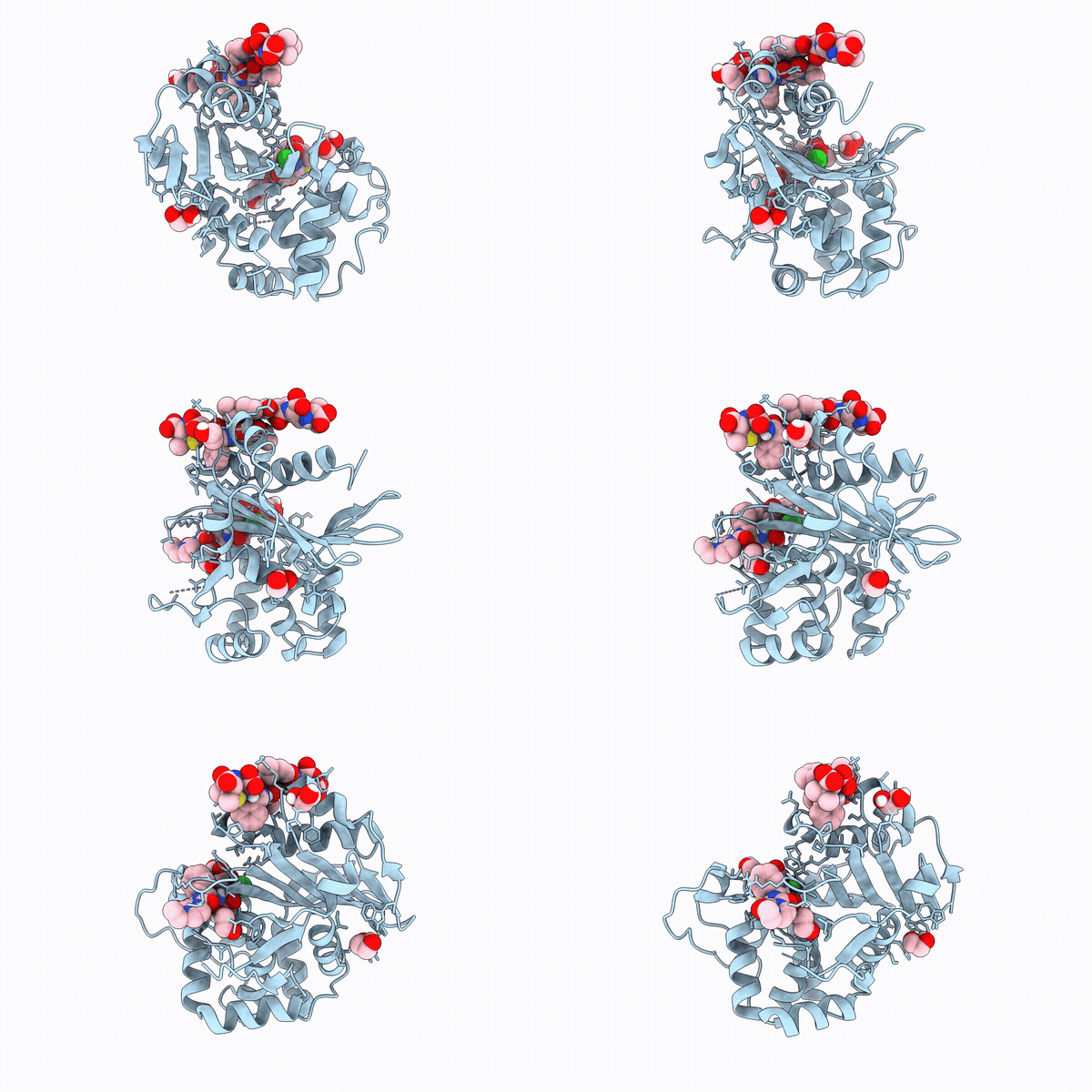
9TAZ image
Deposition Date 2025-11-19
Release Date 2026-09-16
Last Version Date 2026-09-16
Entry Detail
PDB ID:
9TAZ
Keywords:
Title:
OXA-48: Q5 mutant in an acyl enzyme complex with piperacillin
Biological Source:
Source Organism(s):
Expression System(s):
Method Details:
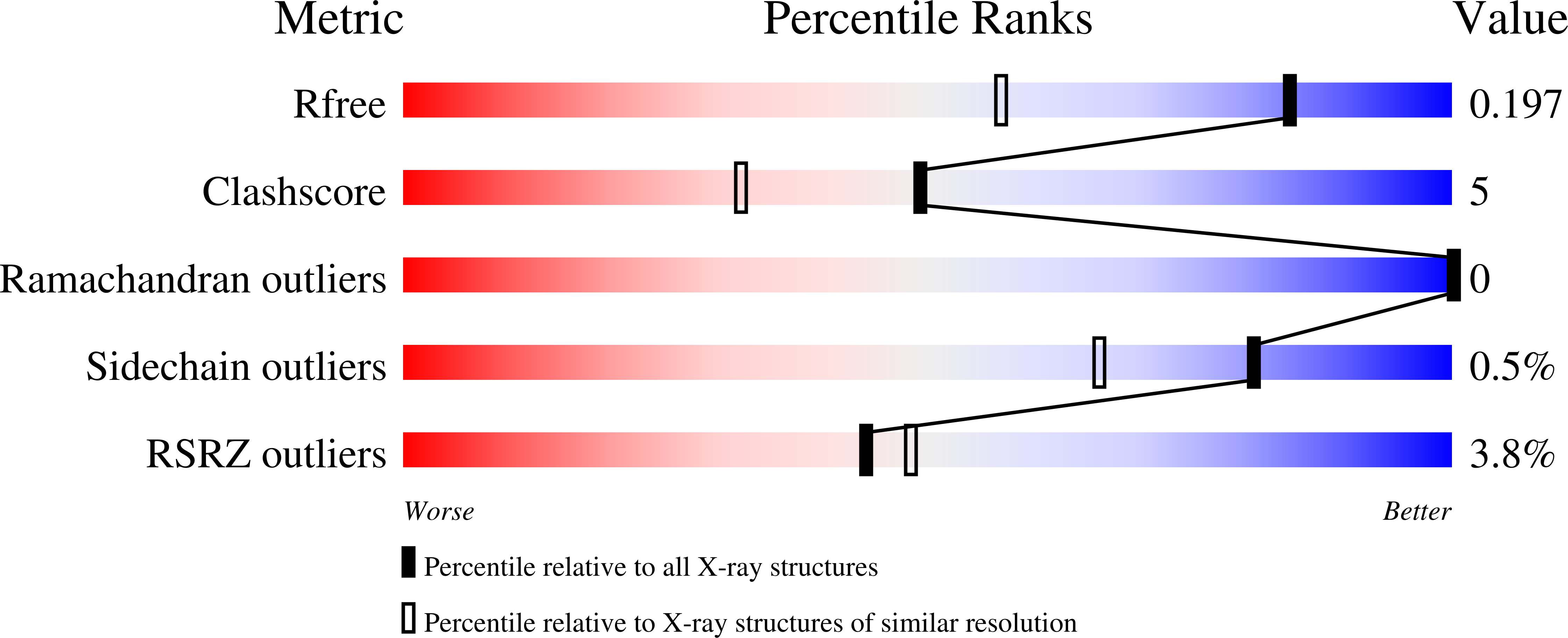
Experimental Method:
Resolution:
1.50 Å
R-Value Free:
0.19
R-Value Work:
0.16
R-Value Observed:
0.16
Space Group:
C 1 2 1
Macromolecular Entities
Polymer Type:polypeptide(L)
Molecule:Beta-lactamase
Gene (Uniprot):blaOXA-162
Mutagens:A33V, K51E, F72L, S212A, T213A
Chain IDs:A
Chain Length:244
Number of Molecules:1
Biological Source:Klebsiella pneumoniae
Primary Citation
Mechanistic Origins and Evolutionary Erosion of Collateral Sensitivity in a beta-lactamase.
J.Mol.Biol. 438 169893 169893 (2026)
PMID: 42250626 DOI: 10.1016/j.jmb.2026.169893

Abstact

As antibiotic discovery stalls, exploiting collateral sensitivity, where resistance to one drug increases sensitivity to another, offers a promising route to extend the lifespan of existing drugs. However, the molecular origins and robustness of such trade-offs at the level of single resistance determinants remain poorly understood. Here, we examined a previously evolved trajectory of the beta-lactamase OXA-48 to Q4 (A33V/F72L/T212A/S213A) in Escherichia coli. Compared to OXA-48, Q4 conferred 40-fold increase in ceftazidime resistance, but a 27-fold lower piperacillin resistance. This trade-off was caused by the introduction of F72L. We challenged the stability of this collateral sensitivity network by subjecting Q4 to directed evolution followed by co-selection from both ceftazidime and piperacillin. The emerging substitution V120G alleviated the piperacillin trade-off while maintaining elevated resistance to ceftazidime in genetic backgrounds harboring F72L. Structural and computational analyses revealed that evolution introduced substantial conformational changes in the Omega-loop, likely leading to less productive piperacillin binding poses. V120G counteracted the effect of F72L by decreasing the Omega-loop's conformational freedom, thereby partially restoring piperacillin resistance. Finally, we show that other substitutions at position 120 can exert similar mitigating effects. Taken together, our results provide a mechanistic understanding of how adaptive solutions both generate and erode collateral sensitivity, knowledge crucial for predicting the long-term stability of these networks.

Legend

Protein

Chemical

Disease

Primary Citation of related structures
Feedback Form
Name
Email
Institute
Feedback