

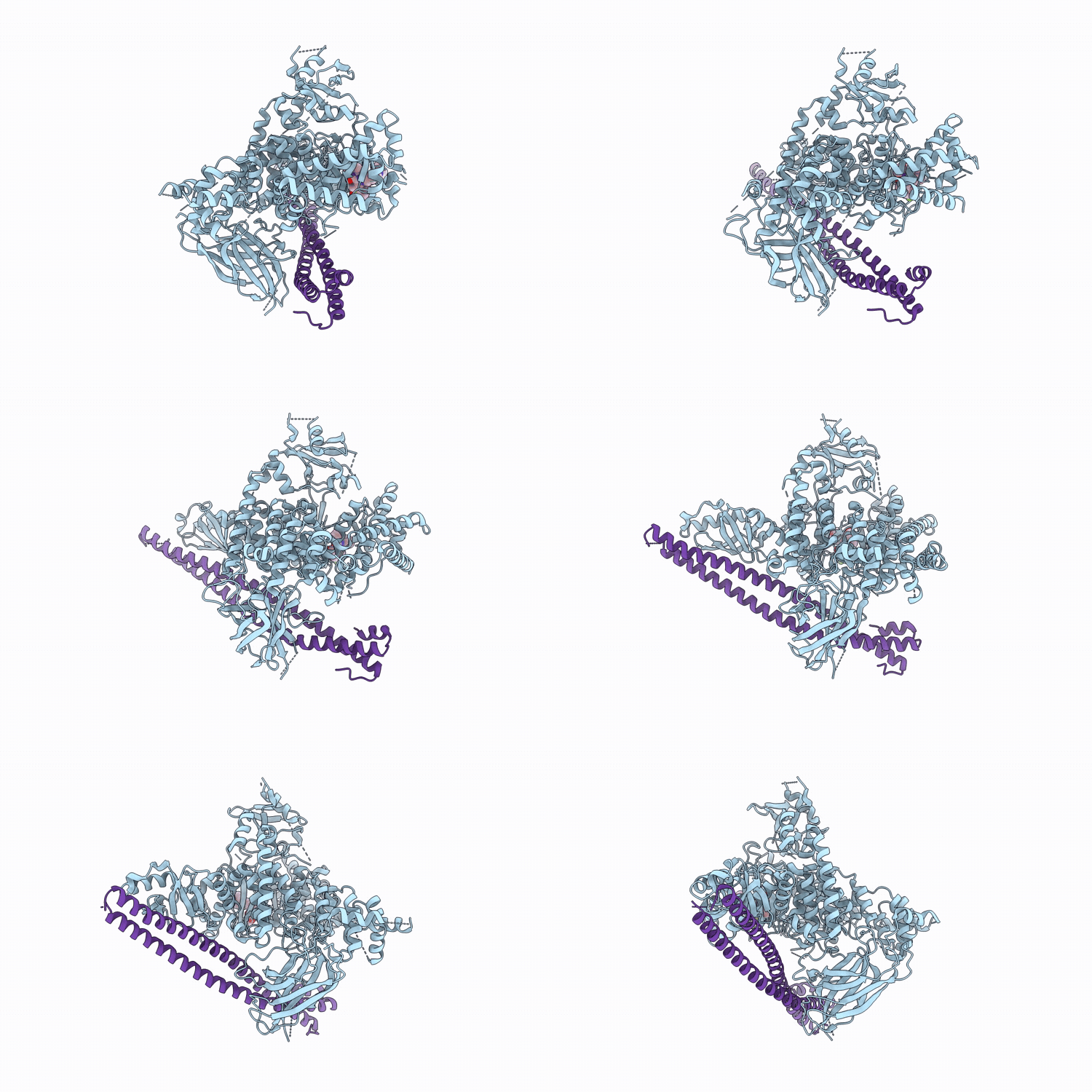
9T1P image
Deposition Date 2025-10-21
Release Date 2026-07-08
Last Version Date 2026-10-28
Entry Detail
PDB ID:
9T1P
Keywords:
Title:
Human PI3Kdelta in complex with IOA-288
Biological Source:
Source Organism(s):
Homo sapiens (Taxon ID: 9606)
Bos taurus (Taxon ID: 9913)
Expression System(s):
Method Details:
Experimental Method:
Resolution:
2.97 Å
R-Value Free:
0.27
R-Value Work:
0.21
R-Value Observed:
0.22
Space Group:
P 21 21 21
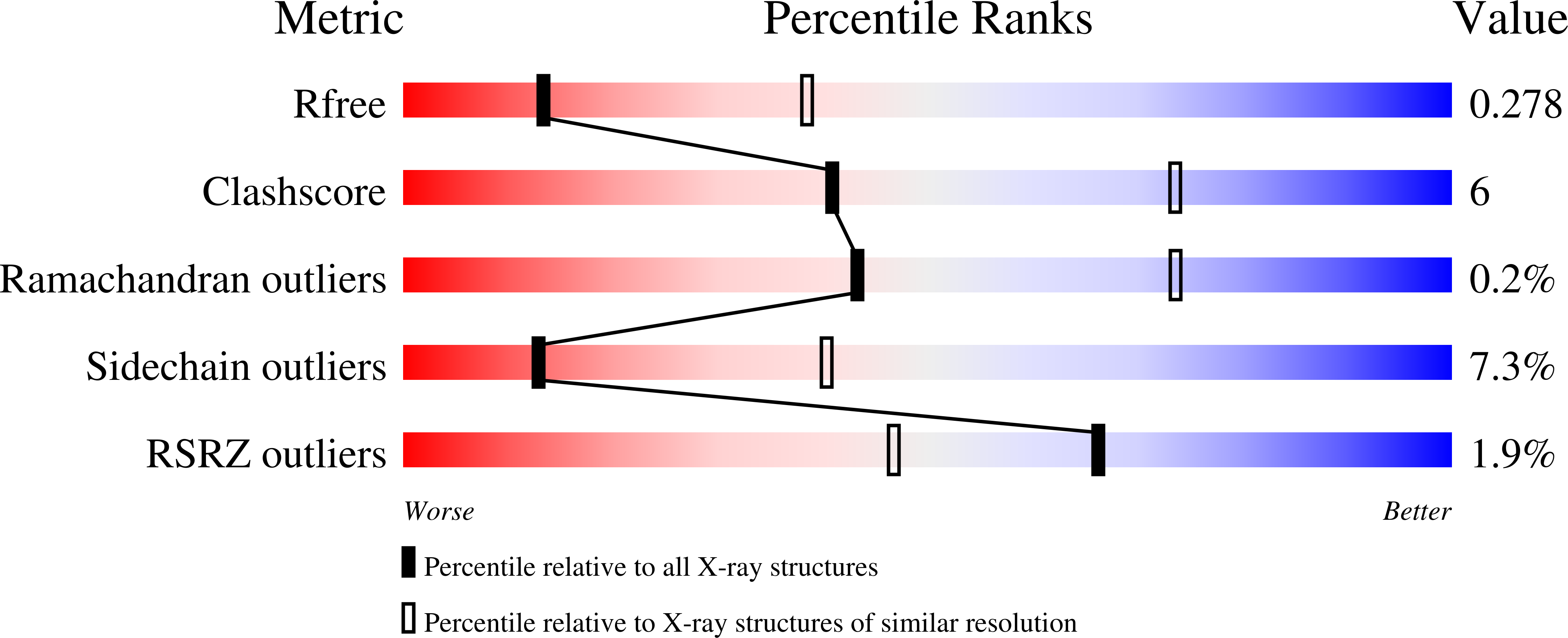
Macromolecular Entities
Polymer Type:polypeptide(L)
Molecule:Phosphatidylinositol 4,5-bisp
Gene (Uniprot):PIK3CD
Chain IDs:A
Chain Length:1044
Number of Molecules:1
Biological Source:Homo sapiens
Polymer Type:polypeptide(L)
Molecule:Phosphatidylinositol 3-kinase
Gene (Uniprot):PIK3R1
Chain IDs:B
Chain Length:169
Number of Molecules:1
Biological Source:Bos taurus
Ligand Molecules
Primary Citation
PI3K delta is selectively inhibited by roginolisib by stabilizing the C-terminal helix k alpha 12.
Nat Commun 17 ? ? (2026)
PMID: 42855469 DOI: 10.1038/s41467-026-77424-0

Abstact

Phosphoinositide 3-kinases (PI3Ks) are major regulators of cell growth, proliferation and signalling, constituting key therapeutic targets in cancer, inflammation, and other diseases. Individual class I PI3K isoforms control key cellular functions, imposing the need to generate isoform-specific inhibition for therapeutic intervention. Roginolisib is a selective PI3Kdelta inhibitor that shows promise for the treatment of cancer. Using a combination of X-ray crystallography, molecular dynamics simulations, and hydrogen-deuterium exchange mass spectrometry, we describe the mechanism driving roginolisib's potent and isoform-selective inhibition of PI3Kdelta. Roginolisib uniquely stabilises the catalytic C-terminal helix kalpha12, locking the enzyme in an inactive conformation. This binding mode also results in more sustained inhibition of phosphatidylinositol 3,4,5-trisphosphate formation in tumour samples of CLL patients. Inhibition of PI3Ks by stabilization of helix kalpha12 into an inactive conformation has not, to the best of our knowledge, been described before and may provide the basis for novel, more selective and effective pharmacological strategies.

Legend

Protein

Chemical

Disease

Primary Citation of related structures
Feedback Form
Name
Email
Institute
Feedback