

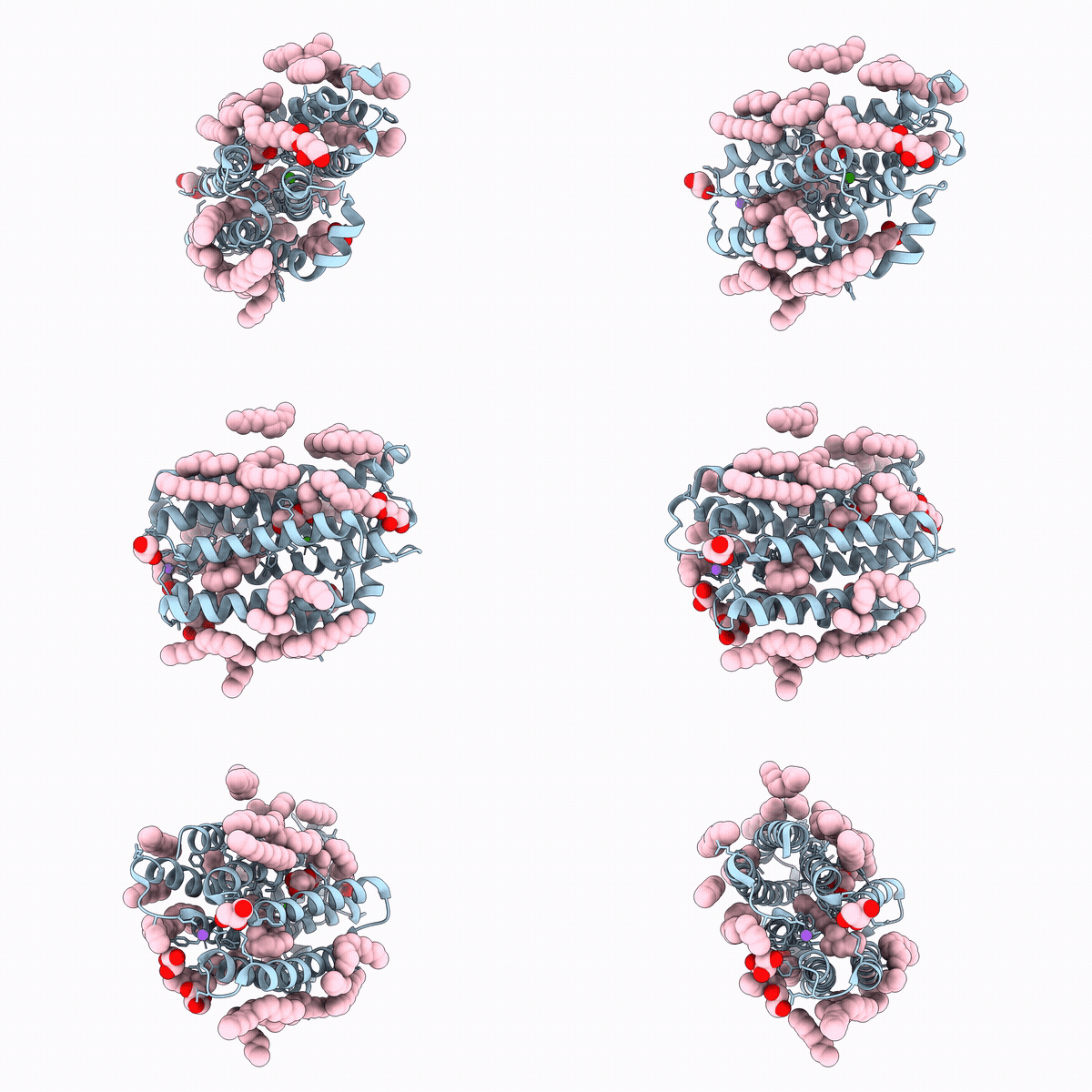
9SOF image
Deposition Date 2025-09-12
Release Date 2026-09-23
Last Version Date 2026-09-30
Entry Detail
PDB ID:
9SOF
Title:
Atomic resolution structure of viral channelrhodopsin OLPVR1 in a complex with calcium ion bound inside the channel
Biological Source:
Source Organism(s):
Expression System(s):
Method Details:
Experimental Method:
Resolution:
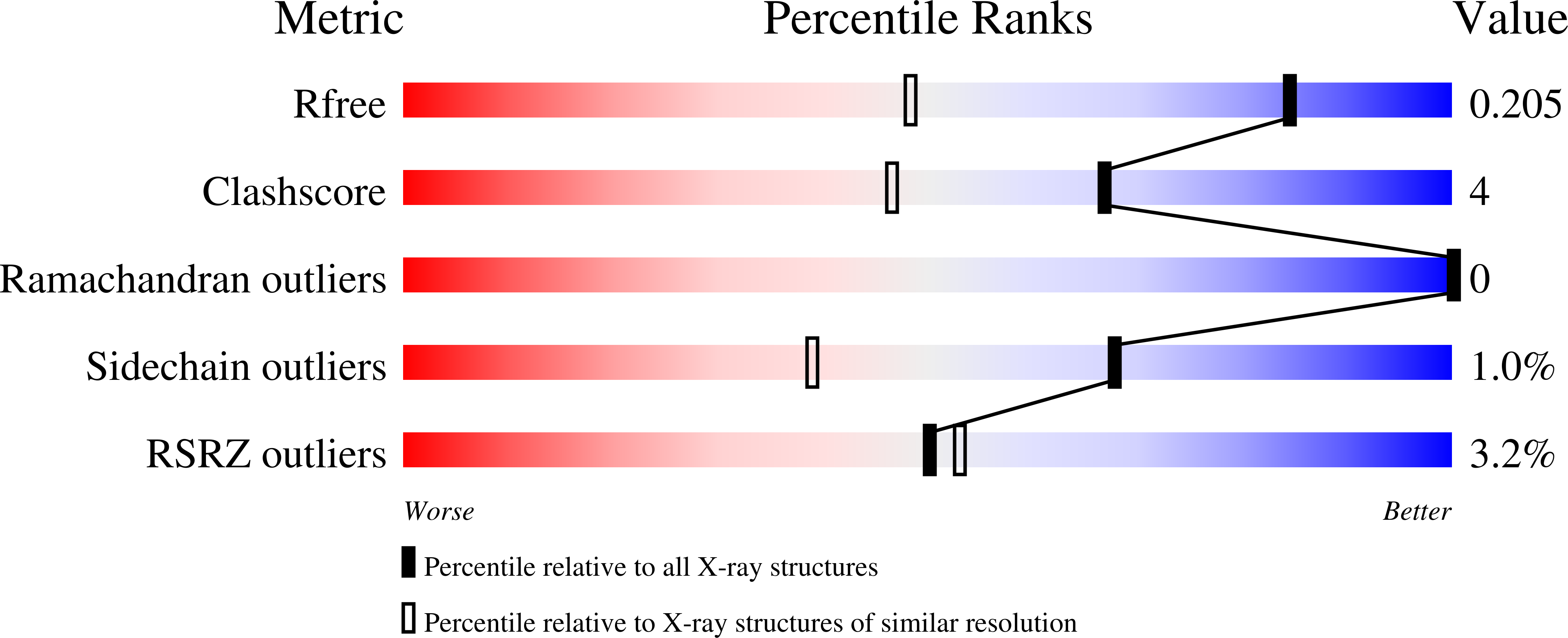
1.41 Å
R-Value Free:
0.20
R-Value Work:
0.17
R-Value Observed:
0.17
Space Group:
P 21 21 2
Macromolecular Entities
Polymer Type:polypeptide(L)
Molecule:rhodopsin
Gene (Uniprot):162281038
Chain IDs:A
Chain Length:231
Number of Molecules:1
Biological Source:Organic Lake phycodnavirus
Modified Residue
Compound ID Chain ID Parent Comp ID Details 2D Image
FME A MET modified residue
Primary Citation
Molecular mechanism of calcium inhibition in viral channelrhodopsins.
Nat Commun 17 ? ? (2026)
PMID: 42749743 DOI: 10.1038/s41467-026-77716-5

Abstact

Viral channelrhodopsins (VCR1s) are giant-virus-encoded light-gated channels permeable to monovalent and divalent cations, including Na(+) and Ca(2+) ions, and inhibited by millimolar Ca(2+) concentrations. Here, we combine X-ray crystallography, time-resolved UV-vis spectroscopy, and ATR-FTIR spectroscopy to investigate molecular mechanisms of ion permeation and Ca(2+)-dependent inhibition in OLPVR1. An atomic resolution structure of OLPVR1 obtained in the presence of 10 mM CaCl(2) and 900 mM NaCl reveals a transient intracellular Ca(2+) binding site near T87 and T88, close to the retinal cofactor. Upon photoactivation, this Ca(2+) ion prevents a key rearrangement of the intracellular gate required for ion translocation, namely the flip of E44, thereby disrupting ion conduction. Instead, illumination leads to the accumulation of Na(+) ions between E44, S208 and the carbonyl oxygen of retinal-binding residue K204. Our findings reveal the molecular basis of Ca(2+)-dependent inhibition in VCR1s and provide a foundation for engineering enhanced tools for calcium optogenetics.

Legend

Protein

Chemical

Disease

Primary Citation of related structures
Feedback Form
Name
Email
Institute
Feedback