

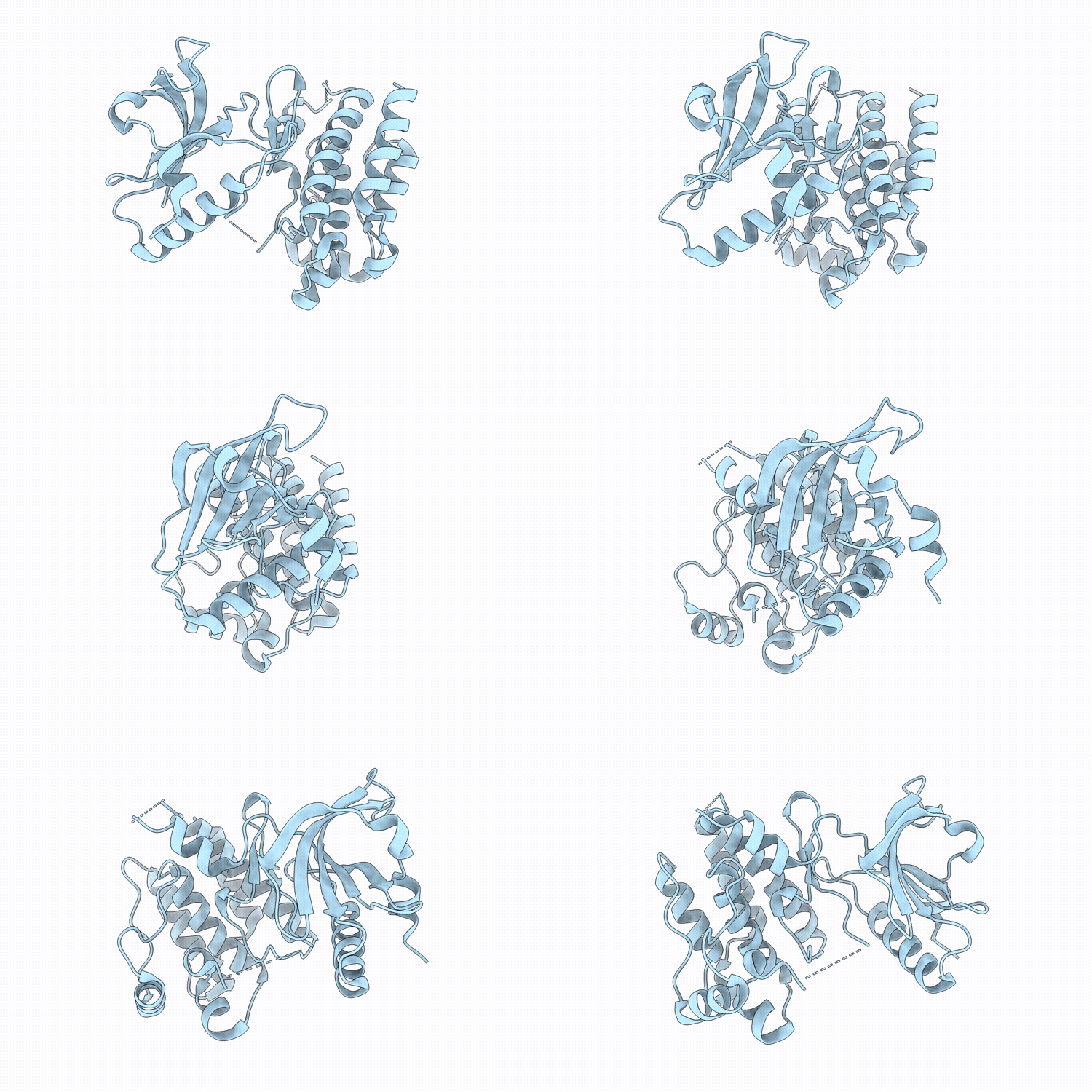
9SNU image
Deposition Date 2025-09-11
Release Date 2026-07-15
Last Version Date 2026-07-15
Entry Detail
PDB ID:
9SNU
Keywords:
Title:
TKD of human Muscle Specific Kinase (MuSK) S752D mutant
Biological Source:
Source Organism(s):
Homo sapiens (Taxon ID: 9606)
Expression System(s):
Method Details:
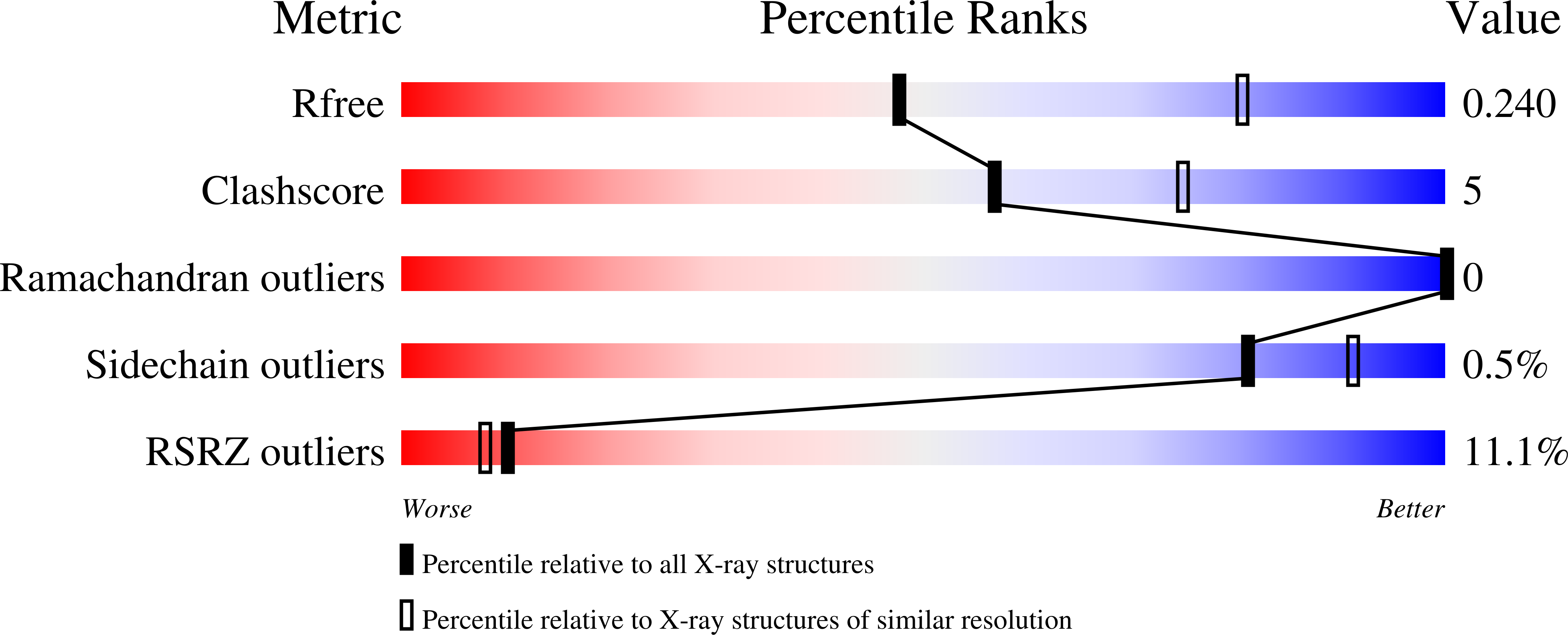
Experimental Method:
Resolution:
2.62 Å
R-Value Free:
0.24
R-Value Work:
0.21
R-Value Observed:
0.21
Space Group:
I 4
Macromolecular Entities
Polymer Type:polypeptide(L)
Molecule:Muscle, skeletal receptor tyr
Mutagens:S752D
Chain IDs:A
Chain Length:351
Number of Molecules:1
Biological Source:Homo sapiens
Primary Citation
An S752D activation loop mutation dynamically primes Muscle-Specific Kinase for activation.
Biochem.J. 483 1221 1235 (2026)
PMID: 42240394 DOI: 10.1042/BCJ20260159

Abstact

Muscle-Specific Kinase (MuSK) is a receptor tyrosine kinase essential for neuromuscular junction (NMJ) formation and maintenance, yet its regulation remains poorly understood. Crystallographic studies of wild-type MuSK revealed an autoinhibited conformation with tyrosines in the activation loop (A-loop) anchored within the catalytic cleft to stabilize the closed, inactive conformation. We showed previously that additional phosphorylation of an A-loop serine may 'prime' MuSK for activation to sensitize it to ligand(s) in certain settings. Here, we employed crystallography, biochemical assays, and hydrogen-deuterium exchange and mass spectrometry (HDX-MS) to test this hypothesis. We found that introducing a phosphomimetic S752D mutation disrupts autoinhibitory A-loop interactions to increase ATP-binding affinity and catalytic turnover. Using HDX-MS, we further observed that the S752D mutation increases A-loop structural flexibility to relieve autoinhibition. The S752D mutation also stabilizes the juxtamembrane NPXY motif region, a docking site for the adaptor Dok7, possibly priming MuSK for downstream signaling. Together, these findings reveal dynamic transitions that underlie relief of MuSK autoinhibition and provide a mechanistic framework for understanding MuSK activation at the NMJ.

Legend

Protein

Chemical

Disease

Primary Citation of related structures
Feedback Form
Name
Email
Institute
Feedback