

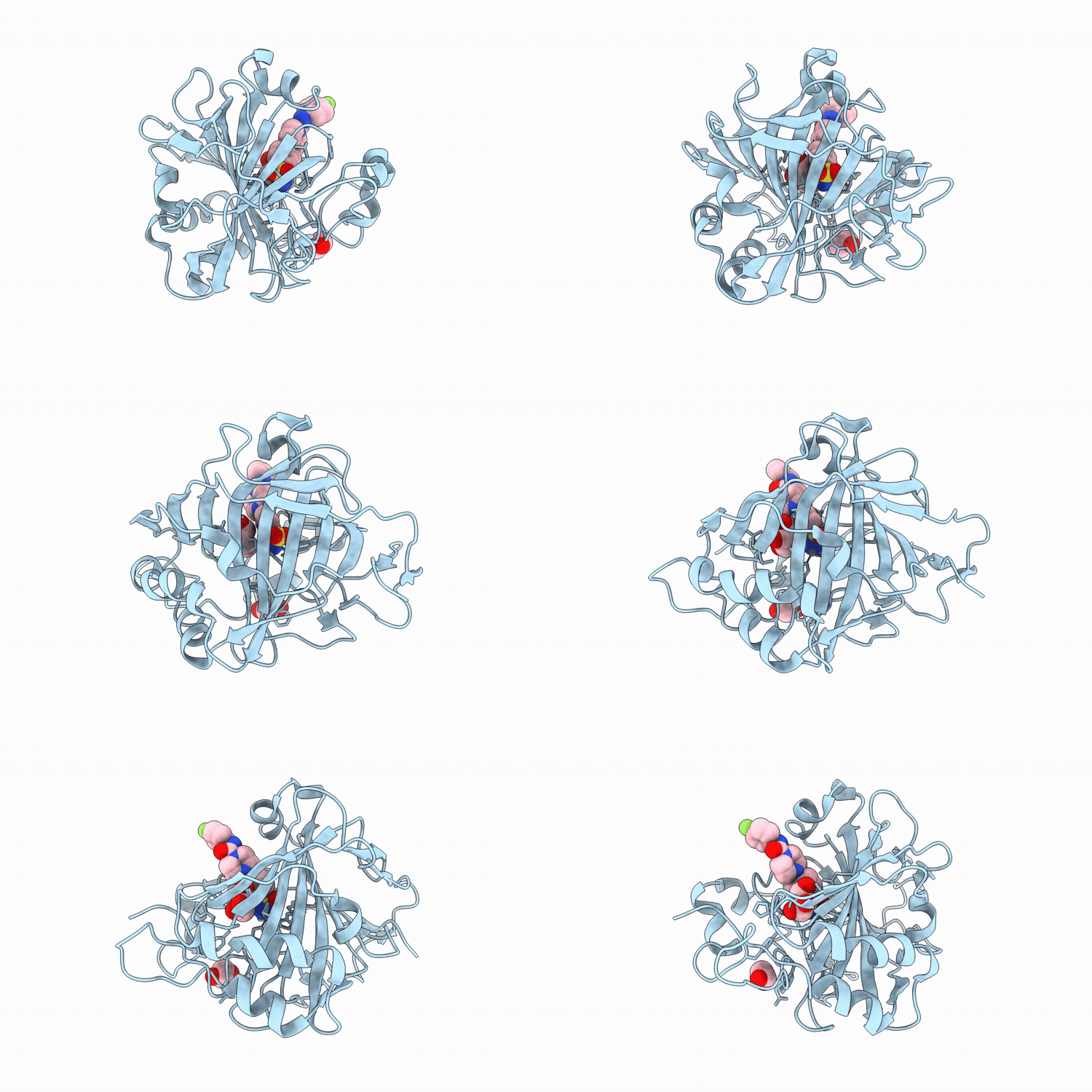
9SNC image
Deposition Date 2025-09-10
Release Date 2026-07-22
Last Version Date 2026-07-22
Entry Detail
PDB ID:
9SNC
Keywords:
Title:
human carbonic anhydrase II in complex with N-(4-fluorophenyl)-4-(4-sulfamoylphenyl)piperazine-1-carboxamide
Biological Source:
Source Organism(s):
Homo sapiens (Taxon ID: 9606)
Expression System(s):
Method Details:
Experimental Method:
Resolution:
1.40 Å
R-Value Free:
0.17
R-Value Work:
0.13
Space Group:
P 1 21 1
Macromolecular Entities
Polymer Type:polypeptide(L)
Molecule:Carbonic anhydrase 2
Gene (Uniprot):CA2
Chain IDs:A (auth: AAA)
Chain Length:260
Number of Molecules:1
Biological Source:Homo sapiens
Primary Citation
Targeting Human Carbonic Anhydrases with Novel Piperazine and Homopiperazine Benzenesulfonamides to Alleviate Paclitaxel-Induced Peripheral Neuropathy.
J.Med.Chem. 68 25485 25504 (2025)
PMID: 41307493 DOI: 10.1021/acs.jmedchem.5c02626

Abstact

In this study, we developed novel carbonic anhydrase (CA) inhibitors potentially useful in managing paclitaxel-induced peripheral neuropathy. A total of 64 new compounds were synthesized and evaluated for in vitro inhibitory activity against hCAs showing interesting inhibition activity against hCA II, hCA VA, and hCA VII, the main isoforms implicated in this pathology. X-ray crystallographic analysis of compounds 9a, 11a, 13a, and 24a on hCA II revealed, for the first time, distinct orientations of piperazine and homopiperazine rings within the active site. In vivo testing of the most promising derivatives (9a, 11a, 13a, and 20a) demonstrated significant pain relieving effects in a mouse model of paclitaxel-induced peripheral neuropathy, with potent and sustained activity lasting up to 90 min postadministration. Notably, compound 13a produced antihypersensitivity effects at a dose 33-fold lower than reference drugs such as acetazolamide and gabapentin.

Legend

Protein

Chemical

Disease

Primary Citation of related structures
Feedback Form
Name
Email
Institute
Feedback