

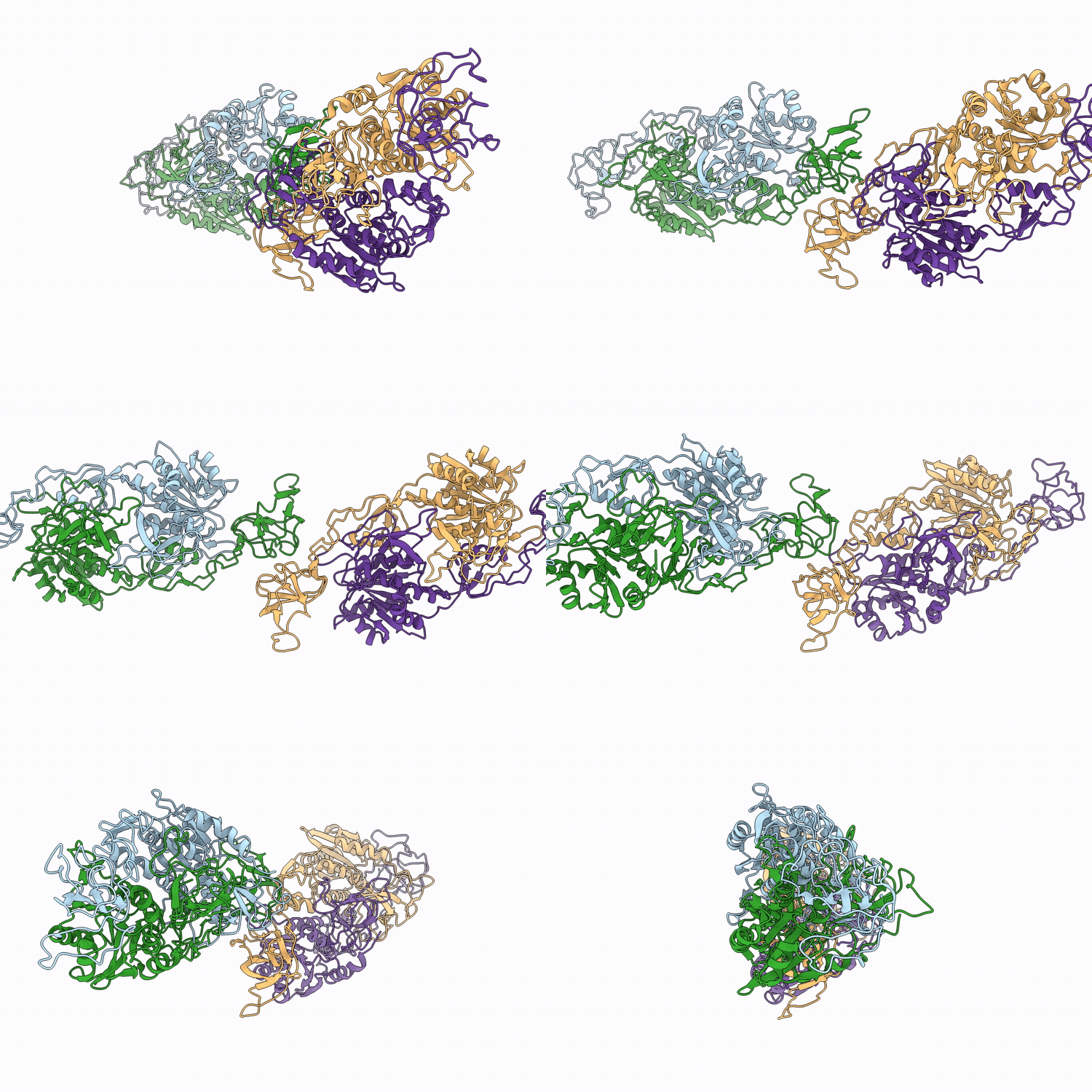
9S3T image
Deposition Date 2025-07-25
Release Date 2026-06-24
Last Version Date 2026-06-24
Entry Detail
PDB ID:
9S3T
Title:
Gephyrin dimer of dimers - combined CryoEM map
Biological Source:
Source Organism(s):
Expression System(s):
Method Details:
Experimental Method:
Resolution:
3.48 Å
Aggregation State:
PARTICLE
Reconstruction Method:
SINGLE PARTICLE
Macromolecular Entities
Structures with similar UniProt ID
Protein Blast
Polymer Type:polypeptide(L)
Molecule:Isoform 5 of Gephyrin
Gene (Uniprot):Gphn
Chain IDs:A, B, C, D
Chain Length:754
Number of Molecules:4
Biological Source:Rattus norvegicus
Ligand Molecules
Primary Citation
Cryo-EM structures of higher order Gephyrin oligomers reveal principles of inhibitory postsynaptic scaffold organization.
Nat Commun 17 ? ? (2026)
PMID: 41991925 DOI: 10.1038/s41467-026-71771-8

Abstact

Gephyrin, the principal scaffolding protein of inhibitory postsynaptic densities, clusters glycine and GABA(A) receptors via multivalent interactions. It features structured N and C terminal domains connected by an intrinsically disordered linker. Although the structural and functional properties of its terminal domains are well characterized, the mechanism by which full-length gephyrin organizes into higher-order complexes remains unresolved. Here, we combine biochemical reconstitution, cryo-electron microscopy, and mutational analyses to elucidate the structural logic of gephyrin oligomerization. We demonstrate that gephyrin adopts a stable dimeric assembly which constitutes the basic unit for both linear and oblique tetramers as well as linear hexameric arrangements. High resolution structures reveal a critical segment of the flexible linker that adopts two distinct conformations, one of which occludes the receptor-binding site. This segment harbors key phosphorylation sites, suggesting a regulatory control mechanism. Our findings redefine the architecture of inhibitory postsynaptic sites and reconcile gephyrin oligomerization models with published in-situ postsynaptic densities characterized by cryo-electron tomography.

Legend

Protein

Chemical

Disease

Primary Citation of related structures
Feedback Form
Name
Email
Institute
Feedback