

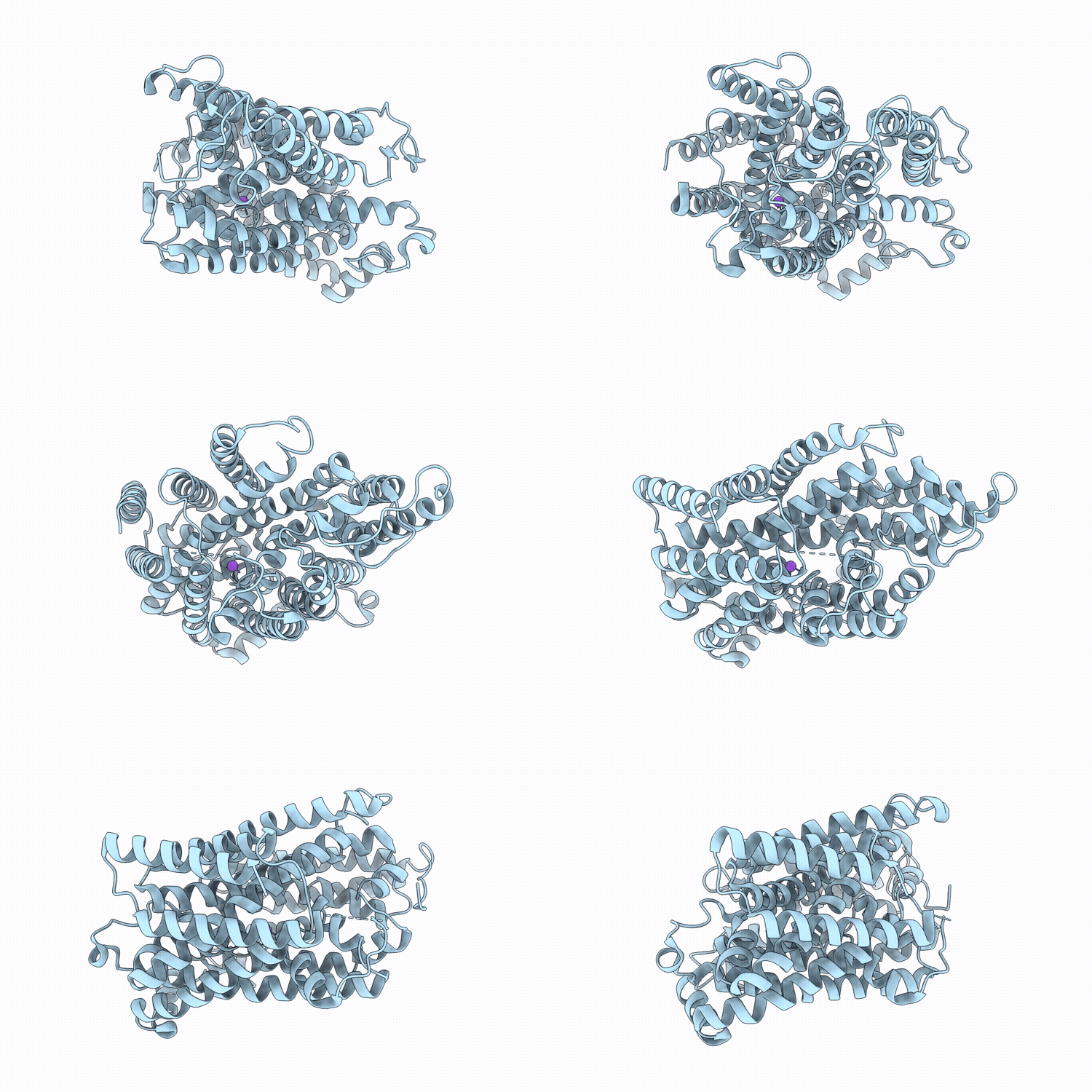
9RWT image
Deposition Date 2025-07-10
Release Date 2026-04-29
Last Version Date 2026-06-10
Entry Detail
PDB ID:
9RWT
Title:
high-affinity choline transporter in DDM with Na+
Biological Source:
Source Organism(s):
Expression System(s):
Method Details:
Experimental Method:
Resolution:
2.83 Å
Aggregation State:
PARTICLE
Reconstruction Method:
SINGLE PARTICLE
Macromolecular Entities
Structures with similar UniProt ID
Protein Blast
Polymer Type:polypeptide(L)
Molecule:Solute carrier family 5 (High
Gene (Uniprot):SAMN05421687_10333
Chain IDs:A
Chain Length:551
Number of Molecules:1
Biological Source:Salimicrobium flavidum
Ligand Molecules
Primary Citation
Structural insights into a conserved mechanism of choline translocation through CHT.
Sci Adv 12 eaec1241 eaec1241 (2026)
PMID: 42213839 DOI: 10.1126/sciadv.aec1241

Abstact

Choline is an essential nutrient critical for cellular homeostasis across all domains of life. In humans, choline uptake in cholinergic neurons for its recycling into acetylcholine is mediated by the high-affinity Na(+)-dependent transporter SLC5A7 (CHT1). Prokaryotes also depend on choline as an osmo-protectant and as metabolite, raising the possibility that bacteria also have choline transporters akin to CHT1. Here, we identify and characterize a bacterial Na(+)-dependent choline transporter (sfCHT) with high sequence identity to CHT1. Cryo-EM structures of Na(+)- and choline-bound sfCHT reveal a LeuT-fold architecture with Na(+) coordination geometry similar to CHT1. Captured in an inward-facing conformation, in sfCHT choline is found at a site near the cytoplasmic side. Computational analysis and transport assays of sfCHT and CHT1 variants reveal local conformational rearrangements in conserved residues along a defined pathway to the cytosolic site. These findings provide structural and mechanistic insights into intracellular choline transition, suggesting an evolutionarily conserved mechanism between the bacterial and human choline transporters.

Legend

Protein

Chemical

Disease

Primary Citation of related structures
Feedback Form
Name
Email
Institute
Feedback