

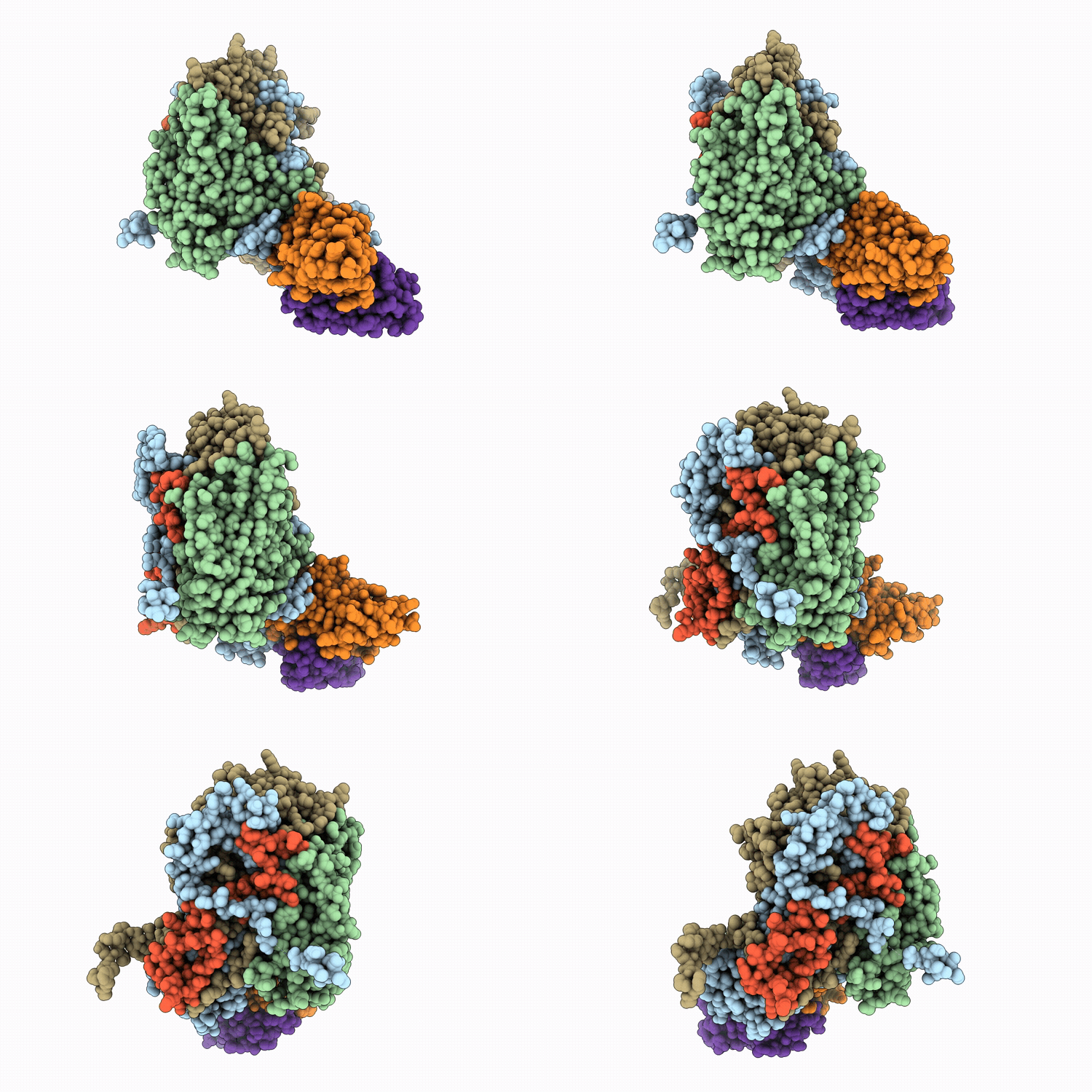
9RIH image
Deposition Date 2025-06-11
Release Date 2026-04-29
Last Version Date 2026-06-17
Entry Detail
PDB ID:
9RIH
Keywords:
Title:
EV-A71 (genotype B2) in complex with 16-2-12D Fab
Biological Source:
Source Organism(s):
Expression System(s):
Method Details:
Experimental Method:
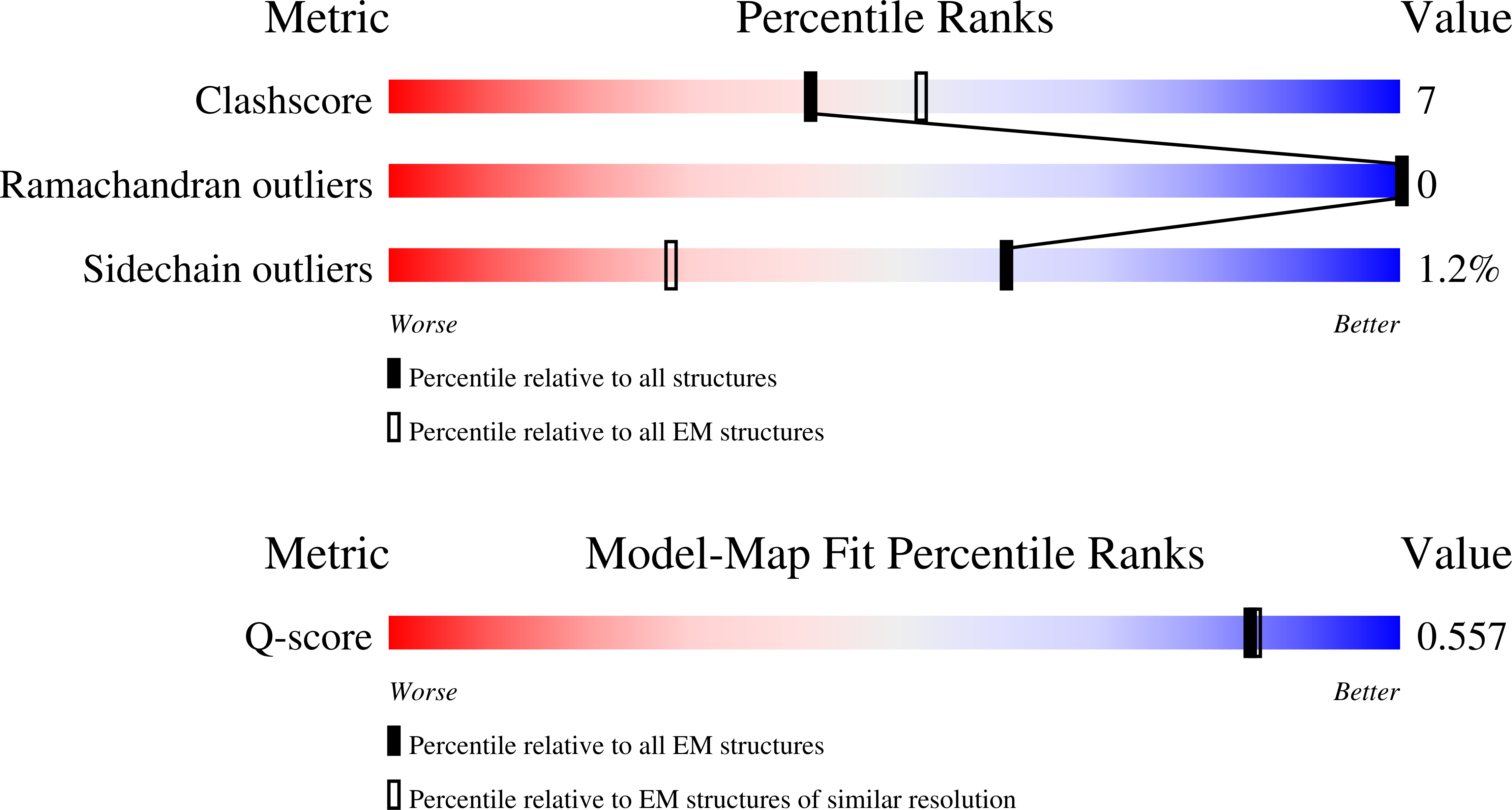
Resolution:
3.10 Å
Aggregation State:
PARTICLE
Reconstruction Method:
SINGLE PARTICLE
Macromolecular Entities
Structures with similar UniProt ID
Protein Blast
Polymer Type:polypeptide(L)
Molecule:Genome polyprotein
Chain IDs:A
Chain Length:297
Number of Molecules:1
Biological Source:Chlorocebus aethiops
Structures with similar UniProt ID
Protein Blast
Polymer Type:polypeptide(L)
Molecule:Genome polyprotein
Chain IDs:B
Chain Length:245
Number of Molecules:1
Biological Source:Chlorocebus aethiops
Structures with similar UniProt ID
Protein Blast
Polymer Type:polypeptide(L)
Molecule:Genome polyprotein
Chain IDs:C
Chain Length:242
Number of Molecules:1
Biological Source:Chlorocebus aethiops
Structures with similar UniProt ID
Protein Blast
Polymer Type:polypeptide(L)
Molecule:Capsid protein
Gene (Uniprot):VP4
Chain IDs:D
Chain Length:69
Number of Molecules:1
Biological Source:Chlorocebus aethiops
Protein Blast
Polymer Type:polypeptide(L)
Molecule:16-2-12D heavy chain
Chain IDs:F (auth: H)
Chain Length:245
Number of Molecules:1
Biological Source:Homo sapiens
Structures with similar UniProt ID
Protein Blast
Polymer Type:polypeptide(L)
Molecule:IgG L chain
Chain IDs:E (auth: L)
Chain Length:216
Number of Molecules:1
Biological Source:Homo sapiens
Ligand Molecules
Primary Citation
Structural and functional mapping of protective human monoclonal antibodies against enterovirus A71.
Sci Adv 12 eaee8217 eaee8217 (2026)
PMID: 42247493 DOI: 10.1126/sciadv.aee8217

Abstact

EV-A71 has been responsible for recent severe HFMD outbreaks. We report structures for 12 potently neutralizing human anti-EV-A71 monoclonal antibody Fabs, alone and complexed with virus. Most recognize the native antigenic state with epitopes that span interfaces, together covering 85% of the capsid surface. The majority (8 of 12) bind the canyon, while the others cluster around the icosahedral two- and threefold axes. Blocking SCARB2 receptor binding likely contributes to neutralization for all, and a subset induces empty particles. A predominant gene family (IGHV4-39) does not dictate a common binding pose. Long CDR-H3 loops are frequently key to binding, especially at the canyon, suggesting that antigenicity data based on antibodies with shorter CDR3s (e.g., murine) may be misleading. This dataset reveals neutralization mechanisms for recently circulating EV-A71 genotypes, which will inform immunotherapies. We demonstrate synergy in vitro between canyon binding and both two- and threefold binding antibodies to increase neutralization potency.

Legend

Protein

Chemical

Disease

Primary Citation of related structures
Feedback Form
Name
Email
Institute
Feedback