

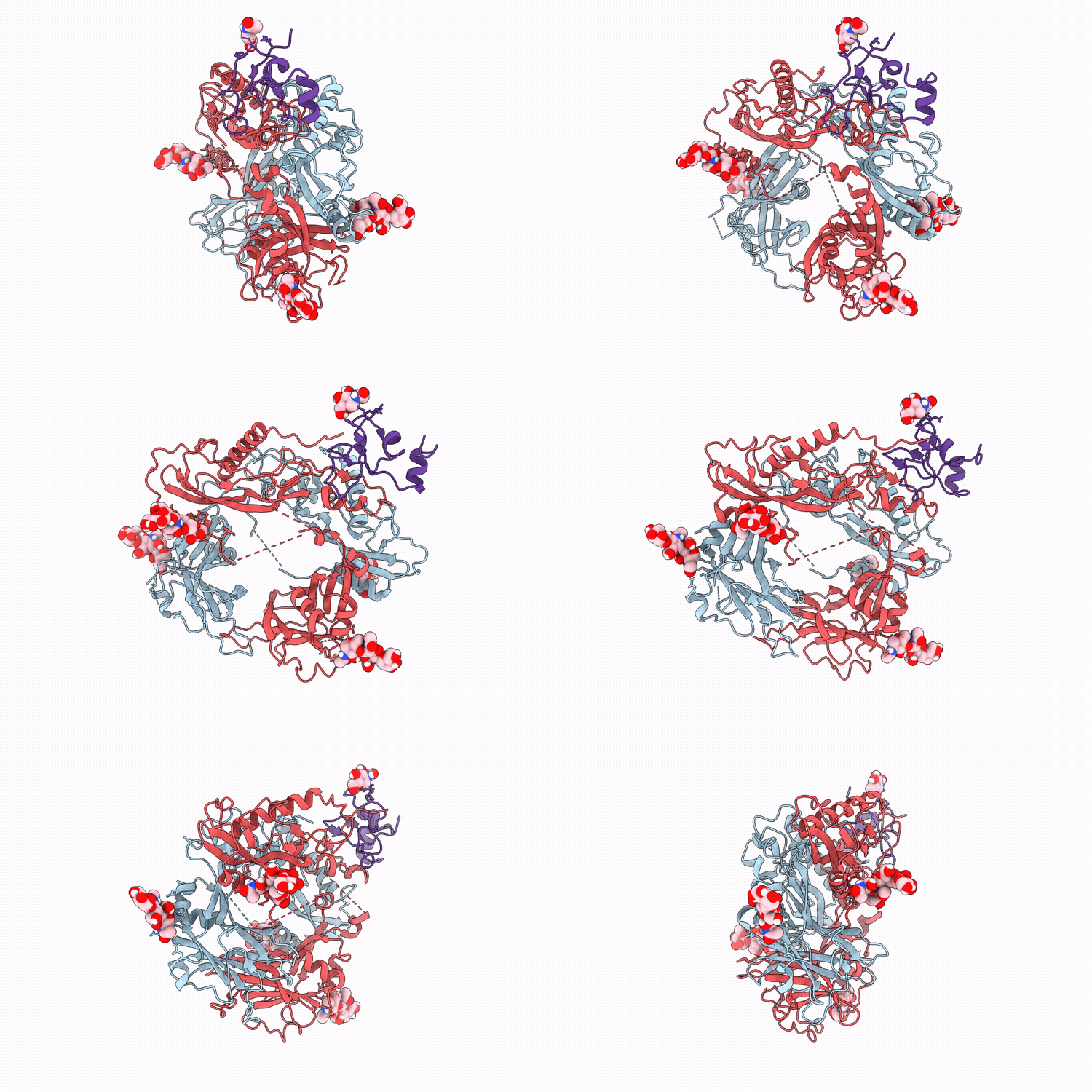
9R3S image
Deposition Date 2025-05-06
Release Date 2026-07-22
Last Version Date 2026-08-19
Entry Detail
PDB ID:
9R3S
Title:
pro-TGF-beta1 in complex with the third TB Domain from Latent Transforming Growth Factor-beta Binding Protein-1
Biological Source:
Source Organism(s):
Homo sapiens (Taxon ID: 9606)
Expression System(s):
Method Details:
Experimental Method:
Resolution:
3.06 Å
Aggregation State:
PARTICLE
Reconstruction Method:
SINGLE PARTICLE
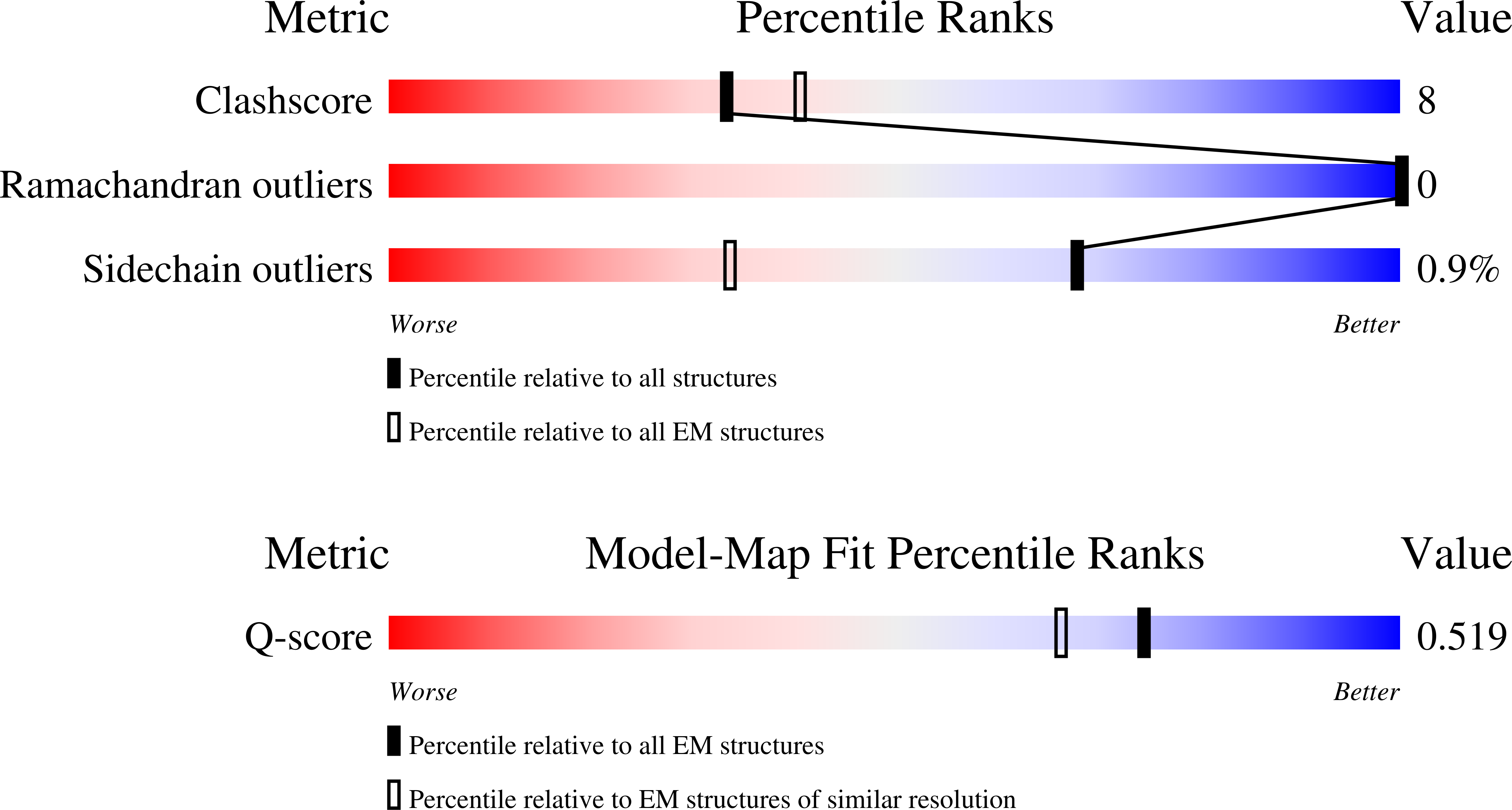
Macromolecular Entities
Polymer Type:polypeptide(L)
Molecule:Transforming growth factor be
Gene (Uniprot):TGFB1
Chain IDs:A (auth: B), B (auth: A)
Chain Length:0
Number of Molecules:2
Biological Source:Homo sapiens
Polymer Type:polypeptide(L)
Molecule:Latent-transforming growth fa
Gene (Uniprot):LTBP1
Chain IDs:C
Chain Length:0
Number of Molecules:1
Biological Source:Homo sapiens
Ligand Molecules
Primary Citation
Structural basis for the contribution of latent TGF beta binding protein to TGF beta latency and activation.
Nat Commun 17 ? ? (2026)
PMID: 42557249 DOI: 10.1038/s41467-026-75834-8

Abstact

Transforming growth factor-beta (TGFbeta) is a potent cytokine that controls all aspects of cellular behavior. TGFbeta is secreted in complex with its prodomain and latent TGFbeta-binding protein-1 (LTBP1), forming the large latent complex (LLC), which through interaction with the extracellular matrix enables integrin-mediated activation. Although TGFbeta structures are known, the influence of LTBP1 on the structure and activity of TGFbeta is unknown. Here, we report the LLC cryo-EM structure comprising the LTBP1 eight-cysteine domain covalently bound to TGFbeta, revealing a hydrophobic interface between TGFbeta and LTBP1. Structure-guided mutagenesis shows that the interface is important for complex formation and TGFbeta activity. Our structure supports a contralateral domain swapped architecture in the LLC, and simulations show that this architecture requires increased force to overcome barriers for integrin-mediated activation, while the covalent attachment of TGFbeta to LTBP1 redistributes force to reduce unfolding barriers. These insights will be important for therapeutic strategies targeting TGFbeta.

Legend

Protein

Chemical

Disease

Primary Citation of related structures
Feedback Form
Name
Email
Institute
Feedback