

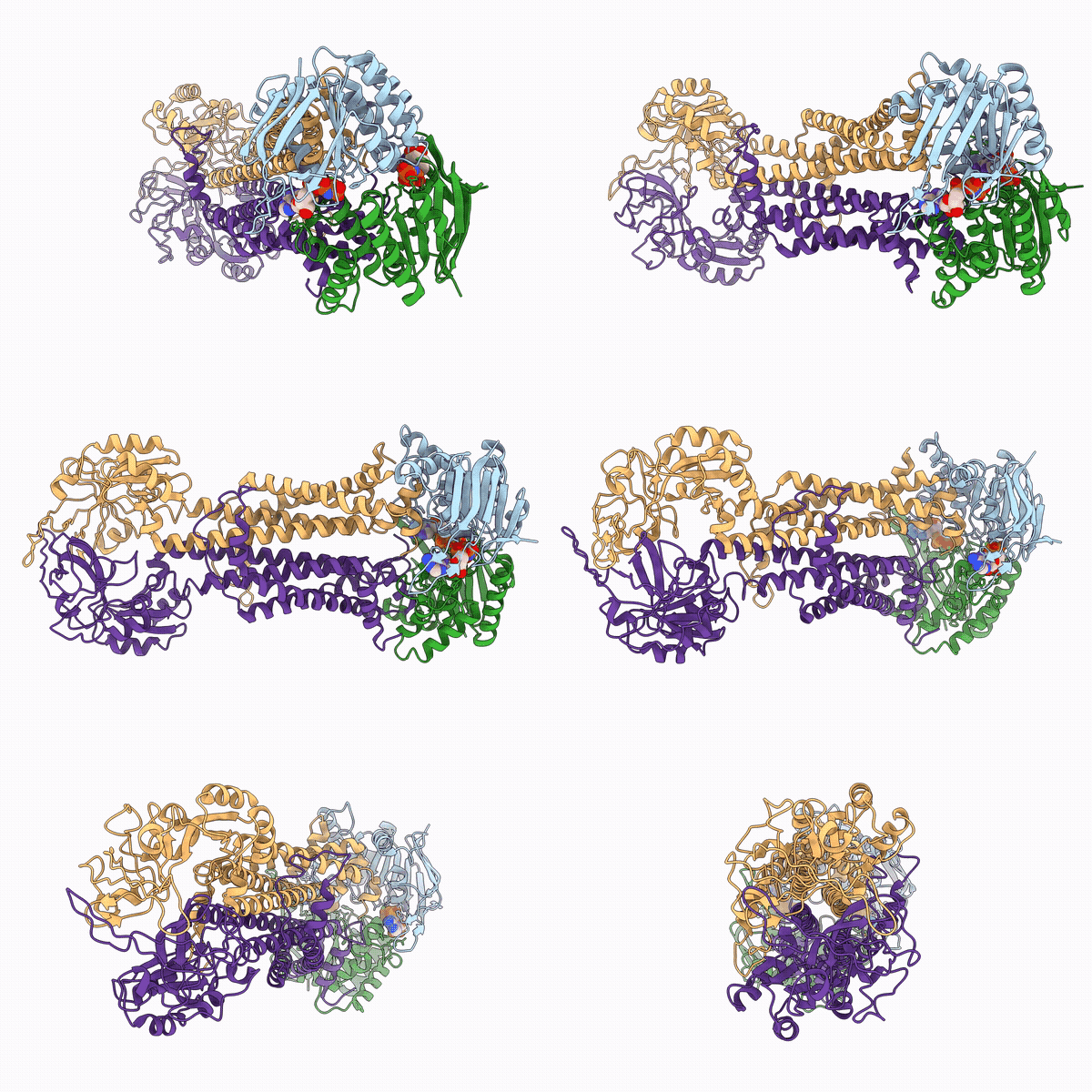
9R29 image
Deposition Date 2025-04-29
Release Date 2026-11-04
Last Version Date 2026-11-04
Entry Detail
PDB ID:
9R29
Title:
Cryo-EM structure of Acinetobacter baylyi LolDF bound AMP-PNP (closed NBDs)
Biological Source:
Source Organism(s):
Method Details:
Experimental Method:
Resolution:
3.54 Å
Aggregation State:
PARTICLE
Reconstruction Method:
SINGLE PARTICLE
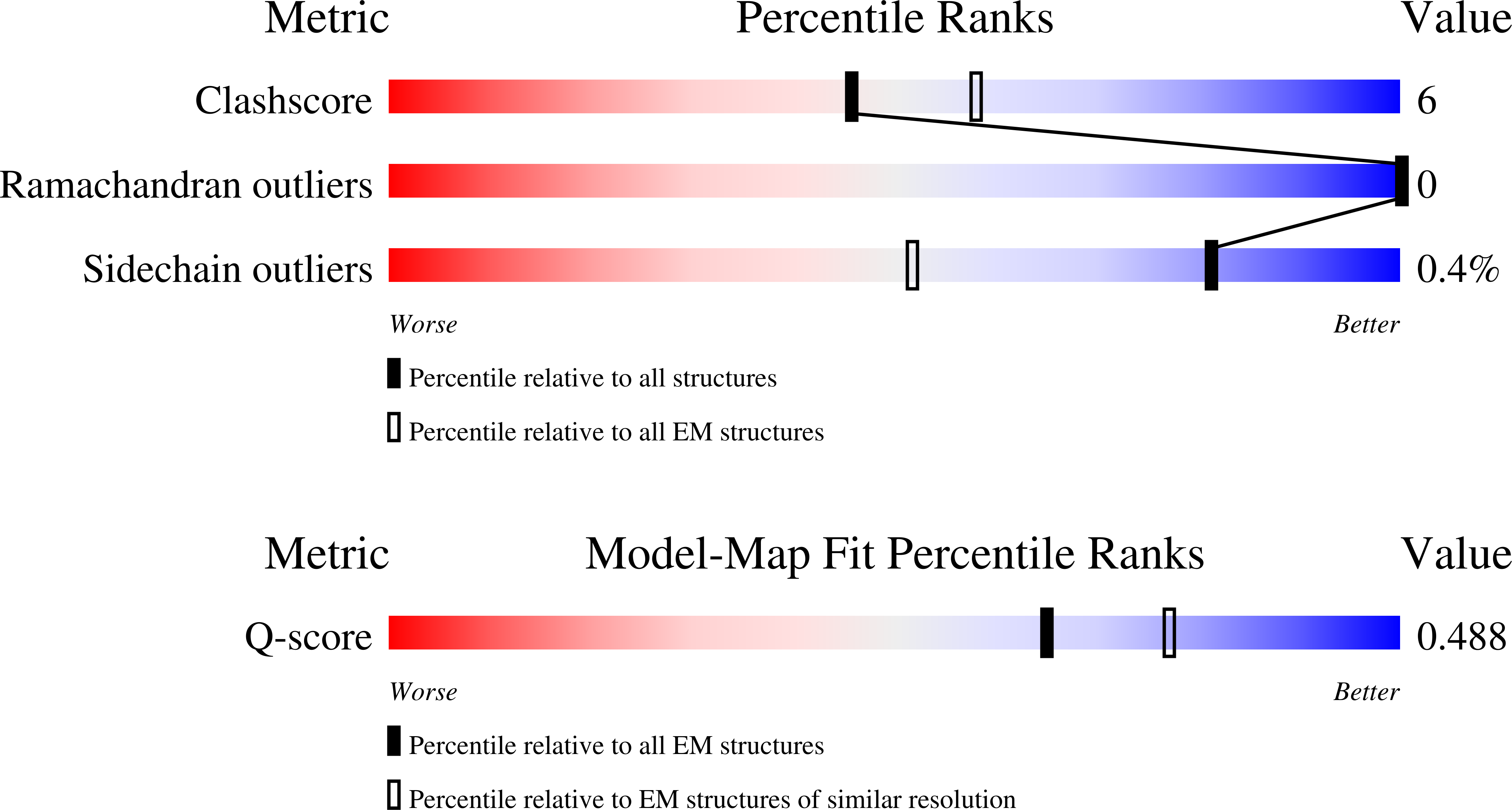
Macromolecular Entities
Polymer Type:polypeptide(L)
Molecule:Lipoprotein-releasing system
Gene (Uniprot):lolD
Chain IDs:A (auth: B), B (auth: A)
Chain Length:224
Number of Molecules:2
Biological Source:Acinetobacter baylyi ADP1
Polymer Type:polypeptide(L)
Molecule:Putative integral membrane pr
Chain IDs:C (auth: D), D (auth: C)
Chain Length:410
Number of Molecules:2
Biological Source:Acinetobacter baylyi ADP1
Primary Citation
Mechanistic basis of LolDF-mediated lipoprotein transport in Acinetobacter.
Nat Commun 17 ? ? (2026)
PMID: 42736309 DOI: 10.1038/s41467-026-76802-y

Abstact

Lipoprotein trafficking is essential for Gram-negative bacteria to maintain the outer membrane, a permeability barrier critical for survival and antibiotic resistance. While most bacteria employ the canonical LolCDE transporter, Acinetobacter utilizes a noncanonical LolDF system whose mechanism has remained unclear. Here we determine cryo-EM structures of Acinetobacter baylyi LolDF in substrate-bound, AMP-PNP-bound, and LolA-bound states. LolDF forms a symmetric homodimer with a central cavity that accommodates three acyl chains at the membrane level, suggesting lateral extraction of lipoproteins directly from the inner membrane. AMP-PNP-driven conformational changes induce a coordinated symmetric constriction of the cavity that promotes substrate expulsion, distinct from the asymmetric mechanism observed in LolCDE. Functional studies further identify key door-bar residues required for transport and reveal that charged residues at the +3 position function as an inner membrane retention signal. Together, these findings reveal a mechanistically distinct lipoprotein trafficking system and provide a framework for targeting multidrug-resistant Gram-negative pathogens.

Legend

Protein

Chemical

Disease

Primary Citation of related structures
Feedback Form
Name
Email
Institute
Feedback