

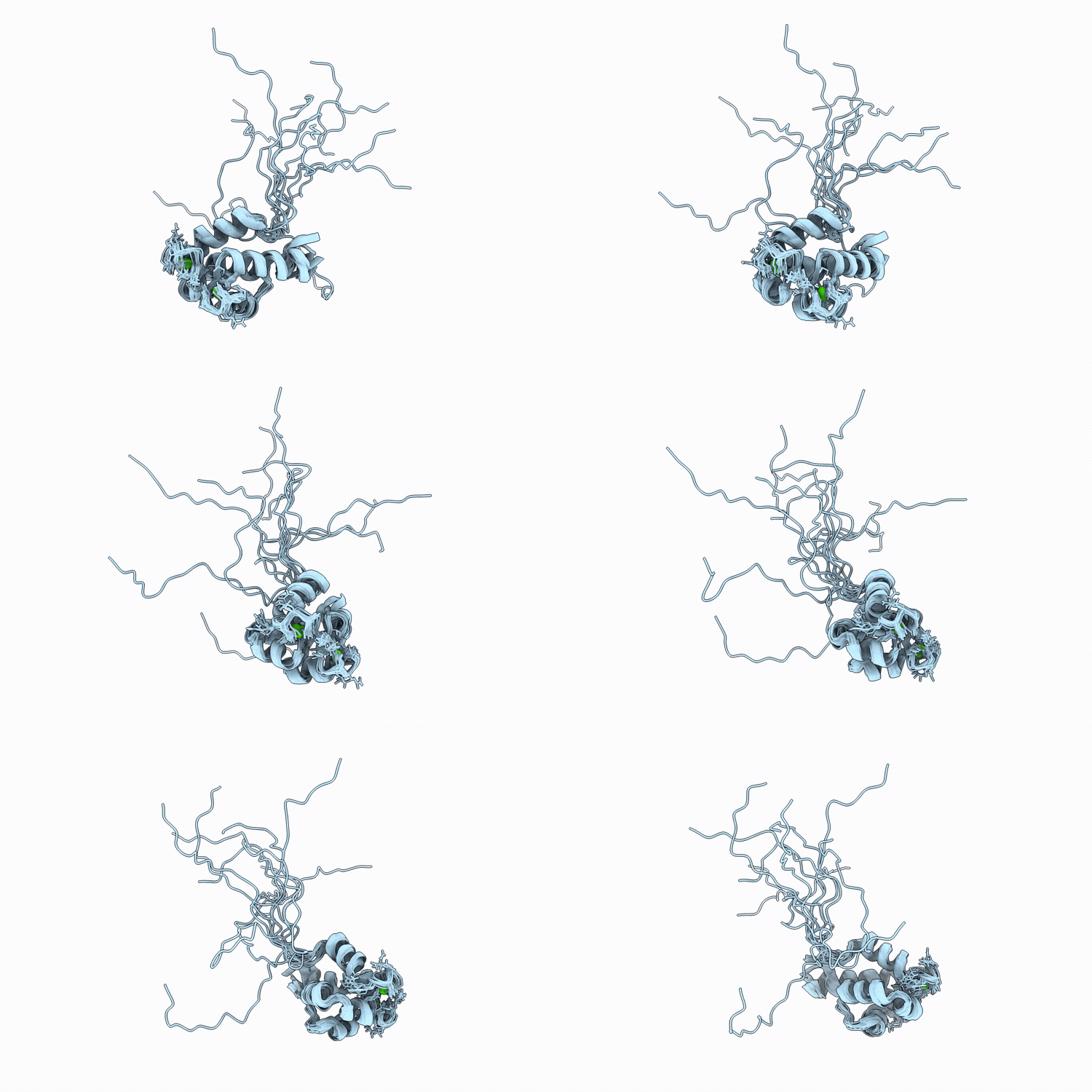
9QSB image
Deposition Date 2025-04-04
Release Date 2026-07-29
Last Version Date 2026-09-23
Entry Detail
PDB ID:
9QSB
Title:
The solution structure of the cyanobacterial calcium binding protein CSE at 293 K
Biological Source:
Source Organism(s):
Expression System(s):
Method Details:
Experimental Method:
Conformers Calculated:
12200
Conformers Submitted:
12
Selection Criteria:
back calculated data agree with experimental NOESY spectrum
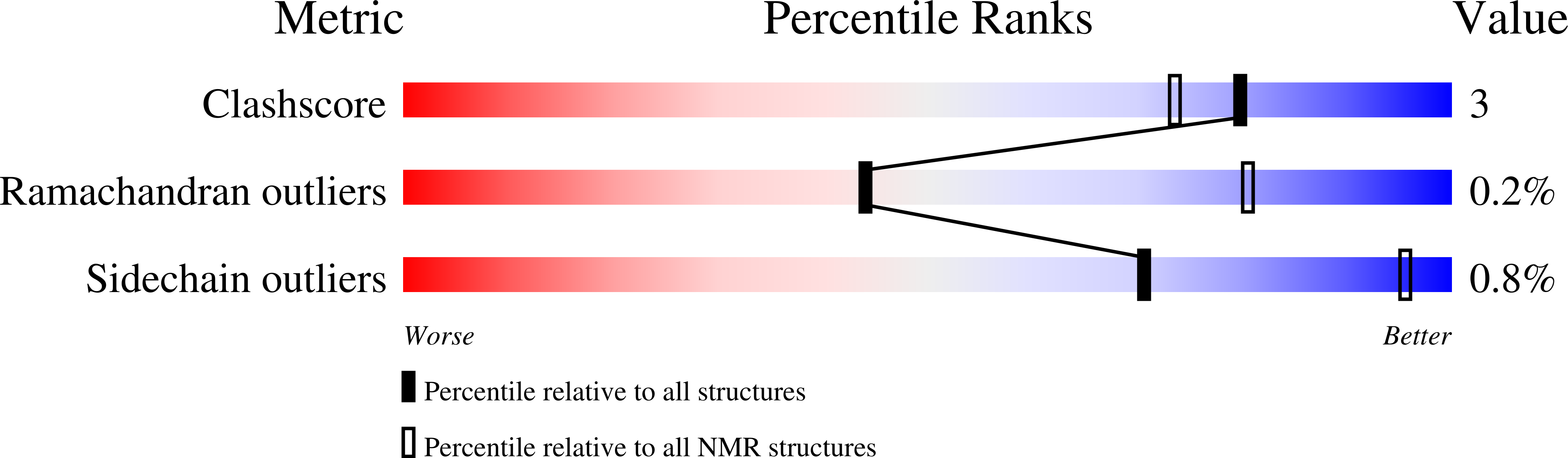
Macromolecular Entities
Polymer Type:polypeptide(L)
Molecule:Asr1131 protein
Chain IDs:A
Chain Length:96
Number of Molecules:1
Biological Source:Nostoc sp. PCC 7120 = FACHB-418
Ligand Molecules
Primary Citation
The calcium-binding protein CSE links Ca 2+ signaling with cell-cell communication in cyanobacteria.
Embo J. 45 6630 6654 (2026)
PMID: 42595912 DOI: 10.1038/s44318-026-00893-y

Abstact

Multicellular cyanobacteria have evolved sophisticated cell-cell communication machinery to exchange, synchronize, and coordinate the efforts of individual cells. Analogous to gap junctions that have traditionally been regarded as a eukaryotic feature, multicellular cyanobacteria coordinate their cell-cell communication via septal junctions (SJs). However, the signals that regulate cell-cell communication and septal-junction assembly are largely unknown. Lately, calcium signaling has been implicated in regulating cell junctions in eukaryotes. We recently discovered a Ca(2+)-binding protein, CSE, which is exclusively found in multicellular cyanobacteria. Here, we investigate CSE as a potential link between calcium signaling and cell-cell communication. We solve the NMR structure of CSE in its Ca(2+)-bound state and revealed that CSE acts as Ca(2+)-buffer protein. Using cryo-electron tomography, we find that Deltacse mutant cells display significantly fewer septal junctions as well as SJ precursors known as nanopores. This indicates that CSE is not only essential for Ca(2+) homeostasis, but also mediates cell-cell communication via regulating SJs and nanopores formation, and establishes Ca(2+) signaling and CSE as key players regulating cyanobacterial multicellularity. Furthermore, these findings highlight calcium signaling as a conserved principle for regulating cellular junctions in organisms that diverged a billion years ago.

Legend

Protein

Chemical

Disease

Primary Citation of related structures
Feedback Form
Name
Email
Institute
Feedback