

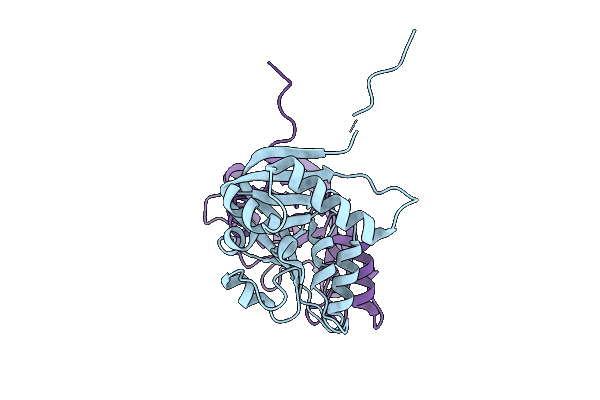
9QE9 image
Deposition Date 2025-03-07
Release Date 2026-03-11
Last Version Date 2026-09-23
Entry Detail
PDB ID:
9QE9
Keywords:
Title:
Catalytic domain of Streptomyces Antiquus Insecticidal Protein (SAIP) from Streptomyces klenkii
Biological Source:
Source Organism(s):
Expression System(s):
Method Details:
Experimental Method:
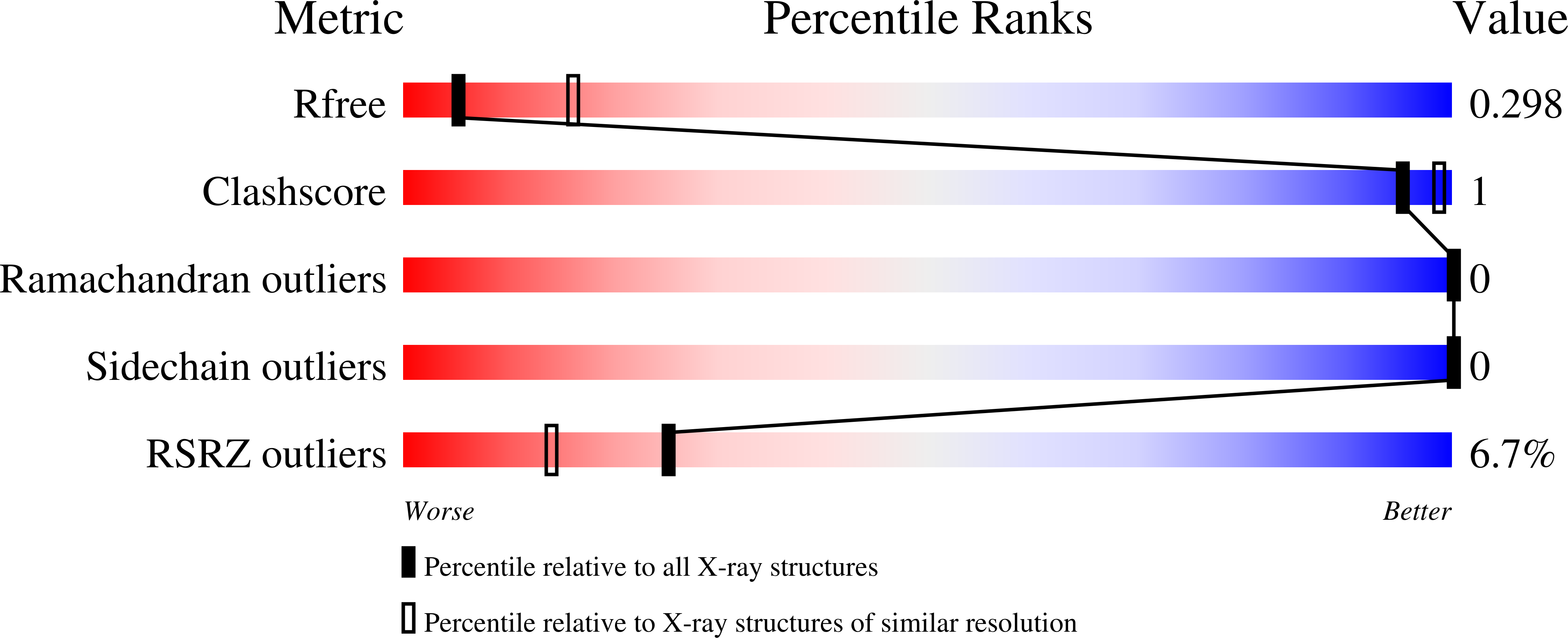
Resolution:
3.00 Å
R-Value Free:
0.30
R-Value Work:
0.24
R-Value Observed:
0.25
Space Group:
C 2 2 2
Macromolecular Entities
Polymer Type:polypeptide(L)
Molecule:ADP-ribosylating toxin
Gene (Uniprot):D7231_23430
Chain IDs:A, B
Chain Length:211
Number of Molecules:2
Biological Source:Streptomyces klenkii
Primary Citation
Streptomyces produce a diphtheria toxin-like exotoxin that targets insects.
Nat Microbiol 11 1271 1285 (2026)
PMID: 42062574 DOI: 10.1038/s41564-026-02315-5

Abstact

Streptomyces and insects engage in complex interactions shaped by millions of years of evolution. While many beneficial relationships are well recognized, it remains unknown whether Streptomyces produce virulence factors targeting insects specifically. Here, through bioinformatic analysis, we identified diphtheria toxin (DT) homologues, which we named Streptomyces antiquus insecticidal proteins (SAIP), within a monophyletic lineage of Streptomyces that emerged more than 100 million years ago. SAIP is cytotoxic to insect cells and lethal to Drosophila melanogaster, suppressing neuronal activity and immune responses in vivo. Structural and functional studies validated that SAIP is homologous to DT and acts by ADP ribosylation of eukaryotic elongation factor 2. CRISPR-Cas9 screening identified the insect protein Flower as the SAIP receptor across a range of insects. Toxigenic Streptomyces can consume dead insects and produce bioactive secondary metabolites while growing on insect carcasses. These findings establish an insecticidal toxin in Streptomyces and demonstrate that Streptomyces have evolved highly specific virulence factors against insects.

Legend

Protein

Chemical

Disease

Primary Citation of related structures
Feedback Form
Name
Email
Institute
Feedback