

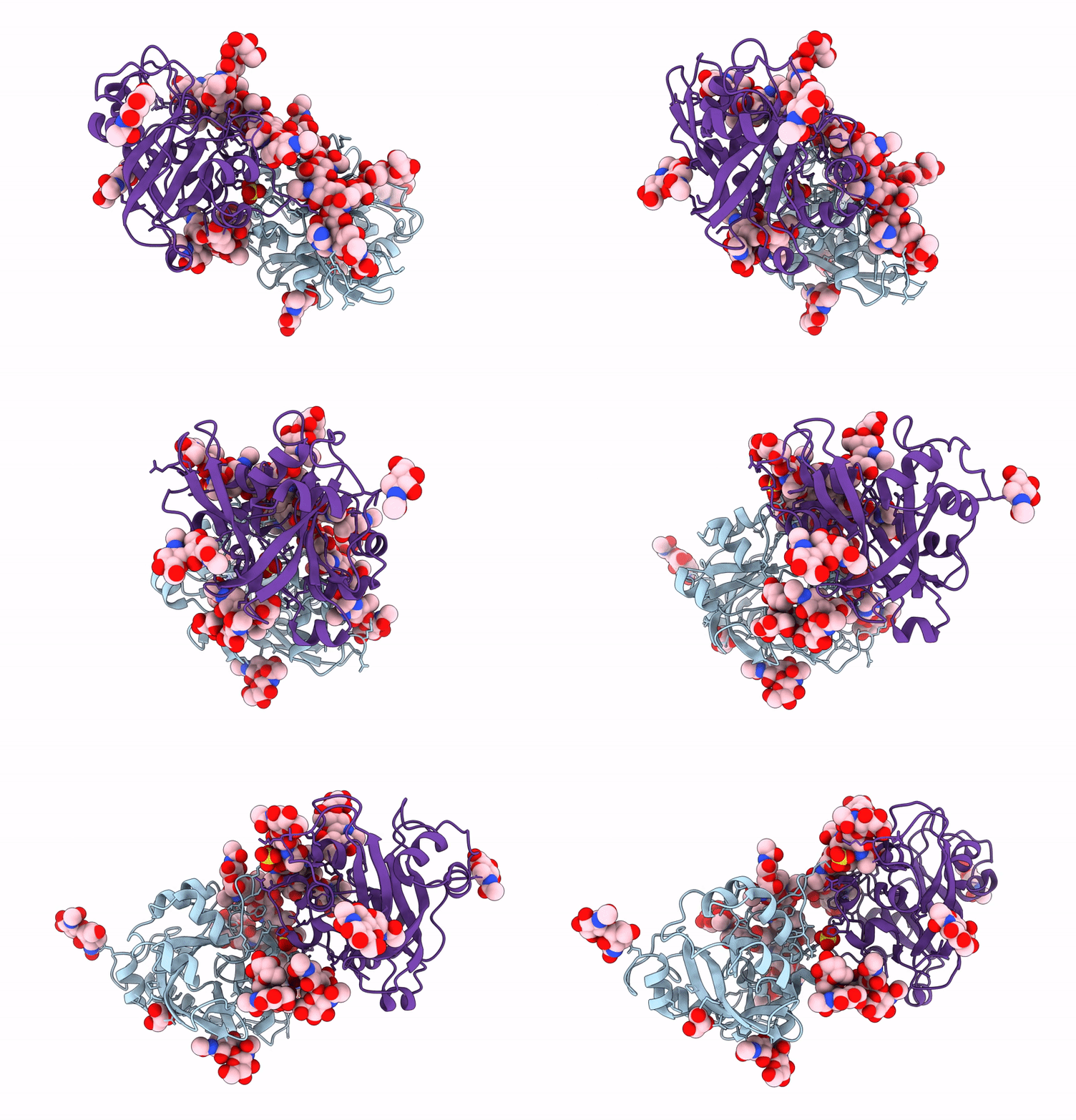
9Q83 image
Deposition Date 2025-02-21
Release Date 2025-07-16
Last Version Date 2026-10-28
Entry Detail
PDB ID:
9Q83
Keywords:
Title:
Crystal structure of Lotus japonicus CHIP13 in complex with chitooctaose
Biological Source:
Source Organism(s):
Expression System(s):
Method Details:
Experimental Method:
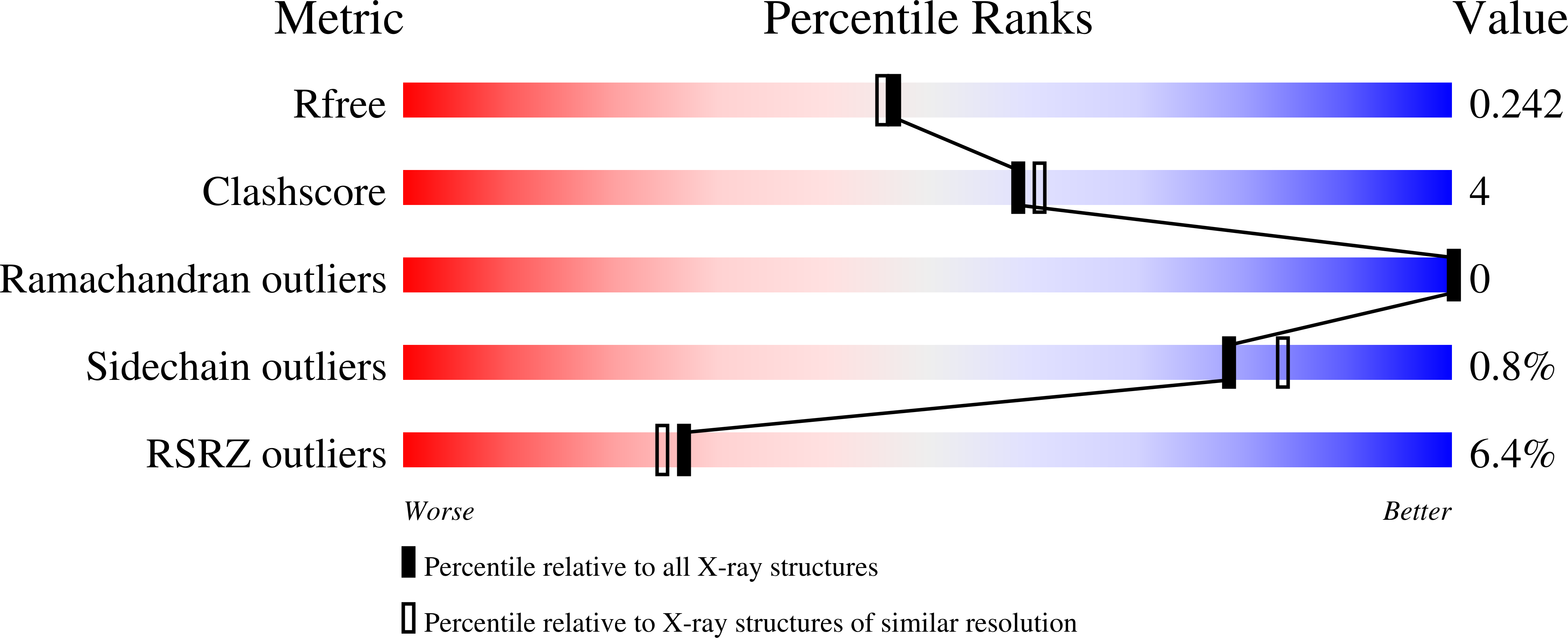
Resolution:
2.01 Å
R-Value Free:
0.24
R-Value Work:
0.20
R-Value Observed:
0.20
Space Group:
C 1 2 1
Macromolecular Entities
Polymer Type:polypeptide(L)
Molecule:LysM type receptor kinase
Gene (Uniprot):LYS13
Chain IDs:A, B (auth: E)
Chain Length:248
Number of Molecules:2
Biological Source:Lotus japonicus
Modified Residue
Compound ID Chain ID Parent Comp ID Details 2D Image
PCA A, B GLN modified residue
Primary Citation
Structural basis for size-selective perception of chitin in plants.
Science 394 298 305 (2026)
PMID: 42879538 DOI: 10.1126/science.adz4600

Abstact

Plants detect microbes through pattern recognition receptors that perceive conserved microbial surface motifs known as microbe-associated molecular patterns (MAMPs). Lysin motif (LysM) receptors recognize and mediate downstream responses to chitinous MAMPs. In this study, we elucidated the mechanism for the specific recognition of long-chain chitin oligomers and identified a hallmark bridge domain characteristic of the CHITIN PERCEPTION (CHIP) receptor class. Structural analysis of receptor-ligand complexes, biochemistry, and in planta functional studies of inhibitory nanobodies revealed the mechanism of size-selective, high-affinity chitin perception in Lotus japonicus and Medicago truncatula. Additionally, we identified the CHITIN ELICITOR RECEPTOR KINASE (CERK) class as low-affinity, yet essential, co-receptors and propose a mechanistic model for a ligand-induced core signaling heterocomplex. Our findings establish the structural and mechanistic basis of differential chitin perception and receptor complex assembly in chitin-elicited plant immune signaling.

Legend

Protein

Chemical

Disease

Primary Citation of related structures
Feedback Form
Name
Email
Institute
Feedback