

9PNB image
Deposition Date 2025-07-19
Release Date 2026-09-16
Last Version Date 2026-10-07
Entry Detail
PDB ID:
9PNB
Title:
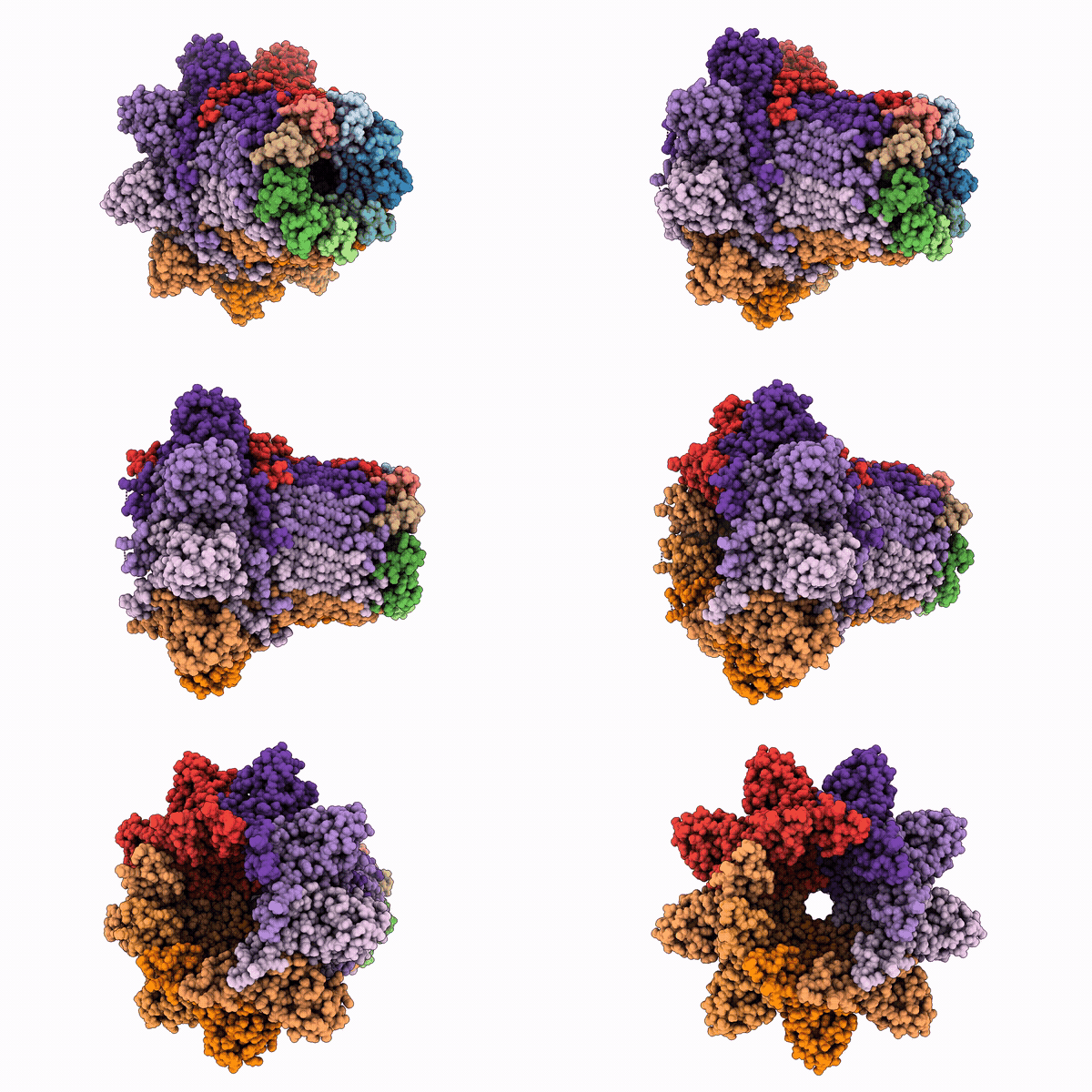
CsgG nanopore in complex with designed CsgX2C
Biological Source:
Source Organism(s):
Expression System(s):
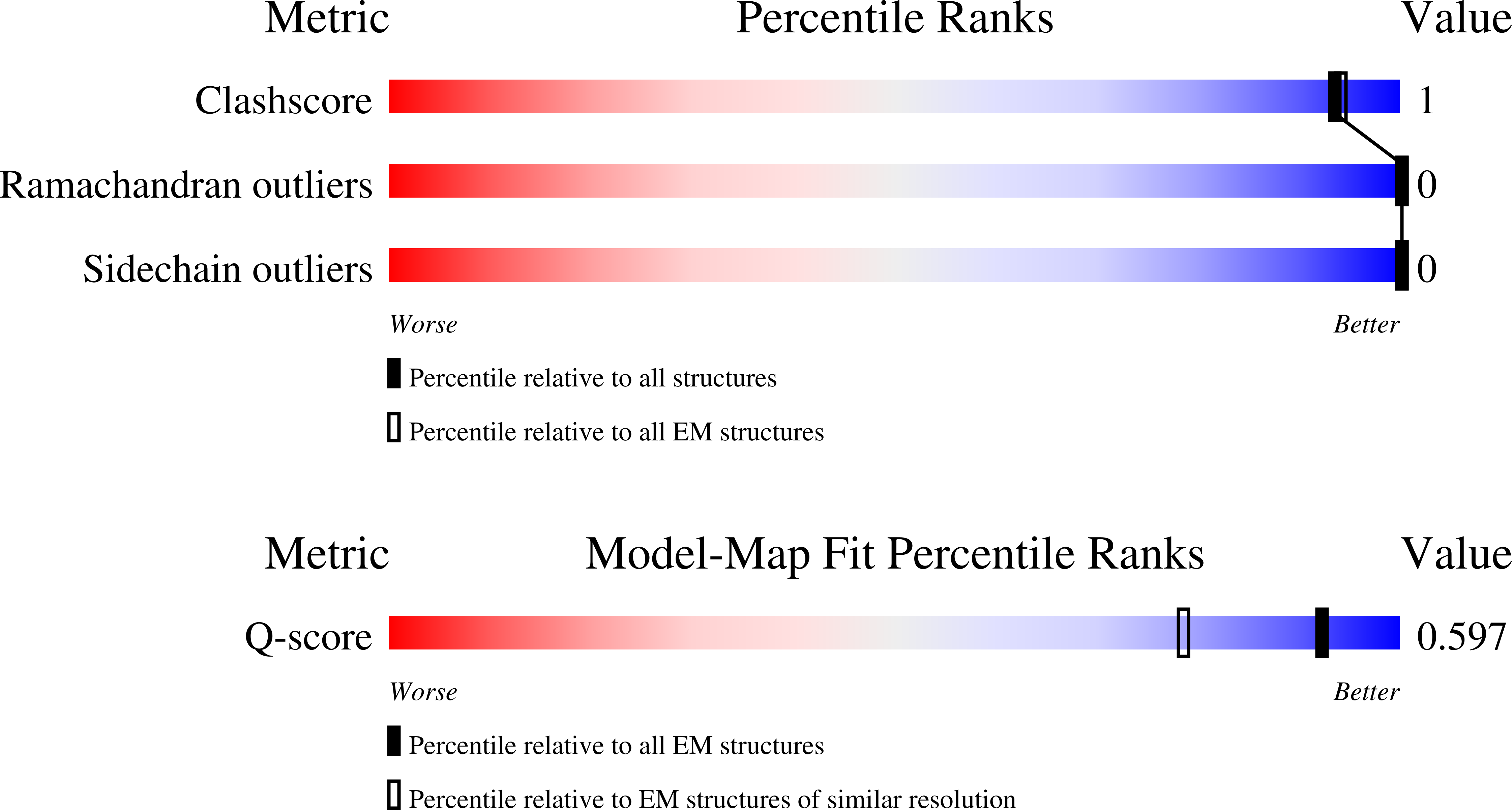
Method Details:
Experimental Method:
Resolution:
2.57 Å
Aggregation State:
PARTICLE
Reconstruction Method:
SINGLE PARTICLE
Macromolecular Entities
Structural Superimposition Protein Blast
Polymer Type:polypeptide(L)
Molecule:CsgX2C
Chain IDs:A, B, C, D, E, F, G, H, I
Chain Length:58
Number of Molecules:9
Biological Source:synthetic construct
Polymer Type:polypeptide(L)
Molecule:Curli production assembly/tra
Gene (Uniprot):csgG
Chain IDs:J, K, L, M, N, O, P, Q, R
Chain Length:272
Number of Molecules:9
Biological Source:Escherichia coli
Ligand Molecules
Primary Citation
De novo design of semisynthetic conduction pores.
Nat.Struct.Mol.Biol. ? ? ? (2026)
PMID: 42768128 DOI: 10.1038/s41594-026-01881-w

Abstact

Protein pores used for molecular sensing are generally assembled from large, multi-subunit natural proteins. Their ion conductance, and thus performance in sensing applications, depends on lumen geometry and chemistry. Here rather than designing a new pore or relying only on mutations to a natural scaffold, we show that installing additional de novo subunits to native protein pore complexes enables large-scale architectural changes. We design de novo proteins that integrate seamlessly with CsgG, a pore widely used in sensing applications, to form 18-subunit, 315-kilodalton semisynthetic conduction pores. This required designing within a confined, nonuniform pore under ninefold symmetry and maintaining an open conducting lumen with a stable, low-noise baseline current. The complexes exhibit distinct current-voltage responses relative to the native pore, including clear rectification, while cryo-electron microscopy confirms the designed lumen architecture, establishing a strategy for modifying existing nano-assemblies with designed protein components under stringent symmetry and structural constraints.

Legend

Protein

Chemical

Disease

Primary Citation of related structures
Feedback Form
Name
Email
Institute
Feedback