

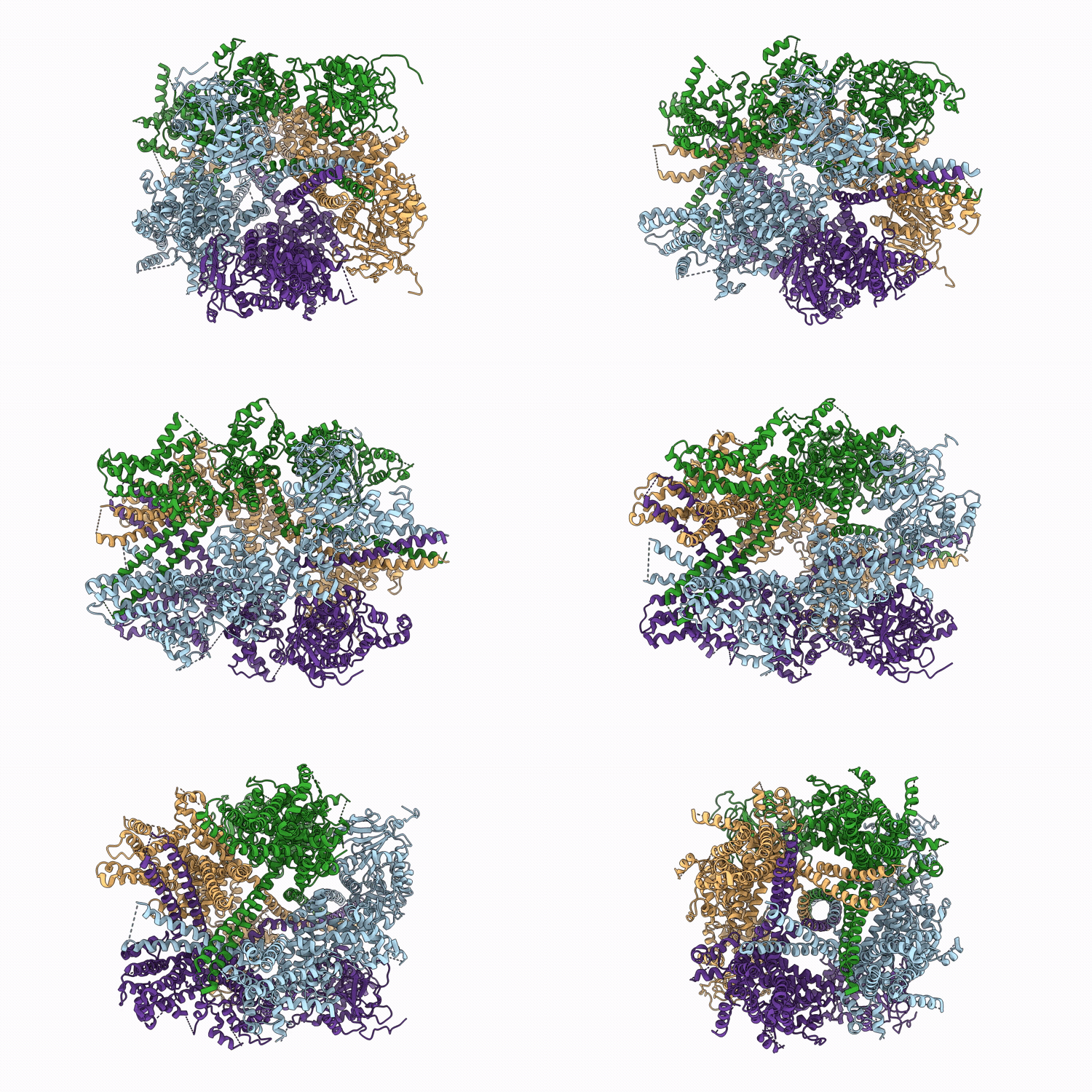
9OR5 image
Deposition Date 2025-05-21
Release Date 2026-04-01
Last Version Date 2026-05-27
Entry Detail
PDB ID:
9OR5
Title:
Cryo-EM structure of rat TRPM1 in the apo state
Biological Source:
Source Organism(s):
Expression System(s):
Method Details:
Experimental Method:
Resolution:
4.30 Å
Aggregation State:
PARTICLE
Reconstruction Method:
SINGLE PARTICLE
Macromolecular Entities
Structures with similar UniProt ID
Protein Blast
Polymer Type:polypeptide(L)
Molecule:Isoform 2 of Transient recept
Gene (Uniprot):Trpm1
Chain IDs:A, B, C, D
Chain Length:1373
Number of Molecules:4
Biological Source:Rattus norvegicus
Ligand Molecules
Primary Citation
Cryo-EM structure of TRPM1 reveals a non-canonical architecture with an inverted transmembrane domain.
Nat Commun 17 ? ? (2026)
PMID: 41857038 DOI: 10.1038/s41467-026-70722-7

Abstact

Transient receptor potential melastatin 1 (TRPM1) is a membrane protein essential for vision in dim light, and mutations in TRPM1 cause complete congenital stationary night blindness. Although TRPM1 shares sequence similarity to other TRPM ion channels such as TRPM3, whether it independently functions as an ion channel remains controversial. This controversy is largely caused by TRPM1's challenging biochemical behaviors that prevent detailed molecular characterization. In this work, we isolate TRPM1 and determine its structures using cryogenic electron microscopy (cryo-EM). The structures reveal a canonical tetrameric fold in the intracellular domain, consistent with other TRPM family members that are ion channels. Surprisingly, in the transmembrane domain, despite the presence of the conserved voltage sensor-like domain (VSLD) and pore domain (PD) in a domain-swapped fashion, the VSLD and PD are arranged with an opposite handedness compared to other related channels. This inverted transmembrane domain allows the formation of a large pore-like structure that supports the role of TRPM1 as an ion channel. This non-canonical architecture of TRPM1 may also confer unique permeation and pharmacological properties.

Legend

Protein

Chemical

Disease

Primary Citation of related structures
Feedback Form
Name
Email
Institute
Feedback