

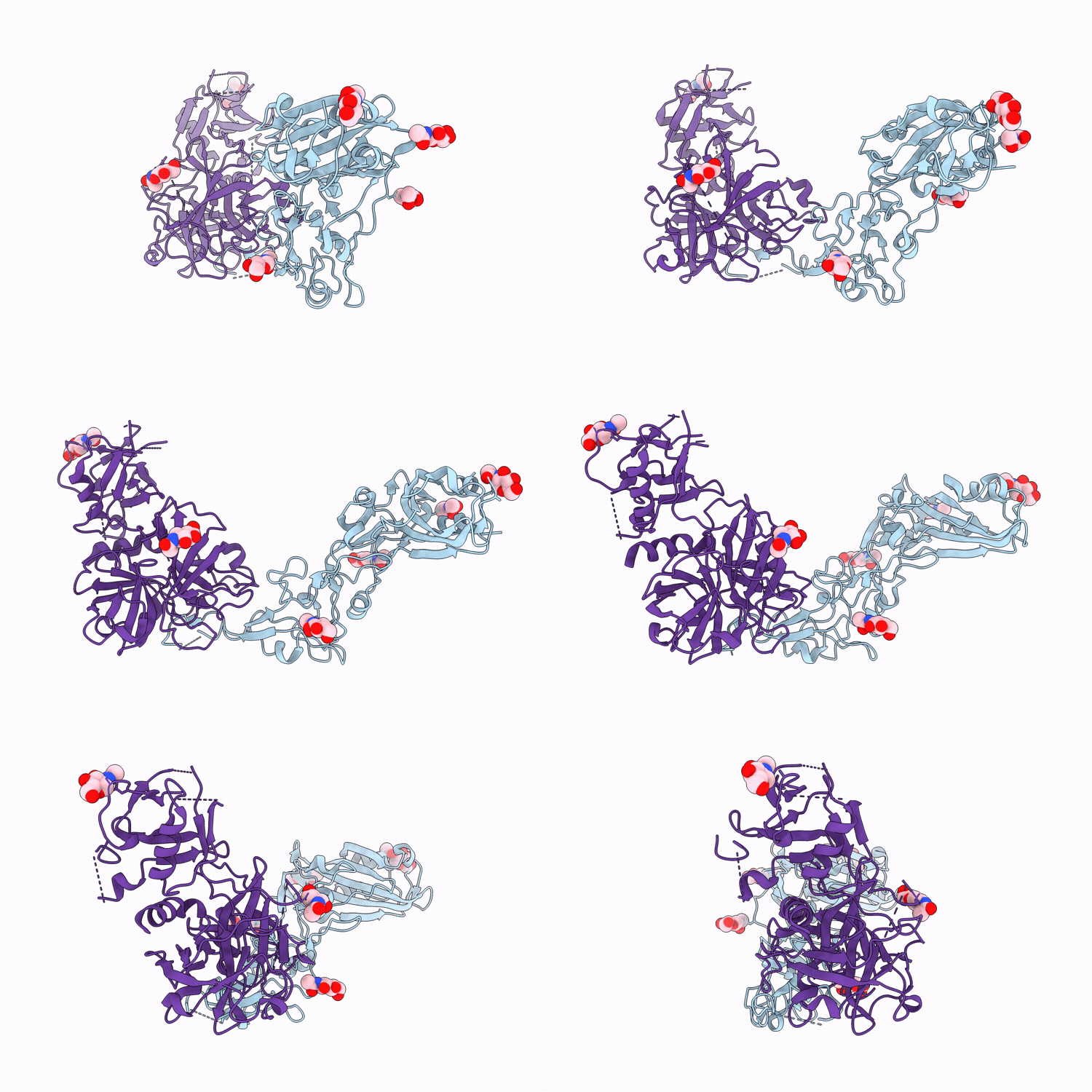
9OPQ image
Deposition Date 2025-05-19
Release Date 2026-05-13
Last Version Date 2026-06-03
Entry Detail
PDB ID:
9OPQ
Title:
TMPRSS2 (S441A) bound to the HCoV-NL63 S2'region genetically fused to the HCoV-HKU1 RBD
Biological Source:
Source Organism(s):
Expression System(s):
Method Details:
Experimental Method:
Resolution:
3.30 Å
Aggregation State:
PARTICLE
Reconstruction Method:
SINGLE PARTICLE

Macromolecular Entities
Structures with similar UniProt ID
Protein Blast
Polymer Type:polypeptide(L)
Molecule:NL63-S2prime/HKU1-RBD
Gene (Uniprot):S
Chain IDs:A
Chain Length:376
Number of Molecules:1
Biological Source:Human coronavirus HKU1
Structures with similar UniProt ID
Protein Blast
Polymer Type:polypeptide(L)
Molecule:Transmembrane protease serine
Gene (Uniprot):TMPRSS2
Mutagens:S441A
Chain IDs:B
Chain Length:506
Number of Molecules:1
Biological Source:Homo sapiens
Ligand Molecules
Primary Citation

Abstact

The protease TMPRSS2 facilitates coronavirus infections, yet its mechanism of viral glycoprotein recognition remains unclear. Here we show that, following ACE2 engagement of the SARS-CoV-2 spike (S) inducing the early fusion intermediate conformation (E-FIC), TMPRSS2 cleaves the R815 S(2)' site and promotes fusogenic conformational changes leading to viral entry. We unveil TMPRSS2 recognition of S(2)', identify key residues modulating binding specificity and demonstrate that S(2)' site-directed broadly neutralizing antibodies target E-FIC and inhibit viral entry by blocking TMPRSS2 access. We computationally designed stabilized E-FIC as a vaccine candidate, overcoming the transient nature of this state. We describe a TMPRSS2-directed monoclonal antibody inhibiting several coronaviruses, including SARS-CoV-2 variants and protecting mice against SARS-CoV-2 challenge. These results outline the mechanistic role of TMPRSS2 and S(2)' site-directed antibodies in coronavirus entry.

Legend

Protein

Chemical

Disease

Primary Citation of related structures
Feedback Form
Name
Email
Institute
Feedback