

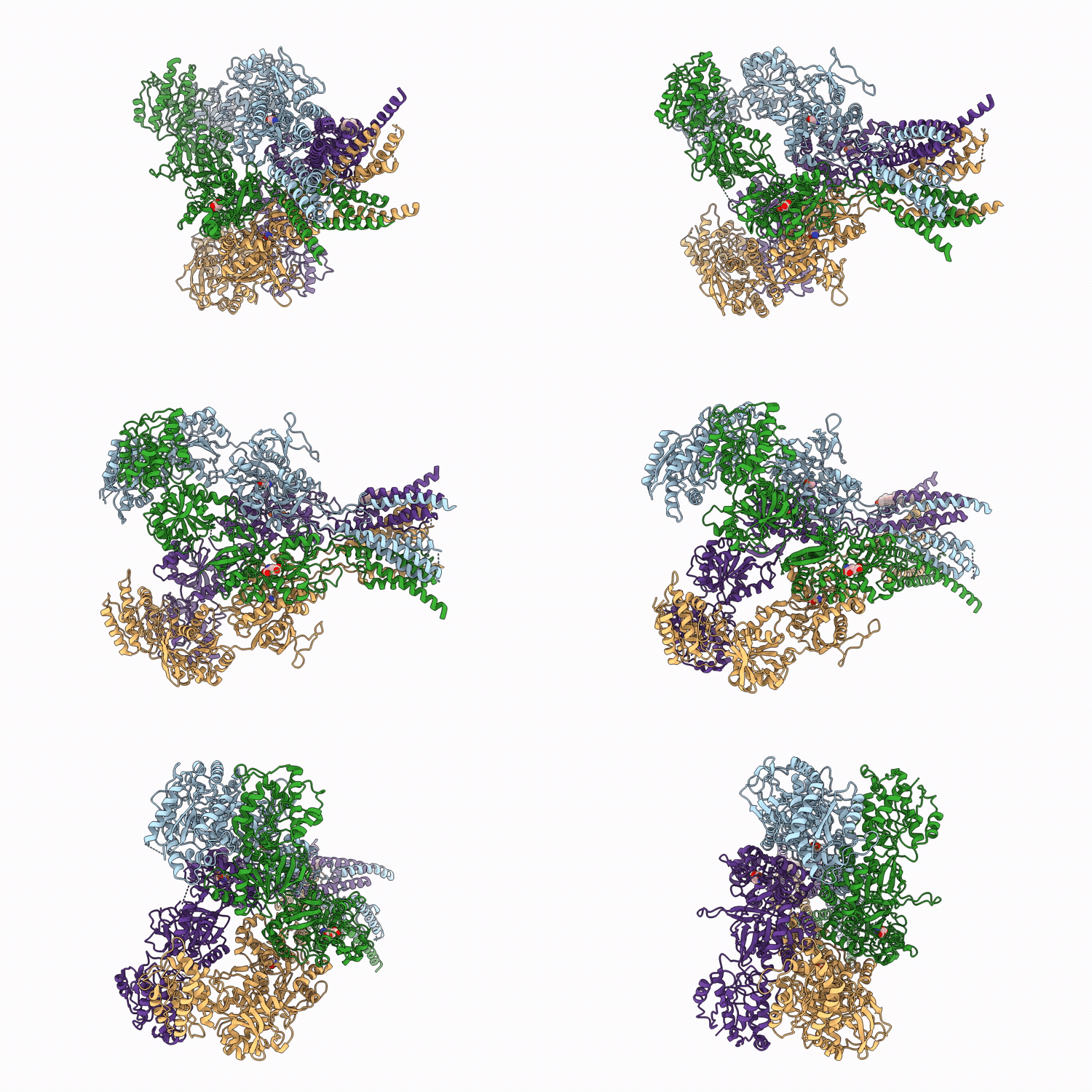
9OBS image
Deposition Date 2025-04-23
Release Date 2026-05-06
Last Version Date 2026-06-24
Entry Detail
PDB ID:
9OBS
Title:
glutamate/glycine-bound GluN1a/2B NMDAR
Biological Source:
Source Organism(s):
Expression System(s):
Method Details:
Experimental Method:
Resolution:
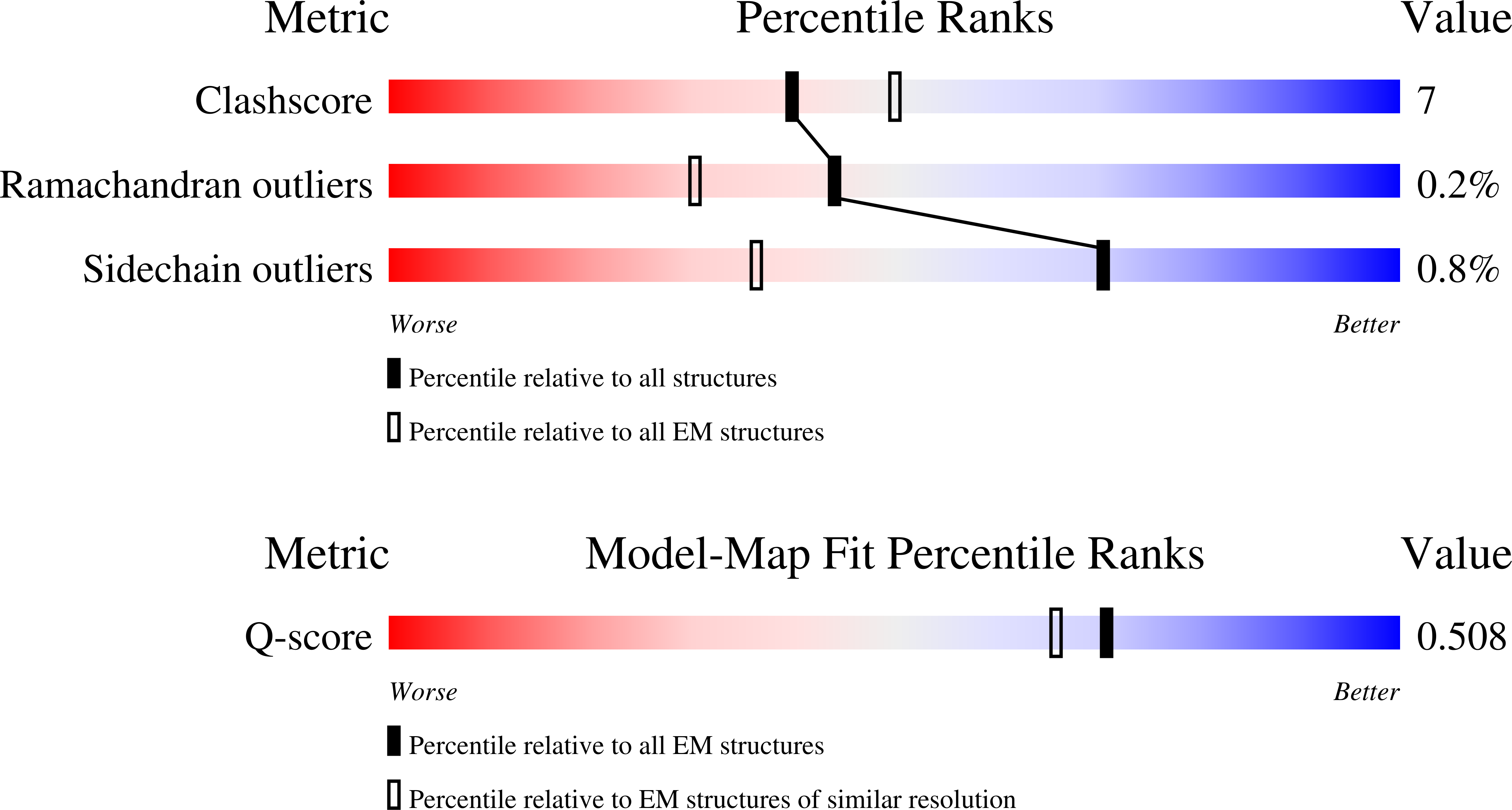
3.18 Å
Aggregation State:
CELL
Reconstruction Method:
SINGLE PARTICLE
Macromolecular Entities
Structures with similar UniProt ID
Protein Blast
Polymer Type:polypeptide(L)
Molecule:Glutamate receptor ionotropic
Gene (Uniprot):Grin1
Chain IDs:A, C
Chain Length:847
Number of Molecules:2
Biological Source:Rattus norvegicus
Structures with similar UniProt ID
Protein Blast
Polymer Type:polypeptide(L)
Molecule:Glutamate receptor ionotropic
Gene (Uniprot):Grin2b
Chain IDs:B, D
Chain Length:862
Number of Molecules:2
Biological Source:Rattus norvegicus
Primary Citation
Molecular mechanism of calcium permeability and magnesium block in NMDA receptors.
Nat.Neurosci. 29 1293 1302 (2026)
PMID: 42086762 DOI: 10.1038/s41593-026-02283-3

Abstact

Hebbian neuroplasticity, which is thought to be a cellular substrate of learning and memory, can occur by means of coincidental detection of presynaptic neurotransmitter release and Ca(2+) influx upon postsynaptic depolarization. This is mediated at a molecular level by N-methyl-D-aspartate-type glutamate receptors, which bind glutamate and glycine and facilitate Ca(2+) influx upon relief of Mg(2+) channel block during membrane depolarization. However, the structural mechanism underlying Ca(2+) permeability and Mg(2+) blockade in N-methyl-D-aspartate-type glutamate receptors has yet to be fully elucidated. Here we demonstrate using single-particle cryo-electron microscopy that Ca(2+) permeation through the narrow constriction of the cation selectivity filter involves partial dehydration, as evidenced by several Ca(2+) binding sites. In contrast, Mg(2+) binds outside of the selectivity filter through a water network and remains hydrated, thereby acting as a channel blocker. Furthermore, the lipid network around the selectivity filter influences the stability of Mg(2+) binding in a voltage-dependent manner. Our study details the transmembrane chemistry essential for initiating neuroplasticity.

Legend

Protein

Chemical

Disease

Primary Citation of related structures
Feedback Form
Name
Email
Institute
Feedback