

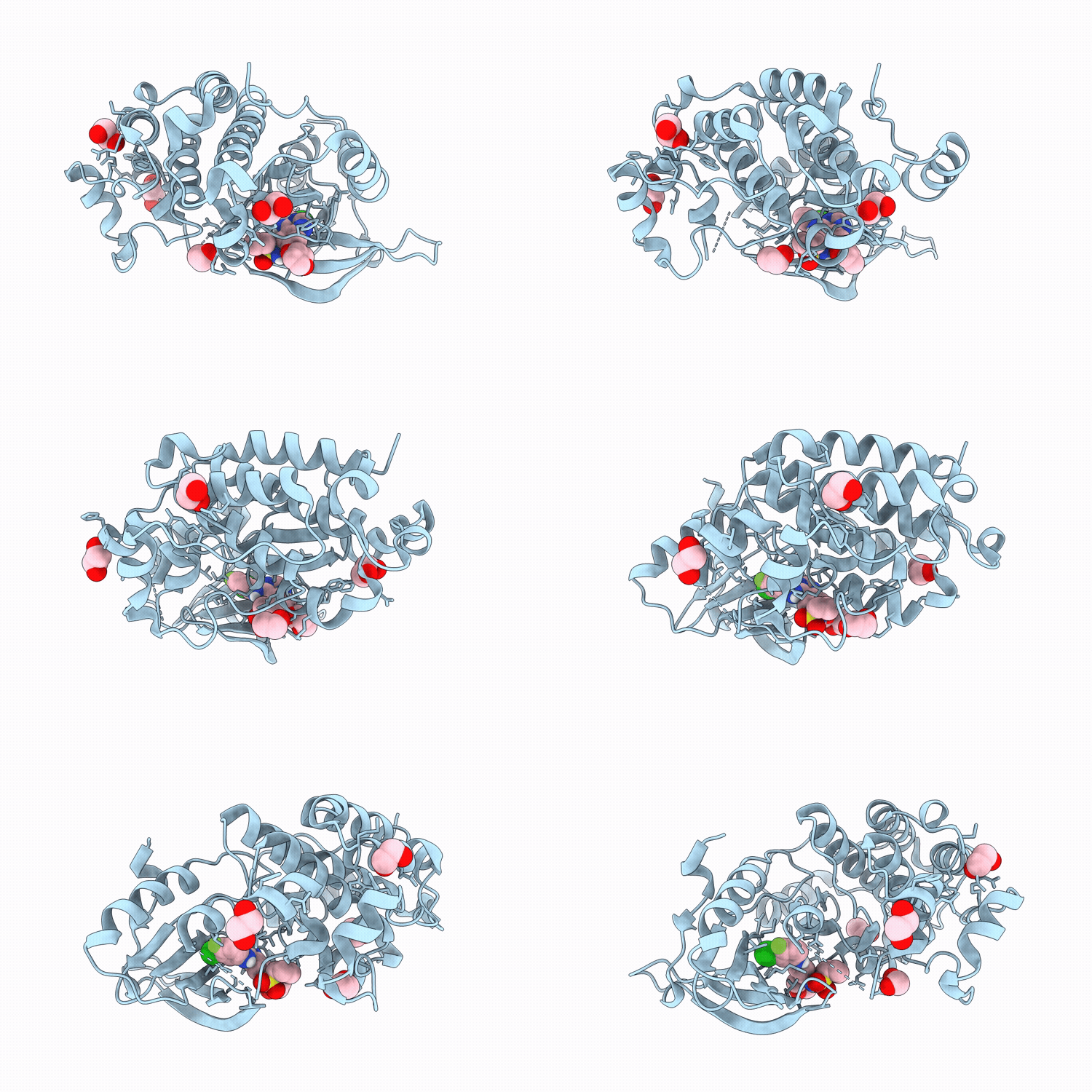
9NTP image
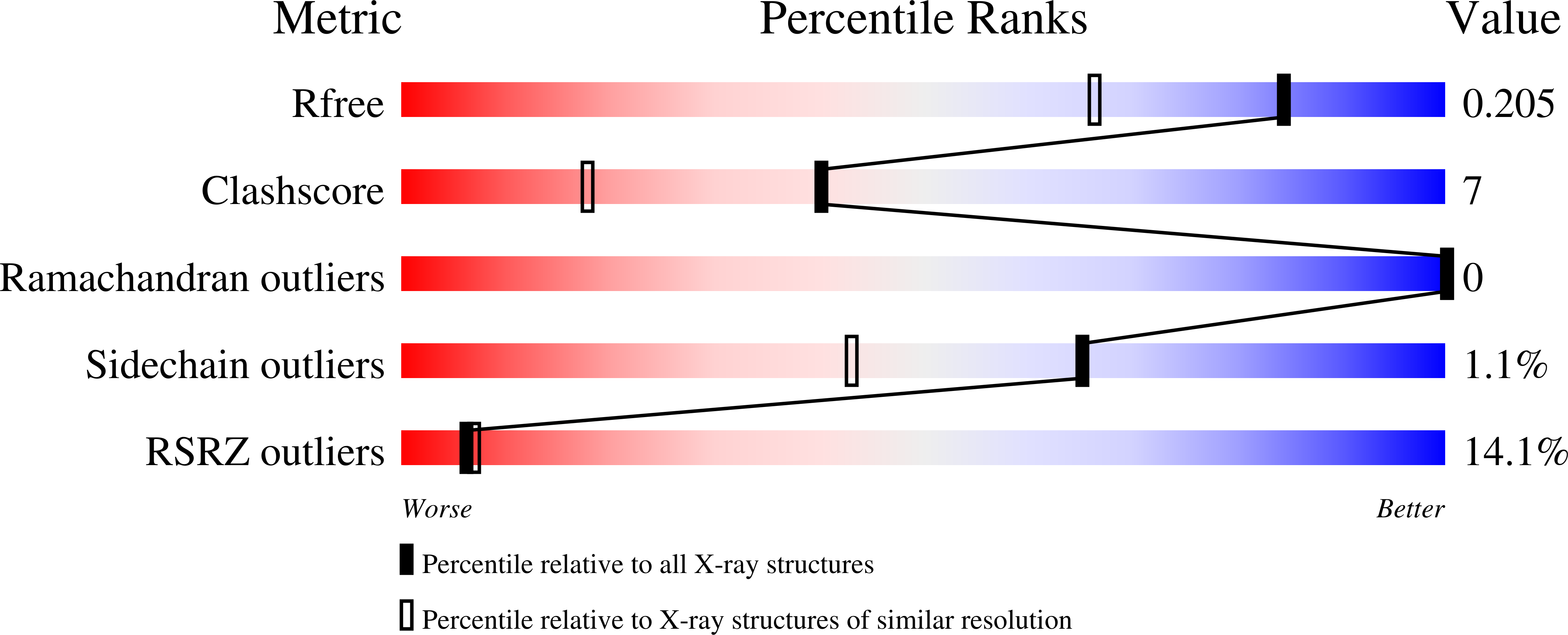
Deposition Date 2025-03-18
Release Date 2026-07-29
Last Version Date 2026-08-05
Entry Detail
PDB ID:
9NTP
Keywords:
Title:
EGFR kinase domain (T790MV948R) in complex with a strain-release covalent inhibitor
Biological Source:
Source Organism(s):
Homo sapiens (Taxon ID: 9606)
Expression System(s):
Method Details:
Experimental Method:
Resolution:
1.55 Å
R-Value Free:
0.20
R-Value Work:
0.18
R-Value Observed:
0.18
Space Group:
P 1 2 1
Macromolecular Entities
Polymer Type:polypeptide(L)
Molecule:Epidermal growth factor recep
Gene (Uniprot):EGFR
Chain IDs:A
Chain Length:329
Number of Molecules:1
Biological Source:Homo sapiens
Primary Citation
Late-stage functionalization with strain-release warheads enables tunable covalent inhibition.
Science 393 408 416 (2026)
PMID: 42490492 DOI: 10.1126/science.adx7219

Abstact

Covalent inhibition continues to gain momentum as a strategy for selective protein modulation in both therapeutic and chemical biology contexts. Covalent reactive groups (CRGs) typically engage nucleophilic residues such as cysteine, resulting in targeted protein inactivation. However, common electrophiles such as acrylamides often suffer from nonselective reactivity, leading to off-target effects and toxicity. To overcome these limitations, we developed a modular sulfur(IV) reagent platform for the mild, late-stage installation of sulfonyl- and sulfonimidoyl-bicyclobutane motifs with complete cysteine selectivity. This methodology enables access to diverse sulfur(VI) CRGs with tunable strain-release reactivity. Incorporation into US Food and Drug Administration-approved covalent inhibitors demonstrated effective bioisosteric replacement of acrylamides and the potential of strain-release CRGs for selective protein targeting. Preclinical studies in mice have validated this approach, highlighting its promise for next-generation covalent drug design.

Legend

Protein

Chemical

Disease

Primary Citation of related structures
Feedback Form
Name
Email
Institute
Feedback