

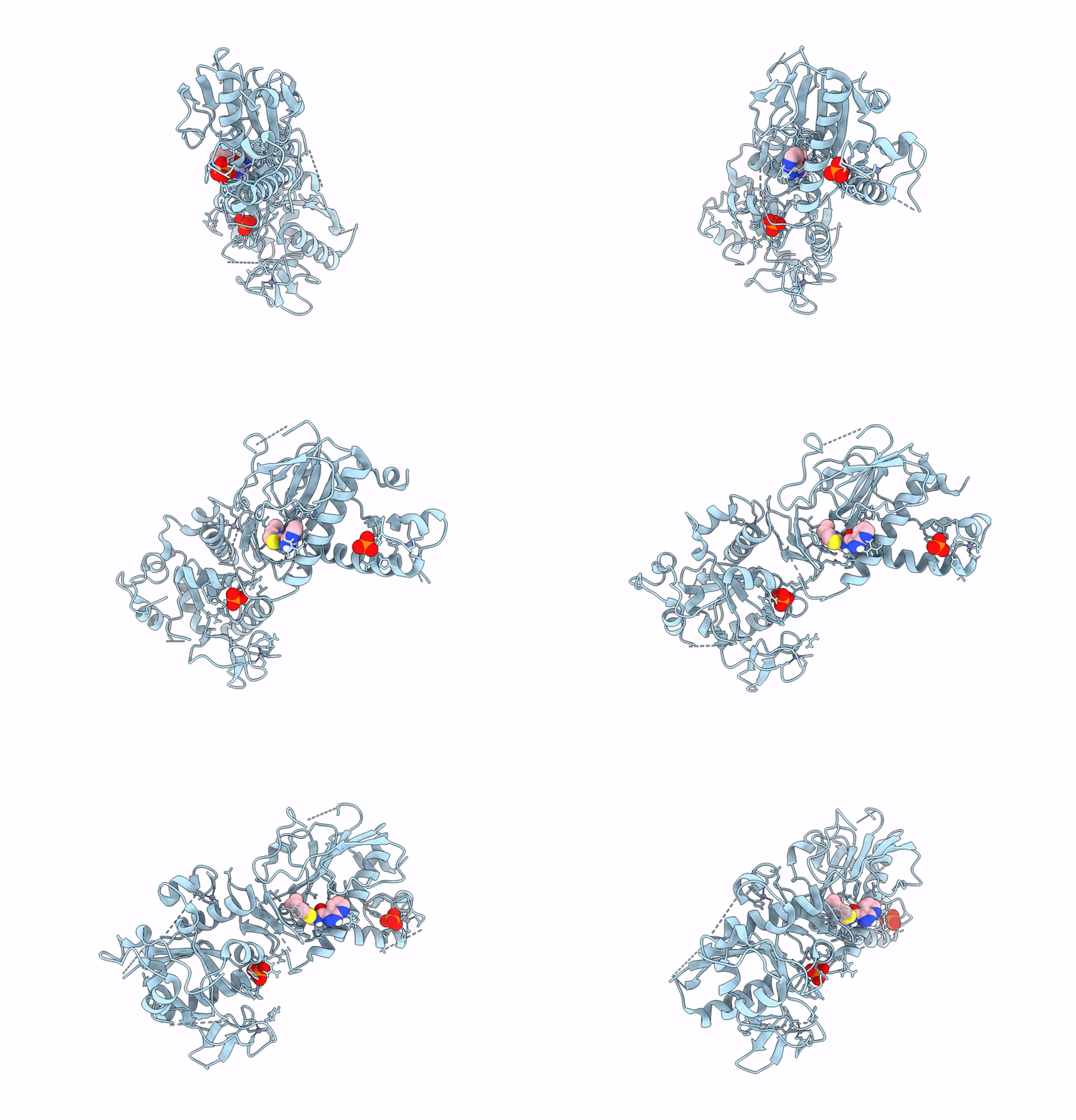
9NJG image
Deposition Date 2025-02-27
Release Date 2025-12-03
Last Version Date 2026-04-01
Entry Detail
PDB ID:
9NJG
Keywords:
Title:
Structure of SARS-CoV-2 NSP14 bound to N-((4-cyclopropylthiazol-2-yl)methyl)-1H-pyrazolo[3,4-b]pyridine-3-carboxamide
Biological Source:
Expression System(s):
Method Details:
Experimental Method:
Resolution:
2.10 Å
R-Value Free:
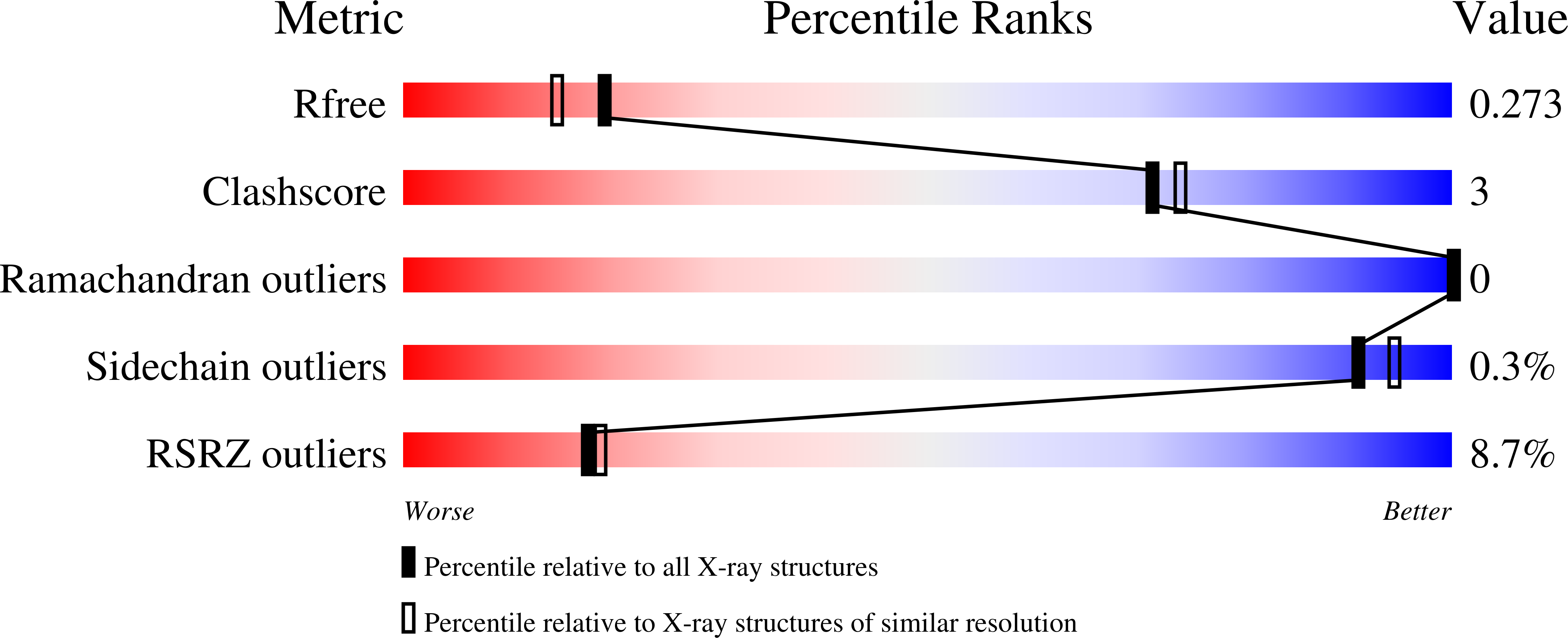
0.27
R-Value Work:
0.23
R-Value Observed:
0.23
Space Group:
P 21 21 21
Macromolecular Entities
Structures with similar UniProt ID
Protein Blast
Polymer Type:polypeptide(L)
Molecule:Guanine-N7 methyltransferase
Gene (Uniprot):rep
Chain IDs:A
Chain Length:523
Number of Molecules:1
Biological Source:Severe acute respiratory syndrome coronavirus 2
Primary Citation
Fragment-Based Development of NSP14 Exonuclease Inhibitors Confounded by Batch-to-Batch Variability.
ACS Chem. Biol. 21 413 418 (2026)
PMID: 41698876 DOI: 10.1021/acschembio.5c00930

Abstact

Point mutations in the exonuclease (ExoN) site of nonstructural protein 14 (NSP14) compromise the fitness of betacoronaviruses such as SARS-CoV-2, implicating NSP14 ExoN inhibition as an antiviral strategy. However, there are no advanced compounds that inhibit NSP14's ExoN activity. Building upon the reported crystal structures of two fragments bound to NSP14's ExoN site, we identified a series of 3,5-disubsituted pyrazoles that bound to and inhibited NSP14 ExoN. However, upon resynthesis, we discovered that these putative leads were false positives, perhaps due to contaminating divalent cations, which potently inhibit NSP14 ExoN. Our results provide a cautionary tale to the field about the sensitivity of NSP14 to divalent cations and illustrate the challenges associated with directly targeting the NSP14 ExoN site via fragment merging.

Legend

Protein

Chemical

Disease

Primary Citation of related structures
Feedback Form
Name
Email
Institute
Feedback