

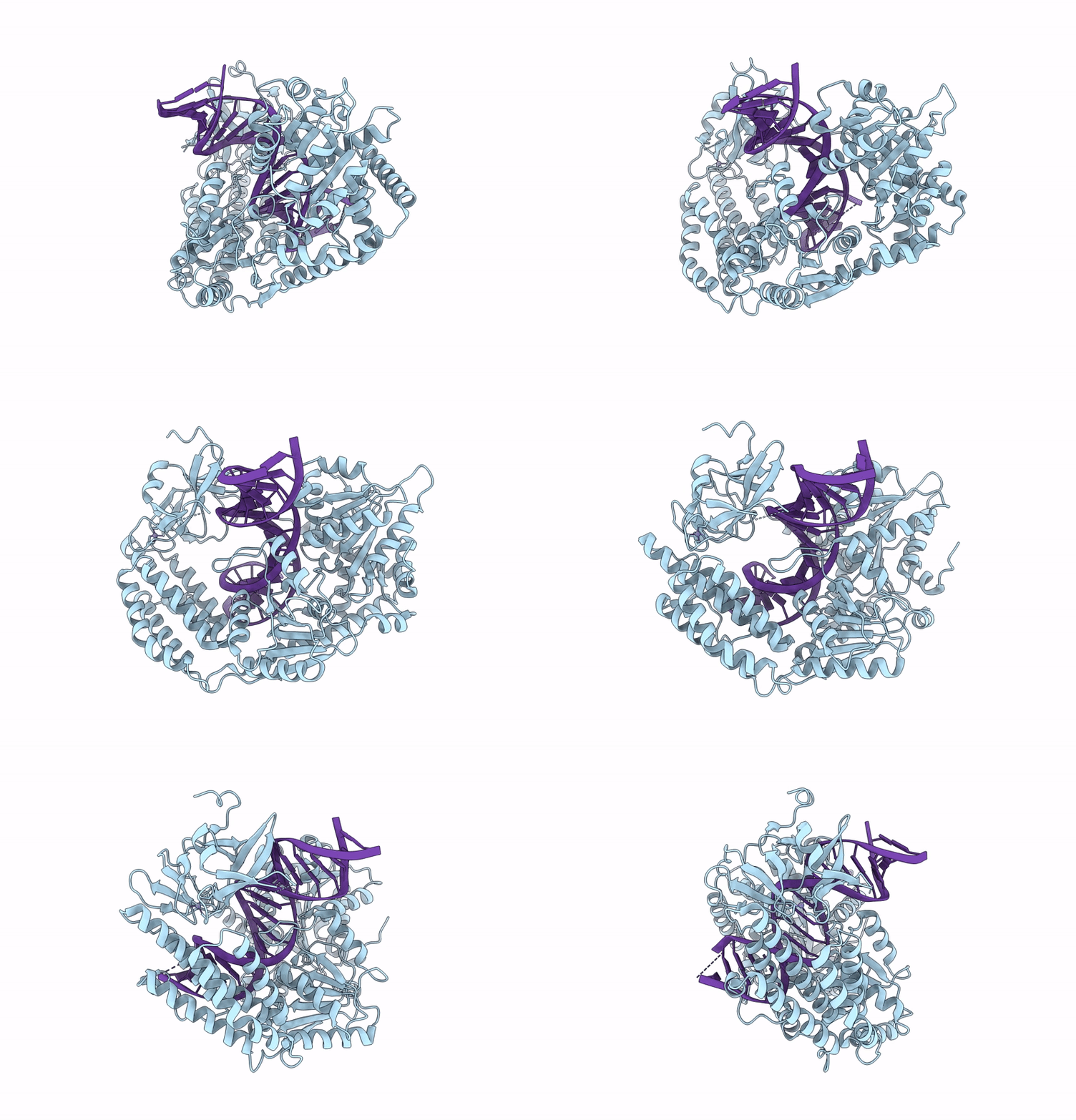
9KTW image
Deposition Date 2024-12-03
Release Date 2025-12-03
Last Version Date 2026-06-17
Entry Detail
PDB ID:
9KTW
Keywords:
Title:
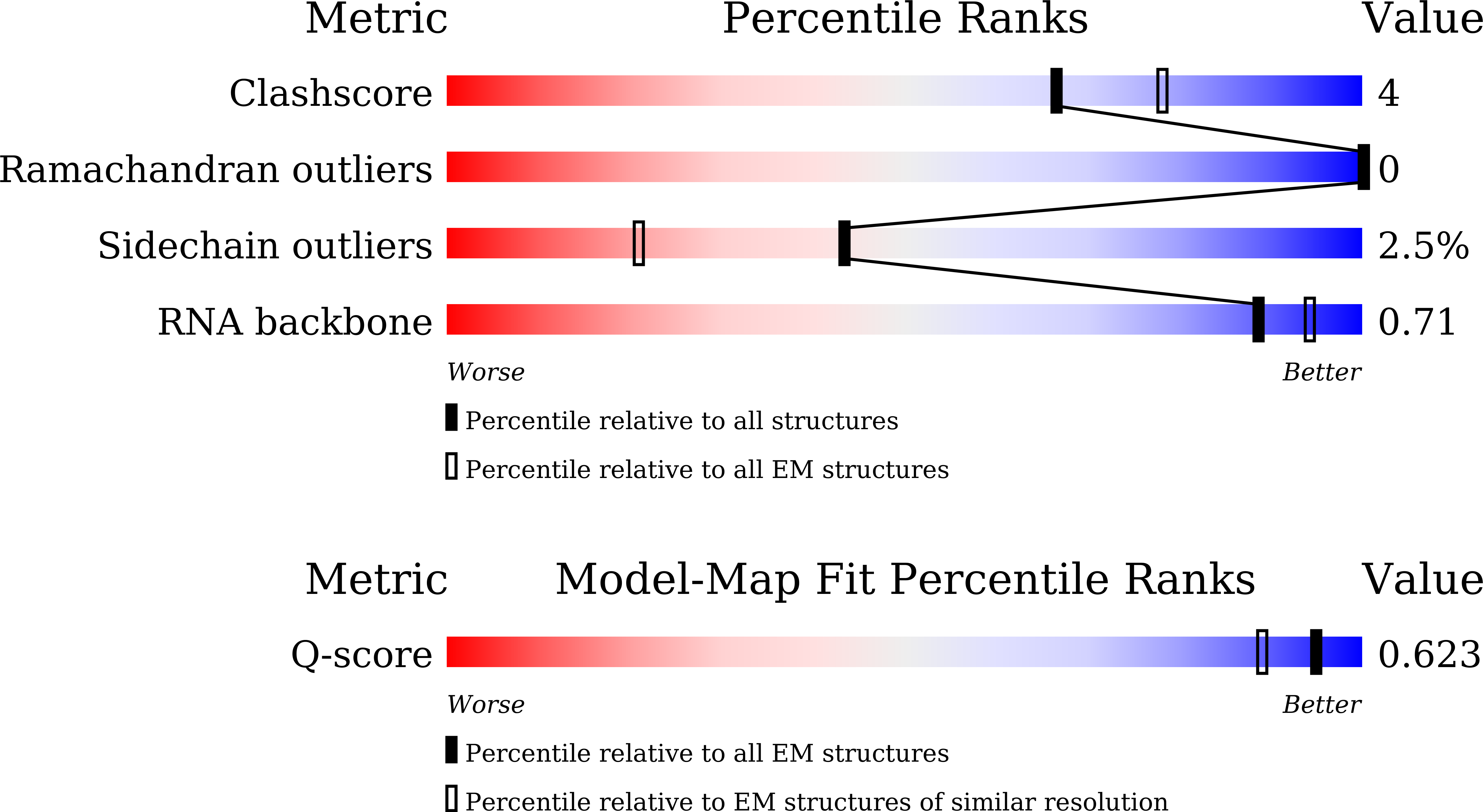
Cryo-EM structure of wild type RIG-I with 5'p-RNA
Biological Source:
Source Organism(s):
Expression System(s):
Method Details:
Experimental Method:
Resolution:
2.60 Å
Aggregation State:
PARTICLE
Reconstruction Method:
SINGLE PARTICLE
Macromolecular Entities
Polymer Type:polypeptide(L)
Molecule:Antiviral innate immune respo
Gene (Uniprot):RIGI
Chain IDs:A (auth: B)
Chain Length:925
Number of Molecules:1
Biological Source:Homo sapiens
Polymer Type:polyribonucleotide
Molecule:5'p-RNA (60-MER)
Chain IDs:B (auth: C)
Chain Length:60
Number of Molecules:1
Biological Source:synthetic construct
Ligand Molecules
Primary Citation
Local activation of mutant RIG-I by short noncoding Y-RNA in the kidney triggers lethal nephritis.
Sci Immunol 10 eadx1135 eadx1135 (2025)
PMID: 41171879 DOI: 10.1126/sciimmunol.adx1135

Abstact

Detecting viral RNA by the ubiquitously expressed cytosolic receptor retinoic acid-inducible gene I (RIG-I) is critical for antiviral immune responses, including type I interferon (IFN-I) and chemokine induction. RIG-I has evolved to sensitively recognize viral RNA but tolerate self-RNA. RIG-I mutations causing self-tolerance loss induce IFN-I and chemokines in patients, initiating autoinflammation. We observed that mice expressing the RIG-I patient variant E373A spontaneously developed lupus-like nephritis. Kidney-derived chemokines attracted monocytes through CCR2 (C-C motif chemokine receptor 2) and induced interstitial inflammation and tubular damage. This led to renal dysfunction independently of immunoglobulin G-nucleic acid complex deposition. Sequencing of RIG-I E373A-bound RNA from kidney-derived cells identified short noncoding Y-RNA. Deletion of the most enriched Y-RNA species reduced RIG-I E373A-induced IFN-I responses. Cryo-electron microscopy and molecular analyses revealed that RIG-I E373A binding to the Y-RNA stem region resulted in its activation. Thus, we demonstrate that Y-RNA activates a RIG-I gain-of-function mutant in a tissue-specific manner, causing autoinflammation culminating in lupus nephritis.

Legend

Protein

Chemical

Disease

Primary Citation of related structures
Feedback Form
Name
Email
Institute
Feedback