

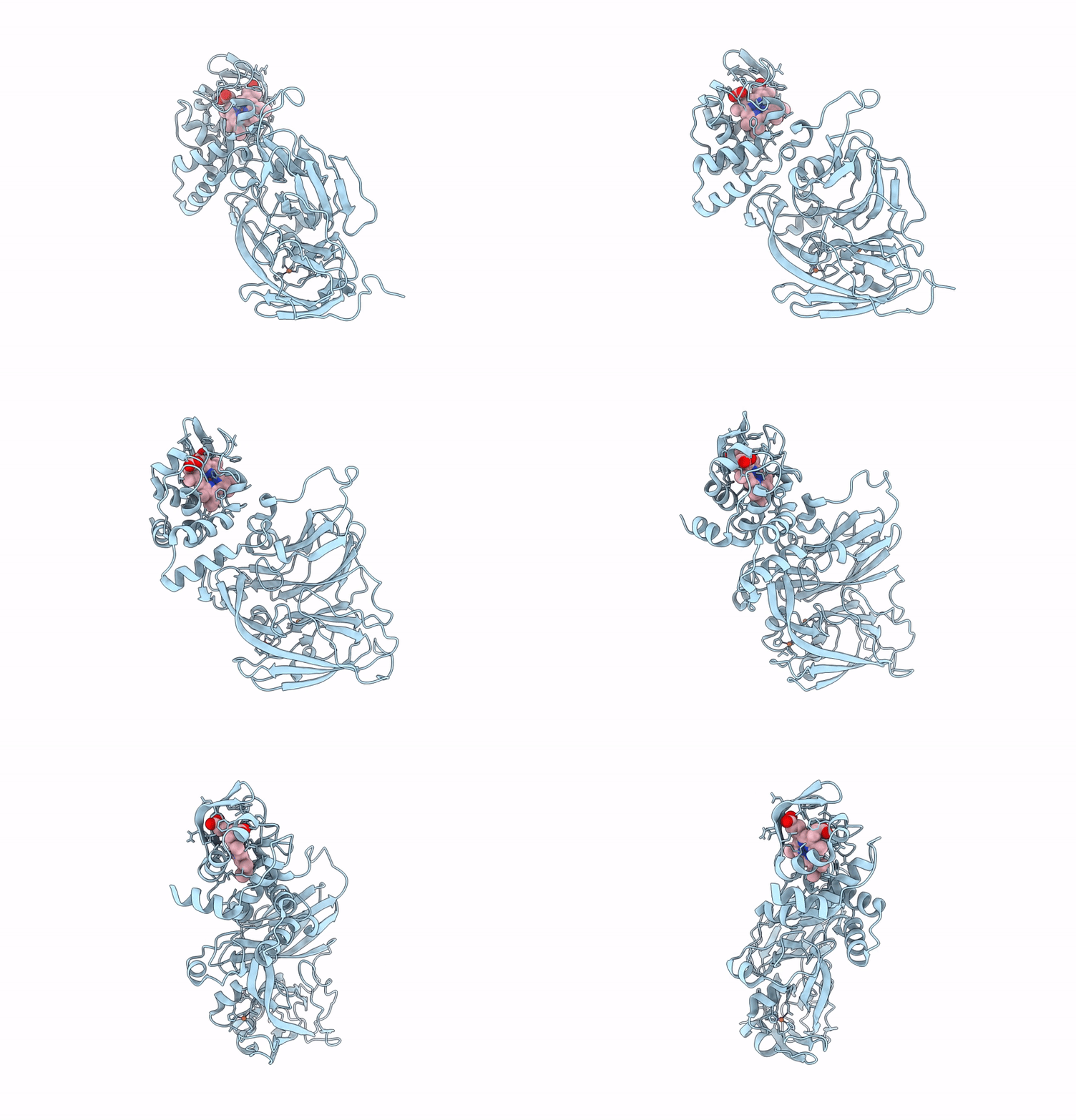
9FUJ image
Deposition Date 2024-06-26
Release Date 2025-07-09
Last Version Date 2026-09-02
Entry Detail
PDB ID:
9FUJ
Keywords:
Title:
CRYSTAL STRUCTURE OF REDUCED F295L MUTANT OF THREE-DOMAIN HEME-CU NITRITE REDUCTASE FROM RALSTONIA PICKETTII
Biological Source:
Source Organism(s):
Expression System(s):
Method Details:
Experimental Method:
Resolution:
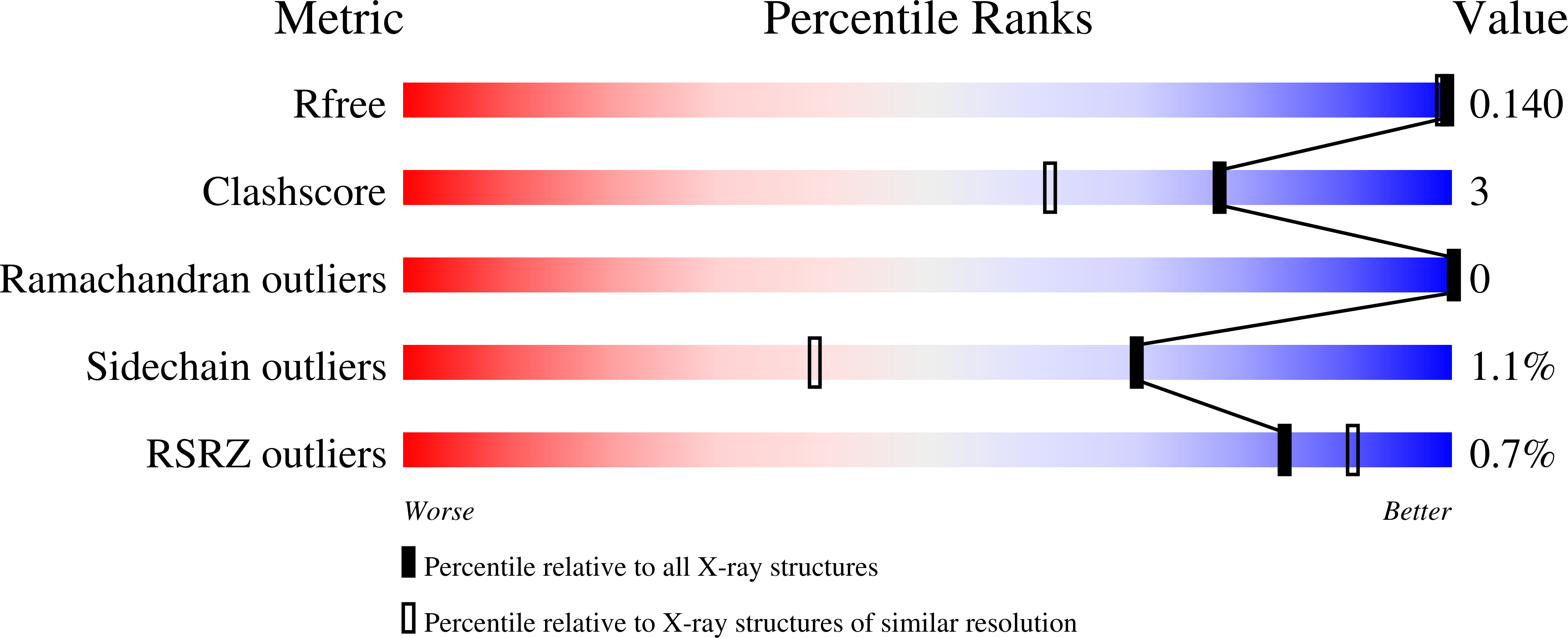
1.33 Å
R-Value Free:
0.14
R-Value Work:
0.11
Space Group:
H 3
Macromolecular Entities
Polymer Type:polypeptide(L)
Molecule:Copper-containing nitrite red
Gene (Uniprot):nirK
Mutagens:F295L
Chain IDs:A
Chain Length:0
Number of Molecules:1
Biological Source:Ralstonia pickettii
Primary Citation
Functional role of a tethered domain as a naturally fused cognate partner is demonstrated in a three-domain copper nitrite reductase.
Iucrj 13 498 513 (2026)
PMID: 42290377 DOI: 10.1107/S2052252526004549

Abstact

Copper-containing nitrite reductases (CuNiRs) catalyse the reduction of nitrite to nitric oxide and are a key enzyme in the anaerobic ammonium oxidation and denitrification steps of the nitrogen cycle. The recent recognition of the widespread distribution of three-domain CuNiRs where cognate redox partners are fused to the core NiR enzyme offered the possibility of studying coordinated events (e.g. proton-coupled electron transfer) in a conformationally stable donor-acceptor complex. The C-terminal cytochrome c tethered domain of the CuNiR from Ralstonia pickettii (RpNiR) has been well studied. Reverse engineering of RpNiR undertaken to remove the cognate partner domain showed that the presence of the additional domain resulted in significant differences in the apparent K(m) for nitrite and the reduction potentials of the Cu centres when compared with the core enzyme. The oxidation state of the haem centre and the position of the tethering linker have also been shown to control access of substrate to the active site. A key feature of this control is a conserved tyrosine residue (Tyr323 in RpNiR) located in the tethering linker between the fused domain and the core enzyme. To gain insight into this control, we have undertaken targeted mutations of RpNiR to probe the so-called primary proton channel and perturb putative electron transfer routes from the haem to the ;gatekeeper' Tyr323 and to the T1Cu centre. The resolution of our crystallographic data to better than 1.2 A enabled us to apply unrestrained SHELXL refinement of the structures. Our data provide a significant advance in our understanding of catalysis and modulation of electron transfer in these tethered systems, with wider implications for these fundamental processes in other protein complexes.

Legend

Protein

Chemical

Disease

Primary Citation of related structures
Feedback Form
Name
Email
Institute
Feedback