

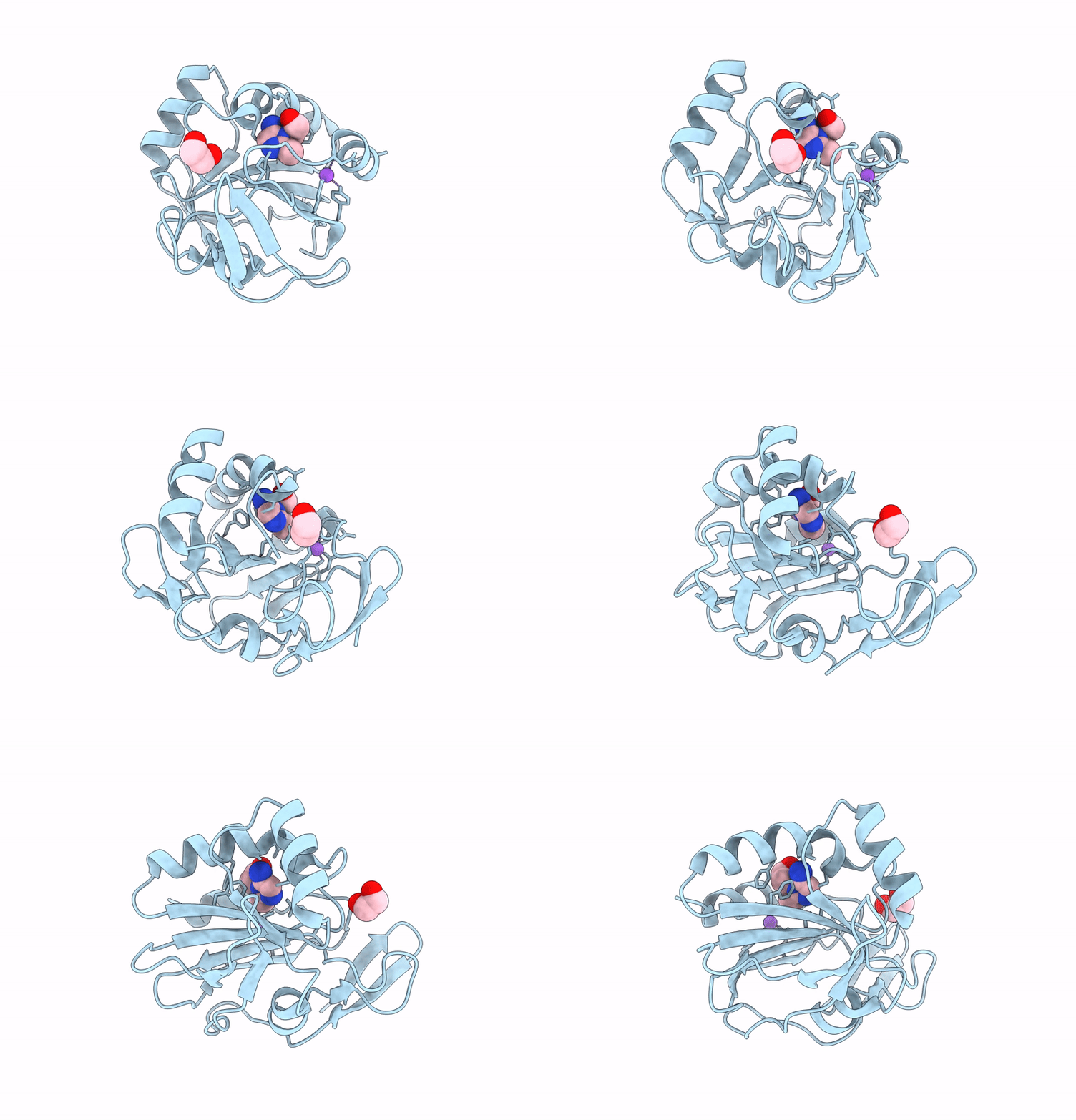
9F64 image
Deposition Date 2024-04-30
Release Date 2025-05-14
Last Version Date 2026-04-22
Entry Detail
PDB ID:
9F64
Keywords:
Title:
Crystal structure of thiol peroxidase mutant (C94A) in complex with Metro* (H. pylori
Biological Source:
Source Organism(s):
Expression System(s):
Method Details:
Experimental Method:
Resolution:
1.75 Å
R-Value Free:
0.22
R-Value Work:
0.19
R-Value Observed:
0.19
Space Group:
C 1 2 1

Macromolecular Entities
Structures with similar UniProt ID
Protein Blast
Polymer Type:polypeptide(L)
Molecule:Thiol peroxidase
Gene (Uniprot):tpx
Mutagens:C94A
Chain IDs:A
Chain Length:188
Number of Molecules:1
Biological Source:Helicobacter pylori
Primary Citation
Metronidazole and ether derivatives target Helicobacter pylori via simultaneous stress induction and inhibition.
Nat Microbiol 11 1049 1063 (2026)
PMID: 41851492 DOI: 10.1038/s41564-026-02291-w

Abstact

Metronidazole is a front-line drug for the treatment of Helicobacter pylori infections. However, its mode of action and cellular targets are poorly defined, and higher dosing and combination therapies are required to overcome resistance. Here we performed activity-based protein profiling with tailored metronidazole probes and identified chaperonin HpGroEL and thiol peroxidase HpTpx as prominent targets, the latter being essential for H. pylori survival under oxidative stress. Alkynylated ether probes exhibited enhanced antibacterial potency compared with the parent drug in vitro, including activity against resistant strains. Biological assays, chemical proteomics and co-crystallization studies confirmed target engagement, with enhanced binding of ether derivatives to HpTpx. Refined ether analogues exhibited favourable pharmacological profiles without cytotoxicity. The in vivo activity of ether analogues using an H. pylori mouse model demonstrated full bacterial eradication at low dosing of 0.3 mg kg(-1) day(-1). Our findings reveal that stress induction and simultaneous inhibition of the stress response represent a mechanism of this compound class.

Legend

Protein

Chemical

Disease

Primary Citation of related structures
Feedback Form
Name
Email
Institute
Feedback