

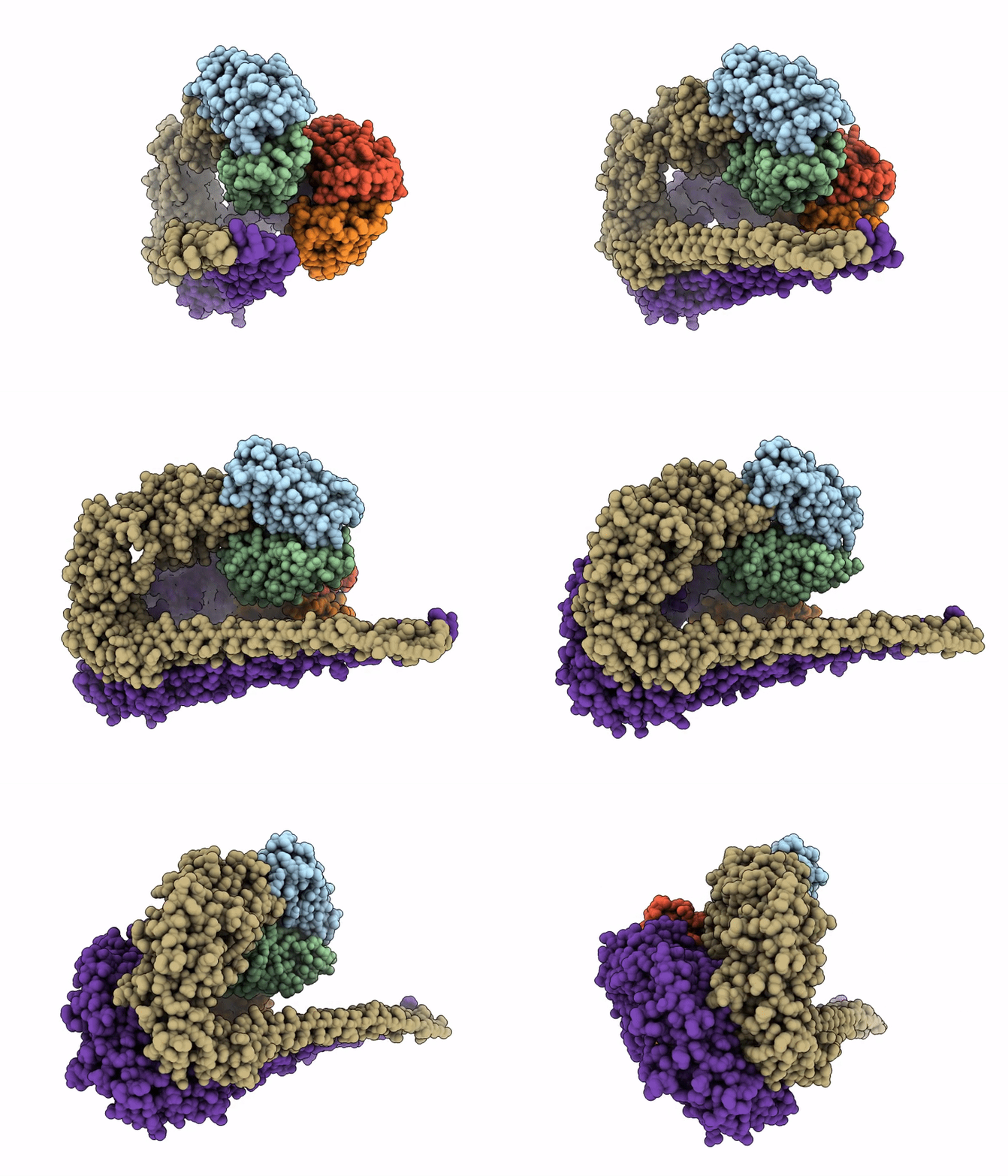
9DO6 image
Deposition Date 2024-09-18
Release Date 2025-09-24
Last Version Date 2026-10-07
Entry Detail
PDB ID:
9DO6
Title:
Membrane-spanning OlyA/PlyB pore complex focused refinement
Biological Source:
Source Organism(s):
Method Details:
Experimental Method:
Resolution:
2.54 Å
Aggregation State:
PARTICLE
Reconstruction Method:
SINGLE PARTICLE
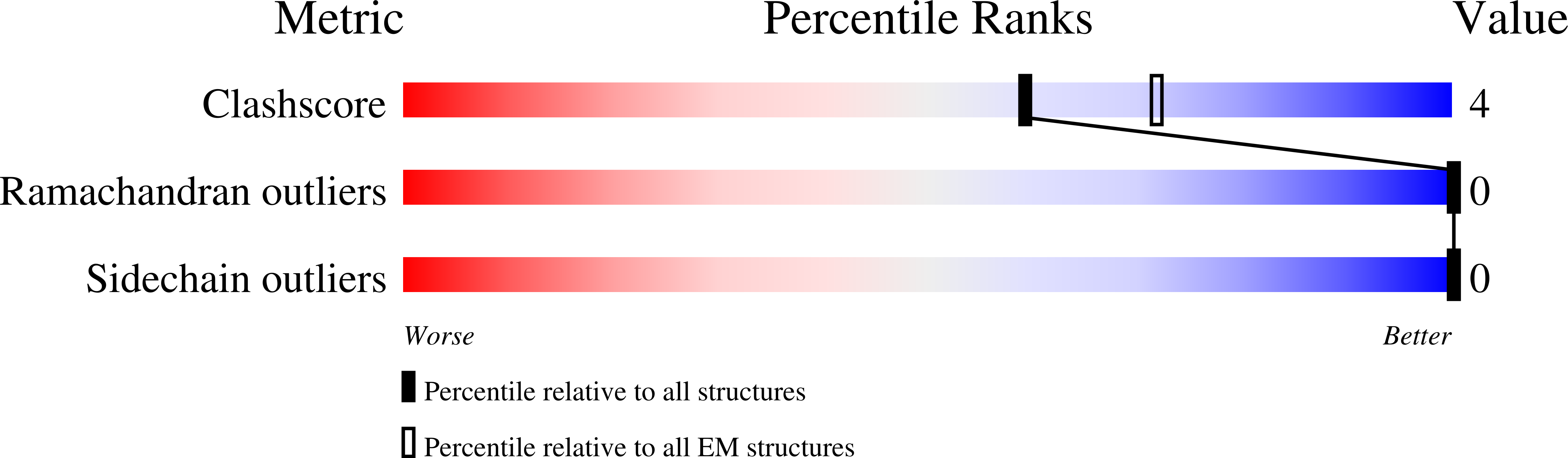
Macromolecular Entities
Polymer Type:polypeptide(L)
Molecule:Ostreolysin A6
Gene (Uniprot):OlyA6
Chain IDs:A, B, D, E
Chain Length:143
Number of Molecules:4
Biological Source:Pleurotus ostreatus
Polymer Type:polypeptide(L)
Molecule:Pleurotolysin B
Gene (Uniprot):plyB
Chain IDs:C, F
Chain Length:483
Number of Molecules:2
Biological Source:Pleurotus ostreatus
Ligand Molecules
Primary Citation
Visualization of the interaction between sphingomyelin and cholesterol in lipid bilayer membranes.
Proc.Natl.Acad.Sci.USA 123 e2528400123 e2528400123 (2026)
PMID: 42085157 DOI: 10.1073/pnas.2528400123

Abstact

Biomembranes are complex two-dimensional liquids composed of hundreds of lipid species that interact in a myriad of ways. One such interaction, that between sphingomyelin (SM) and cholesterol in plasma membranes of animal cells, provides many functional benefits, including protection from microbial infection, prevention of unrestrained cell growth, and proper maintenance of cellular lipid composition. Owing to the liquid nature of membranes, the structure of the SM/cholesterol interaction, or any other functionally critical lipid-lipid interaction, has remained elusive. Here, we overcome this challenge using a fungal toxin called Ostreolysin A (OlyA), that has been shown to specifically bind to SM/cholesterol complexes in membranes. We used OlyA to stabilize the SM/cholesterol interaction much in the same way as antibodies are used to stabilize preexisting protein complexes. Cryoelectron microscopy analysis of OlyA bound to SM/cholesterol membranes reveals the details of the tight interaction between these two lipids-the steroid nucleus of cholesterol packs against the acyl chains of SM, and a hydrogen bond forms between the nitrogen on SM's ceramide base and the oxygen on cholesterol's hydroxyl group, thus sequestering this key functional group of cholesterol. The importance of hydrogen bonding in stabilizing the SM/cholesterol interaction is supported by structural analysis of a mutant form of OlyA that binds free SM in a cholesterol-independent manner. These results provide structural insights into the organization of cholesterol in membranes.

Legend

Protein

Chemical

Disease

Primary Citation of related structures
Feedback Form
Name
Email
Institute
Feedback