

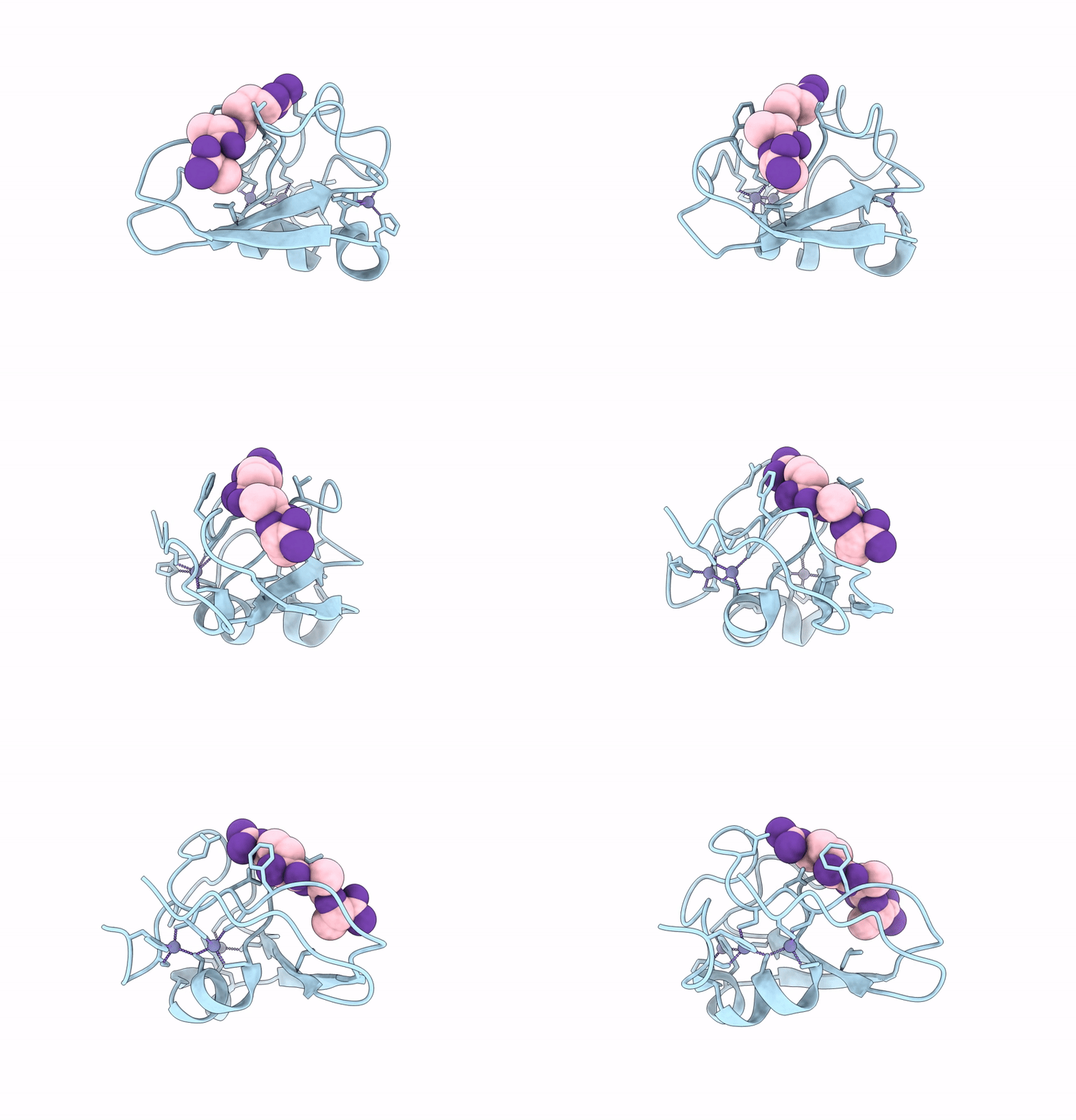
9DNR image
Deposition Date 2024-09-17
Release Date 2025-08-13
Last Version Date 2026-02-25
Entry Detail
PDB ID:
9DNR
Keywords:
Title:
Structure of UBR2-RWF complex
Biological Source:
Source Organism(s):
Expression System(s):
Method Details:
Experimental Method:
Resolution:
1.22 Å
R-Value Free:
0.17
R-Value Work:
0.16
R-Value Observed:
0.16
Space Group:
P 1 21 1
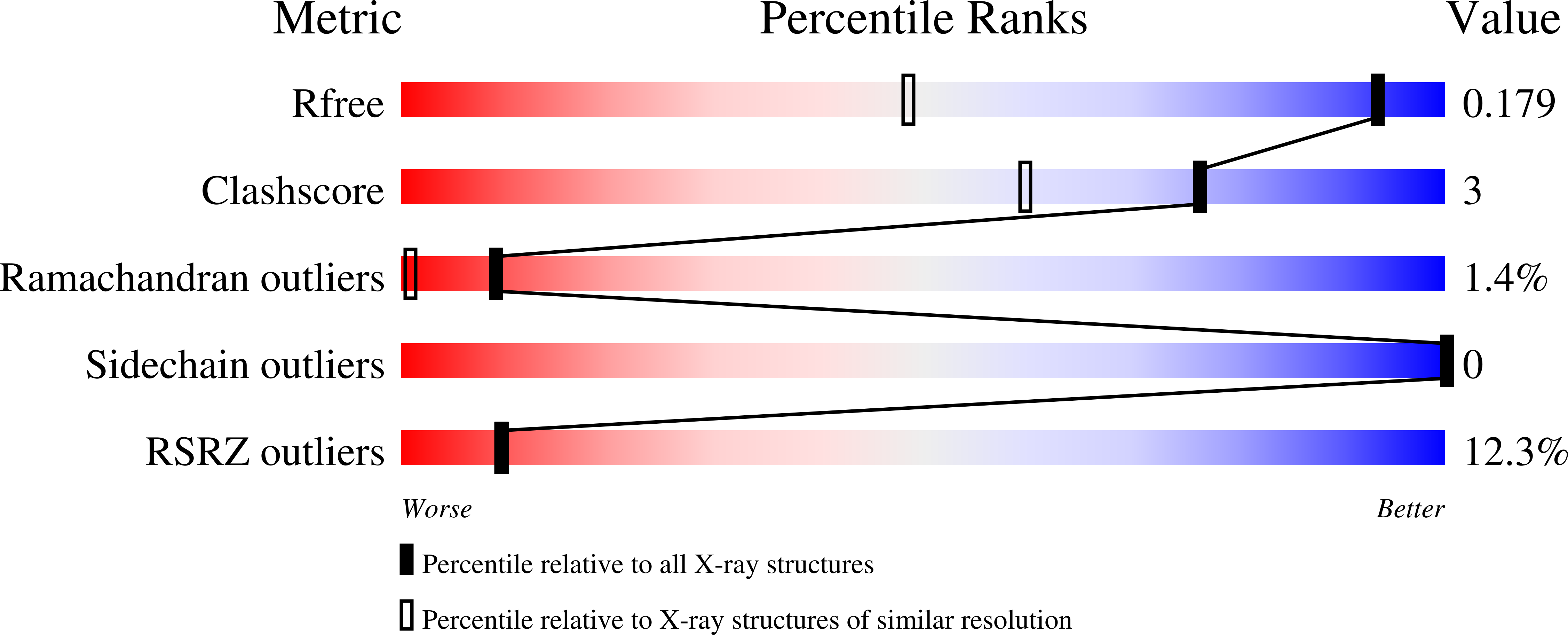
Macromolecular Entities
Polymer Type:polypeptide(L)
Molecule:E3 ubiquitin-protein ligase U
Gene (Uniprot):UBR2
Chain IDs:A
Chain Length:70
Number of Molecules:1
Biological Source:Homo sapiens
Structural Superimposition Protein Blast
Polymer Type:polypeptide(L)
Molecule:ARG-TRP-PHE-NH2
Chain IDs:B (auth: C)
Chain Length:4
Number of Molecules:1
Biological Source:synthetic construct
Ligand Molecules
Primary Citation
An alternative pocket for binding the N-degrons by the UBR1 and UBR2 ubiquitin E3 ligases.
Protein Sci. 34 e70248 e70248 (2025)
PMID: 40880185 DOI: 10.1002/pro.70248

Abstact

The UBR family of ubiquitin ligases binds to N-termini of their targets (known as N-degron) to induce their ubiquitination and degradation via a conserved domain known as UBR-box. UBR1 and UBR2 share the highest sequence homology among the family, and substantial structural studies were previously performed for substrate binding by the UBR-boxes of UBR1 and UBR2. Here, we describe a new pocket in the UBR-boxes of UBR1 and UBR2 for binding the second residues of N-degrons through determining five co-crystal structures of the UBR-boxes with various N-degron peptides. Together with binding affinities measured by fluorescence polarization, we show that the two highly homologous UBR-boxes can interact with the second residue of an N-degron differently. In addition, the UBR-boxes undergo different conformational changes when binding N-degrons. Furthermore, we demonstrate that the sidechain of the third amino acid of an N-degron has no contribution to binding the UBR-boxes. These findings represent a new conceptual advancement for the UBR E3 ligases and the new insights described here can be leveraged for developing their selective ligands for research and potential therapies.

Legend

Protein

Chemical

Disease

Primary Citation of related structures
Feedback Form
Name
Email
Institute
Feedback