

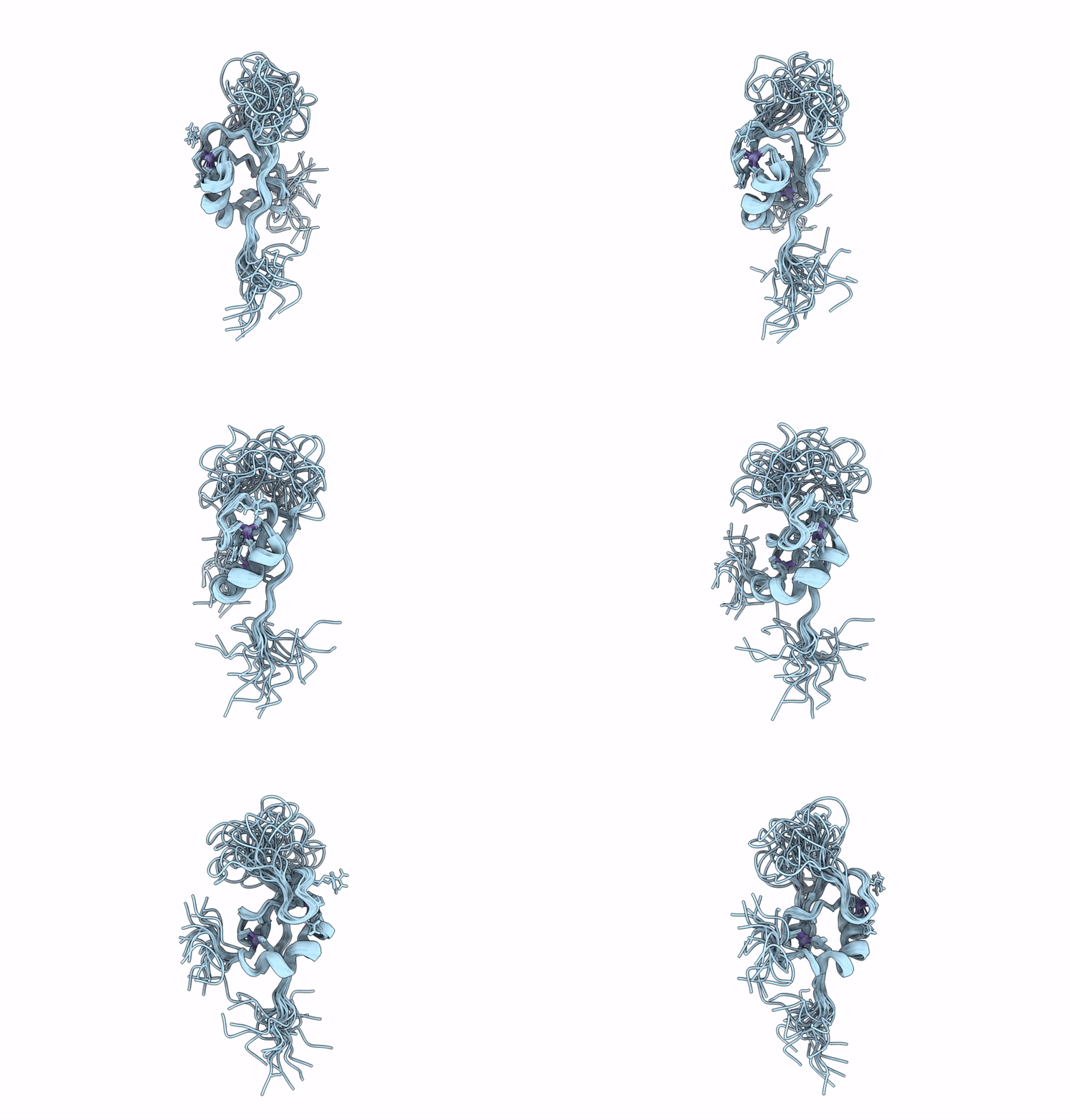
9DE2 image
Deposition Date 2024-08-28
Release Date 2024-09-18
Last Version Date 2024-09-18
Entry Detail
PDB ID:
9DE2
Keywords:
Title:
ETO2 MYND bound to MPPL peptide from GATAD2A
Biological Source:
Source Organism(s):
Homo sapiens (Taxon ID: 9606)
Expression System(s):
Method Details:
Experimental Method:
Conformers Calculated:
100
Conformers Submitted:
20
Selection Criteria:
structures with the lowest energy

Macromolecular Entities
Structures with similar UniProt ID
Protein Blast
Polymer Type:polypeptide(L)
Molecule:GATAD2A-MPPL motif and ETO2 N
Gene (Uniprot):CBFA2T3
Chain IDs:A
Chain Length:71
Number of Molecules:1
Biological Source:Homo sapiens
Ligand Molecules
Primary Citation
The role of multivalency in the association of the eight twenty-one protein 2 (ETO2) with the nucleosome remodeling and deacetylase (NuRD) complex.
Nucleic Acids Res. 53 ? ? (2025)
PMID: 40421803 DOI: 10.1093/nar/gkaf439

Abstact

Over the past 50 years, research has uncovered the co-regulatory proteins and complexes that silence the expression of the γ-globin gene in a developmental stage-specific manner. Recent research expanded the list of these regulatory factors by showing that the eight twenty-one protein 2 (ETO2) helps recruit the nucleosome remodeling and deacetylase (NuRD) complex to the globin locus. Furthermore, ETO2 regulates hematopoietic differentiation and is a potential therapeutic target for acute leukemia. In this work, we identify critical interactions between ETO2 and the GATA Zn finger domain containing the 2A (GATAD2A) component of NuRD. The ETO2 nervy homology region 4 (NHR4) domain interacts with multiple polyproline-leucine motifs within GATAD2A. We demonstrate that oligomerization of the ETO2 nervy homology region 3 (NHR3) enhances its affinity for peptides containing at least two polyproline-leucine motifs. Replacing the native motifs from GATAD2A with a higher-affinity sequence from known-binder N-CoR markedly enhances binding affinity, yielding a peptide that disrupts the interaction between ETO2 and target proteins. Enforced peptide expression elevates γ-globin expression levels and induces differentiation of HUDEP-2 and K562 cells. These findings provide insight into ETO2-mediated recruitment of co-regulatory proteins and yield a novel approach for ETO2 inhibition through multivalent binding of the NHR4 domain.

Legend

Protein

Chemical

Disease

Primary Citation of related structures
Feedback Form
Name
Email
Institute
Feedback