

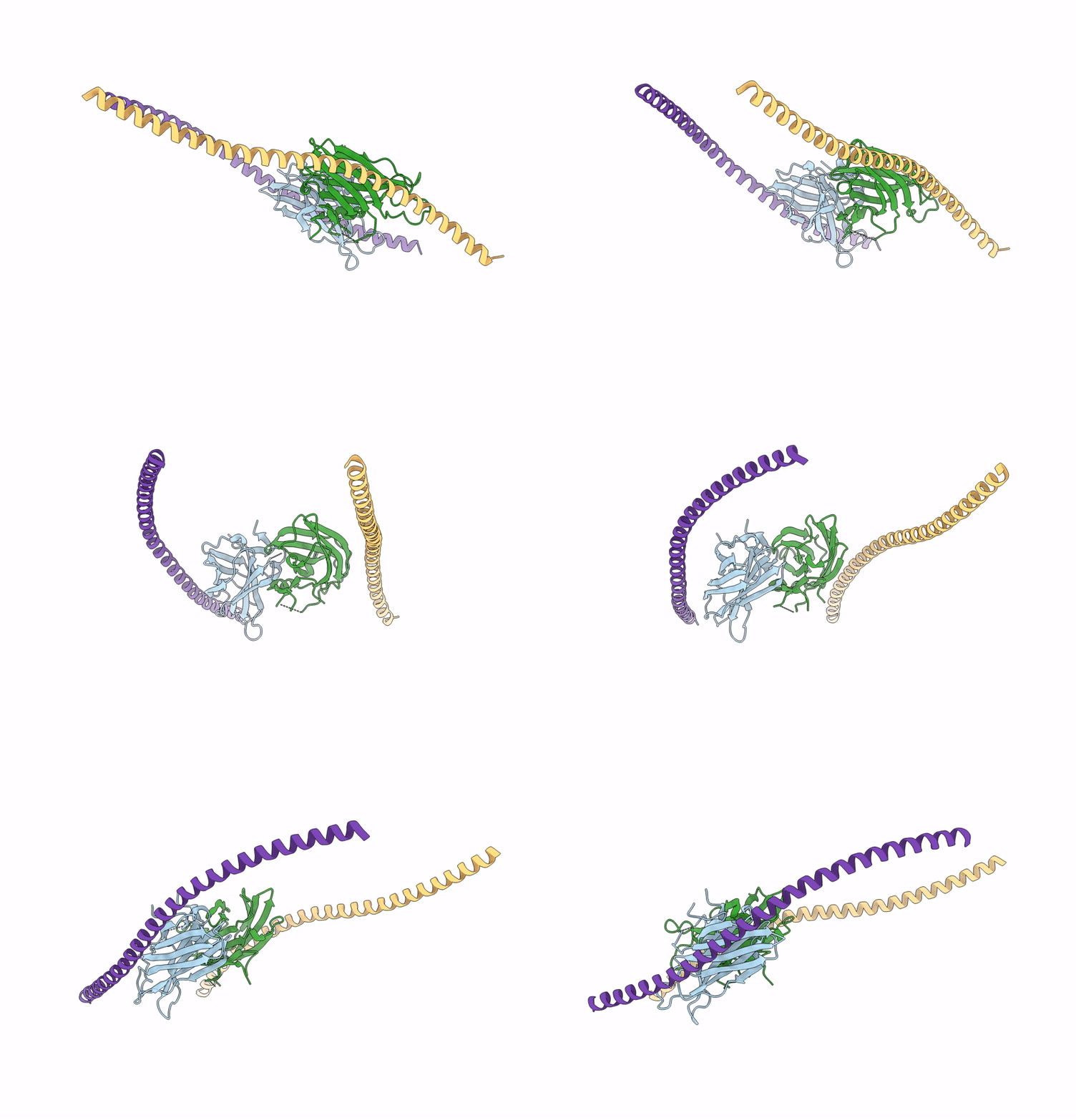
8Z22 image
Deposition Date 2024-04-12
Release Date 2025-04-02
Last Version Date 2025-10-22
Entry Detail
PDB ID:
8Z22
Keywords:
Title:
Crystal structure of the liprin-alpha2/RIM1 complex
Biological Source:
Source Organism(s):
Rattus norvegicus (Taxon ID: 10116)
Homo sapiens (Taxon ID: 9606)
Expression System(s):
Method Details:
Experimental Method:
Resolution:
2.75 Å
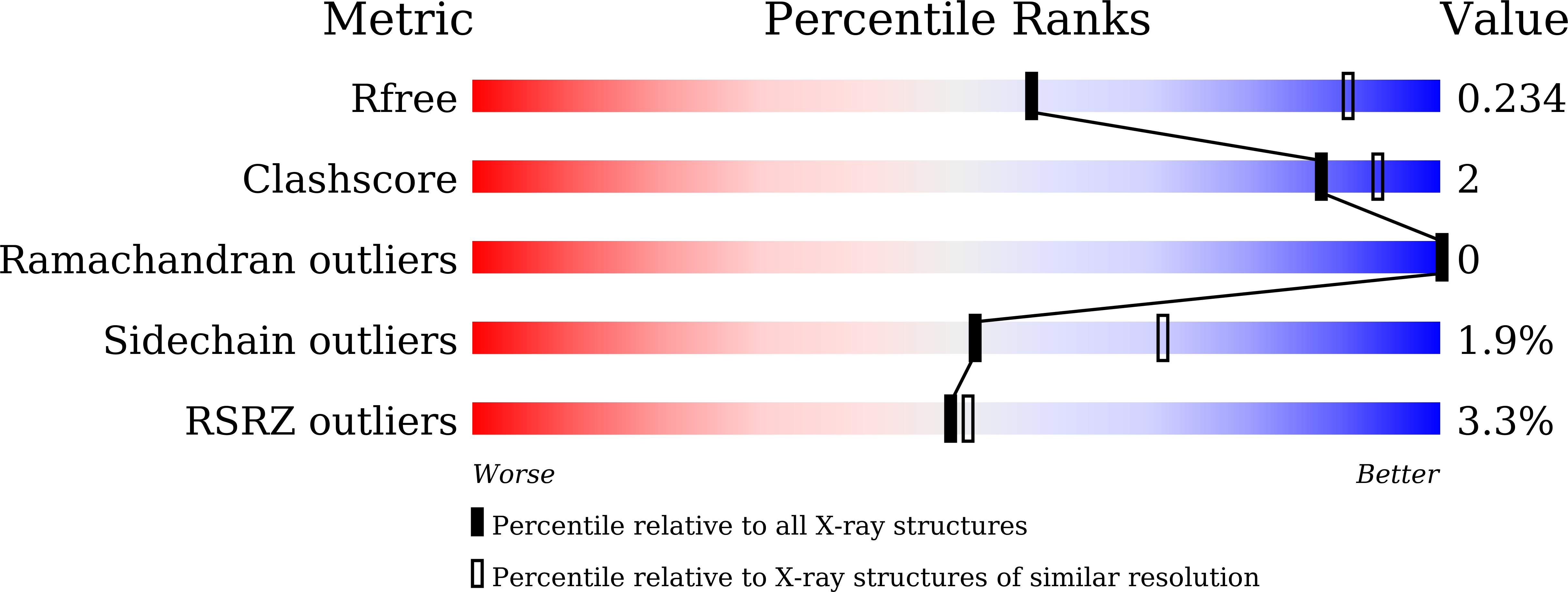
R-Value Free:
0.23
R-Value Work:
0.20
R-Value Observed:
0.20
Space Group:
P 1 21 1
Macromolecular Entities
Structures with similar UniProt ID
Protein Blast
Polymer Type:polypeptide(L)
Molecule:Regulating synaptic membrane
Gene (Uniprot):Rims1
Chain IDs:A, B
Chain Length:175
Number of Molecules:2
Biological Source:Rattus norvegicus
Structures with similar UniProt ID
Protein Blast
Polymer Type:polypeptide(L)
Molecule:Liprin-alpha-2
Gene (Uniprot):PPFIA2
Chain IDs:C, D
Chain Length:111
Number of Molecules:2
Biological Source:Homo sapiens
Primary Citation
The liprin-alpha /RIM complex regulates the dynamic assembly of presynaptic active zones via liquid-liquid phase separation.
PLoS Biol. 23 e3002817 e3002817 (2025)
PMID: 40493522 DOI: 10.1371/journal.pbio.3002817

Abstact

Presynaptic scaffold proteins, including liprin-alpha, RIM, and ELKS, are pivotal to the assembly of the active zone and regulating the coupling of calcium signals and neurotransmitter release, yet the underlying mechanism remains poorly understood. Here, we determined the crystal structure of the liprin-alpha2/RIM1 complex, revealing a multifaceted intermolecular interaction that drives the liprin-alpha/RIM assembly. Neurodevelopmental disease-associated mutations block the formation of the complex. Disrupting this interaction in cultured human neurons impairs synaptic transmission and reduces the readily releasable pool of synaptic vesicles. Super-resolution imaging analysis supports a role for liprin-alpha in recruiting RIM1 to the active zone, presumably by promoting the liquid-liquid phase separation (LLPS) of RIM1. Strikingly, the liprin-alpha/RIM interaction modulates the competitive distribution of ELKS1 and voltage-gated Ca2+ channels (VGCCs) in RIM1 condensates. Disrupting the liprin-alpha/RIM interaction significantly decreased VGCC accumulation in the condensed phase and rendered release more sensitive to the slow calcium buffer EGTA, suggesting an increased physical distance between VGCC and vesicular calcium sensors. Together, our findings provide a plausible mechanism of the liprin-alpha/RIM complex in regulating the coupling of calcium channels and primed synaptic vesicles via LLPS for efficient synaptic transmission and uncover the pathological implication of liprin-alpha mutations in neurodevelopmental disorders.

Legend

Protein

Chemical

Disease

Primary Citation of related structures
Feedback Form
Name
Email
Institute
Feedback