

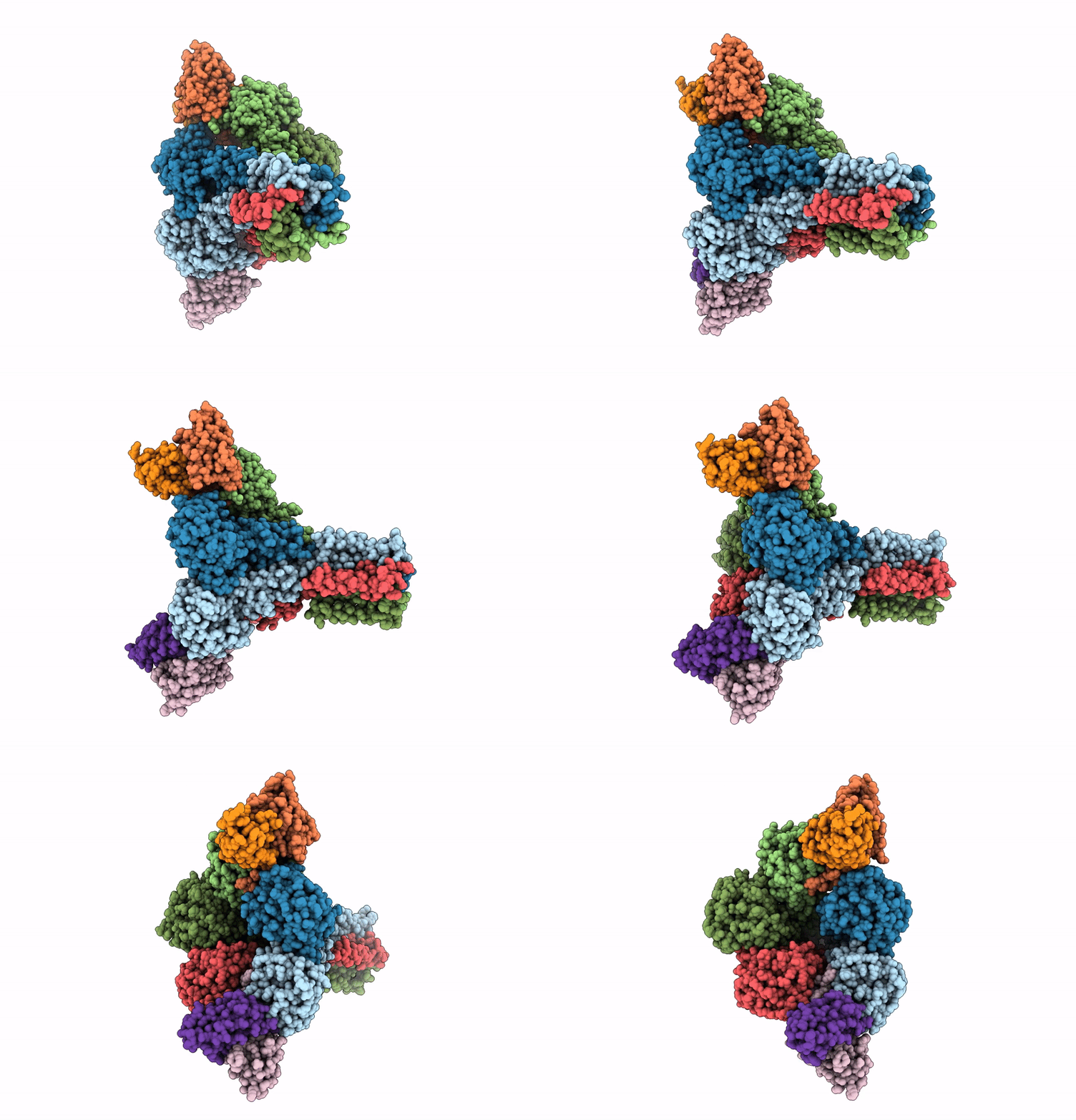
8TMC image
Deposition Date 2023-07-29
Release Date 2025-02-12
Last Version Date 2026-02-25
Entry Detail
PDB ID:
8TMC
Title:
Cryo-EM structure of CorA in complex with conformation-specific synthetic antibody C12 and 20 mM MgCl2, State MG20-2
Biological Source:
Source Organism(s):
Thermotoga maritima (Taxon ID: 2336)
Homo sapiens (Taxon ID: 9606)
Method Details:
Experimental Method:
Resolution:
3.30 Å
Aggregation State:
PARTICLE
Reconstruction Method:
SINGLE PARTICLE
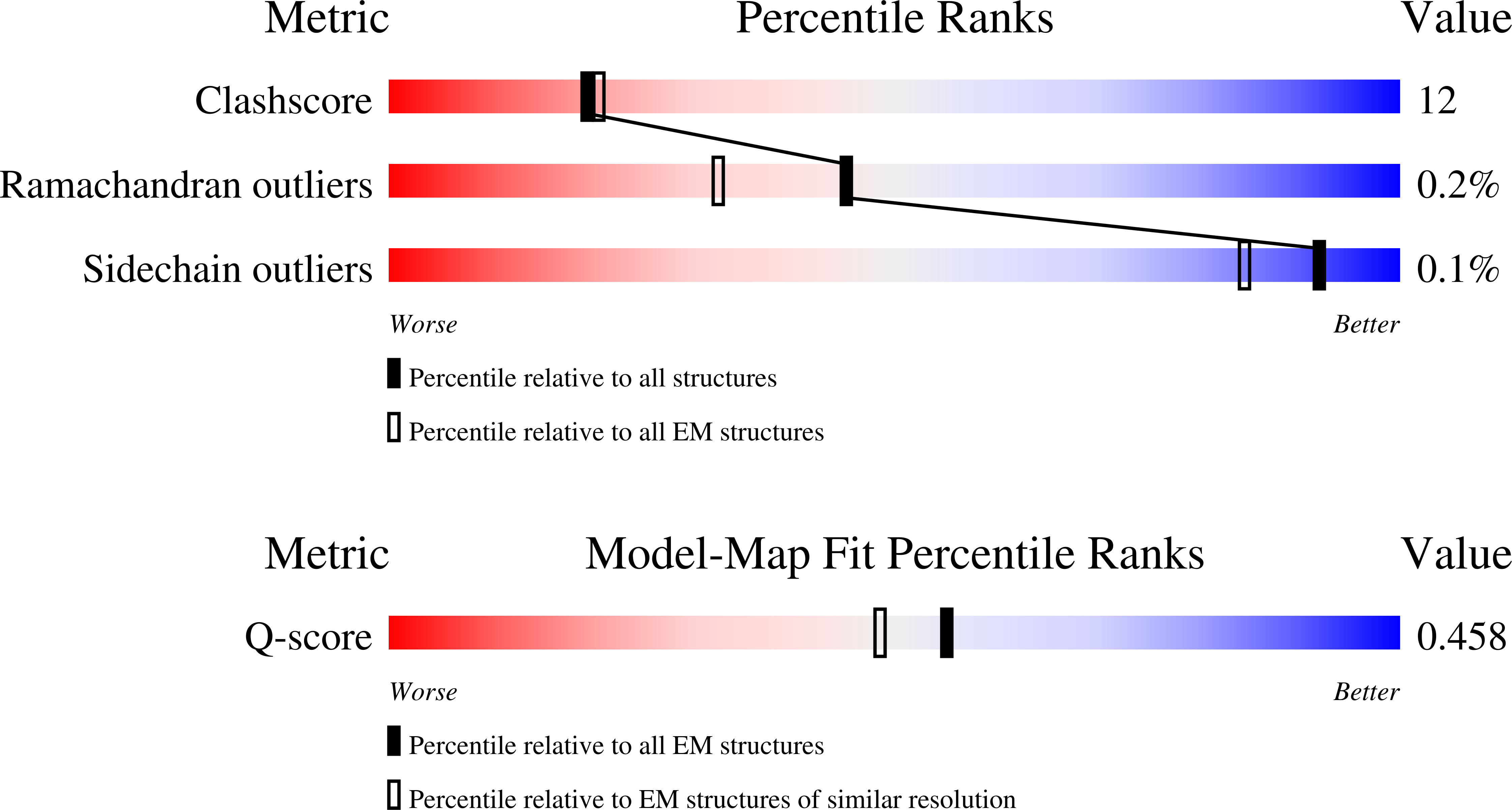
Macromolecular Entities
Structures with similar UniProt ID
Protein Blast
Polymer Type:polypeptide(L)
Molecule:Cobalt/magnesium transport pr
Gene (Uniprot):corA
Chain IDs:A, B, C, D, E
Chain Length:373
Number of Molecules:5
Biological Source:Thermotoga maritima
Protein Blast
Polymer Type:polypeptide(L)
Molecule:sAB C12 Heavy Chain
Chain IDs:F (auth: H), H (auth: F)
Chain Length:240
Number of Molecules:2
Biological Source:Homo sapiens
Protein Blast
Polymer Type:polypeptide(L)
Molecule:sAB C12 Light Chain
Chain IDs:G (auth: L), I (auth: G)
Chain Length:215
Number of Molecules:2
Biological Source:Homo sapiens
Ligand Molecules
Primary Citation
Conformational ensembles of the magnesium channel CorA reveal structural basis for channel gating.
Proc. Natl. Acad. Sci. U.S.A. 123 e2512532123 e2512532123 (2026)
PMID: 41701836 DOI: 10.1073/pnas.2512532123

Abstact

In prokaryotes, CorA is the primary influx pathway for magnesium, a critical divalent cation in cellular physiology and biochemistry. Mechanistic studies show that homopentameric CorA is regulated through an intracellular [Mg(2+)]-dependent negative feedback loop, involving the asymmetric participation of individual subunits. To understand the connection between asymmetry and activation, we used single-particle cryo-EM to solve sixteen structures of nanodisc-reconstituted CorA. We utilized conformation-specific synthetic antibodies to stabilize subtle but significant conformational differences in the cryo-EM structures. Our results demonstrate that CorA exists as a set of conformational ensembles, where population size inversely correlates with intracellular Mg(2+) concentration. These ensembles include channels with a variety of pore conformations, both constricted and dilated, suggesting a spectrum of active CorA functional states. The ensembles connect asymmetric structural transitions in the cytoplasmic domain with conformational changes in the permeation pathway via an electrostatic network, ultimately controlling channel-gating events. We believe that these results establish a framework for understanding magnesium homeostasis in prokaryotic systems.

Legend

Protein

Chemical

Disease

Primary Citation of related structures
Feedback Form
Name
Email
Institute
Feedback