

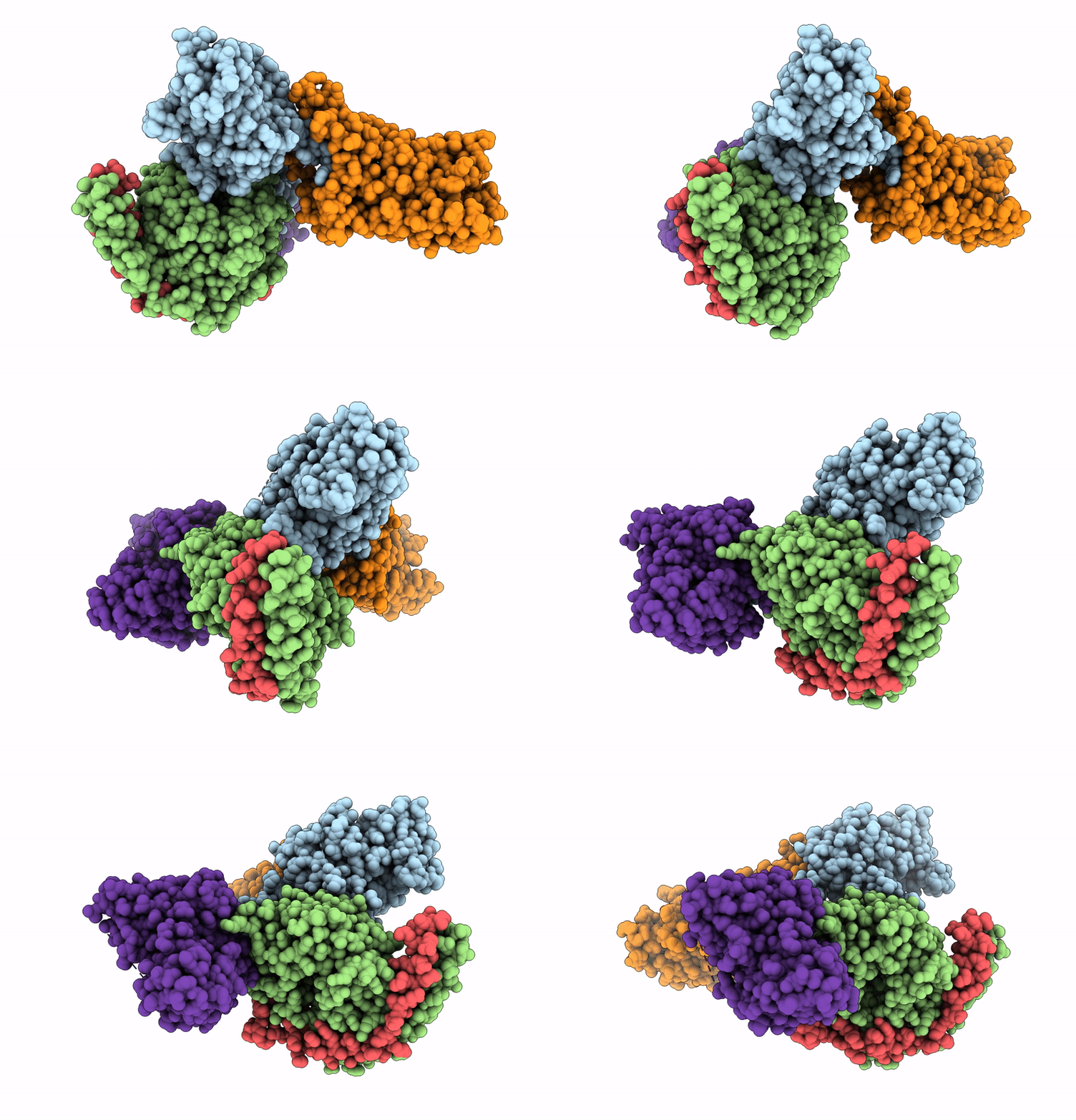
7YU8 image
Deposition Date 2022-08-16
Release Date 2022-10-05
Last Version Date 2024-11-20
Entry Detail
PDB ID:
7YU8
Title:
Human Lysophosphatidic Acid Receptor 1-Gi complex bound to ONO-0740556, state4
Biological Source:
Source Organism(s):
Homo sapiens (Taxon ID: 9606)
Rattus norvegicus (Taxon ID: 10116)
Bos taurus (Taxon ID: 9913)
Mus musculus (Taxon ID: 10090)
Method Details:
Experimental Method:
Resolution:
5.60 Å
Aggregation State:
PARTICLE
Reconstruction Method:
SINGLE PARTICLE
Macromolecular Entities
Polymer Type:polypeptide(L)
Molecule:Guanine nucleotide-binding pr
Gene (Uniprot):GNAI1
Chain IDs:B (auth: A)
Chain Length:354
Number of Molecules:1
Biological Source:Homo sapiens
Polymer Type:polypeptide(L)
Molecule:Guanine nucleotide-binding pr
Gene (Uniprot):Gnb1
Chain IDs:C (auth: B)
Chain Length:351
Number of Molecules:1
Biological Source:Rattus norvegicus
Polymer Type:polypeptide(L)
Molecule:Guanine nucleotide-binding pr
Gene (Uniprot):GNG2
Chain IDs:D (auth: G)
Chain Length:68
Number of Molecules:1
Biological Source:Bos taurus
Polymer Type:polypeptide(L)
Molecule:Lysophosphatidic acid recepto
Gene (Uniprot):LPAR1
Chain IDs:A (auth: R)
Chain Length:379
Number of Molecules:1
Biological Source:Homo sapiens
Polymer Type:polypeptide(L)
Molecule:scFv16
Chain IDs:E (auth: S)
Chain Length:260
Number of Molecules:1
Biological Source:Mus musculus
Ligand Molecules
Primary Citation
Structure of the active G i -coupled human lysophosphatidic acid receptor 1 complexed with a potent agonist.
Nat Commun 13 5417 5417 (2022)
PMID: 36109516 DOI: 10.1038/s41467-022-33121-2

Abstact

Lysophosphatidic acid receptor 1 (LPA1) is one of the six G protein-coupled receptors activated by the bioactive lipid, lysophosphatidic acid (LPA). LPA1 is a drug target for various diseases, including cancer, inflammation, and neuropathic pain. Notably, LPA1 agonists have potential therapeutic value for obesity and urinary incontinence. Here, we report a cryo-electron microscopy structure of the active human LPA1-Gi complex bound to ONO-0740556, an LPA analog with more potent activity against LPA1. Our structure elucidated the details of the agonist binding mode and receptor activation mechanism mediated by rearrangements of transmembrane segment 7 and the central hydrophobic core. A structural comparison of LPA1 and other phylogenetically-related lipid-sensing GPCRs identified the structural determinants for lipid preference of LPA1. Moreover, we characterized the structural polymorphisms at the receptor-G-protein interface, which potentially reflect the G-protein dissociation process. Our study provides insights into the detailed mechanism of LPA1 binding to agonists and paves the way toward the design of drug-like agonists targeting LPA1.

Legend

Protein

Chemical

Disease

Primary Citation of related structures
Feedback Form
Name
Email
Institute
Feedback