

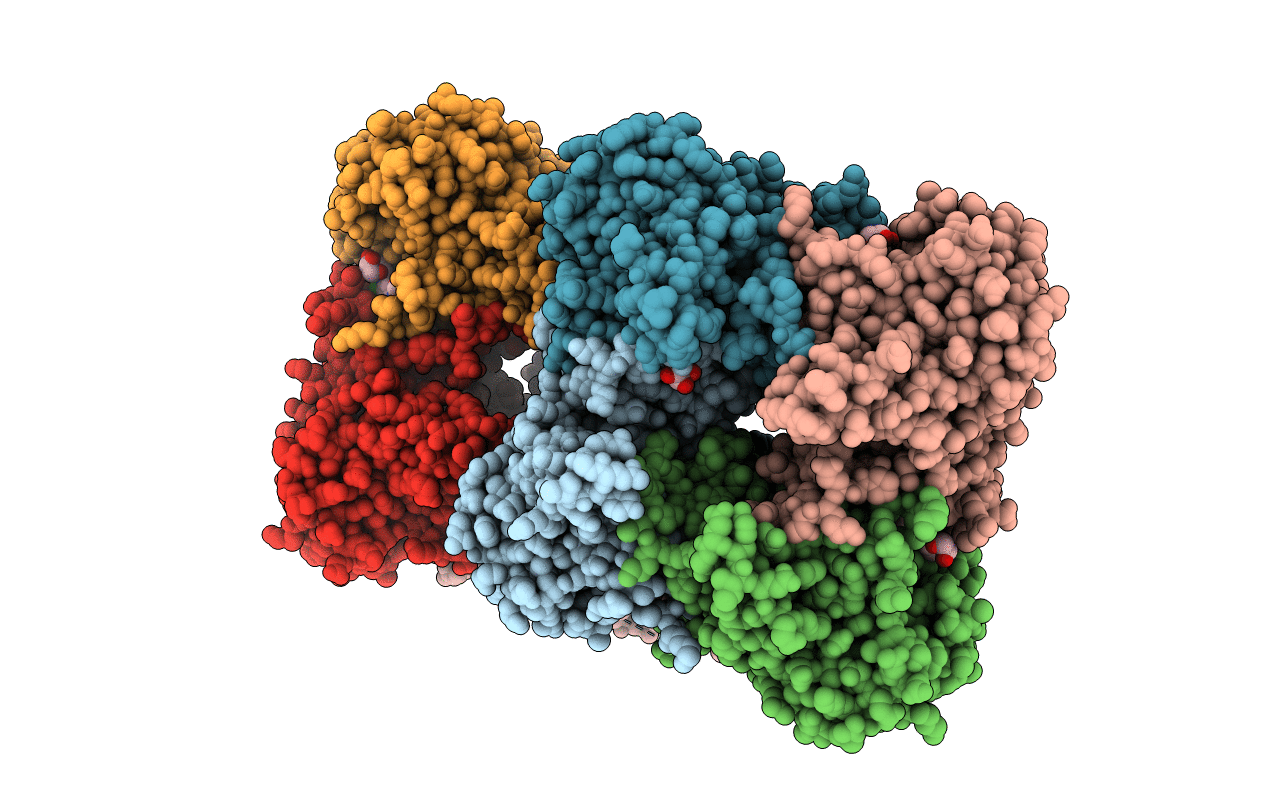
7MTU image
Deposition Date 2021-05-13
Release Date 2021-06-09
Last Version Date 2026-03-25
Entry Detail
PDB ID:
7MTU
Title:
Crystal Structure of the Catalytic Domain of the Inosine Monophosphate Dehydrogenase from Bacillus anthracis in the complex with IMP and the inhibitor P221
Biological Source:
Source Organism(s):
Expression System(s):
Method Details:
Experimental Method:
Resolution:
2.34 Å
R-Value Free:
0.27
R-Value Work:
0.23
R-Value Observed:
0.23
Space Group:
P 1

Macromolecular Entities
Structures with similar UniProt ID
Protein Blast
Polymer Type:polypeptide(L)
Molecule:Inosine-5'-monophosphate dehy
Chain IDs:A, B, C, D, E, F, G, H
Chain Length:384
Number of Molecules:8
Biological Source:Bacillus anthracis
Primary Citation
The Enzymatic Activity of Inosine 5'-Monophosphate Dehydrogenase May Not Be a Vulnerable Target for Staphylococcus aureus Infections.
Acs Infect Dis. 7 3062 3076 (2021)
PMID: 34590817 DOI: 10.1021/acsinfecdis.1c00342

Abstact

Many bacterial pathogens, including Staphylococcus aureus, require inosine 5'-monophosphate dehydrogenase (IMPDH) for infection, making this enzyme a promising new target for antibiotics. Although potent selective inhibitors of bacterial IMPDHs have been reported, relatively few have displayed antibacterial activity. Here we use structure-informed design to obtain inhibitors of S. aureus IMPDH (SaIMPDH) that have potent antibacterial activity (minimal inhibitory concentrations less than 2 muM) and low cytotoxicity in mammalian cells. The physicochemical properties of the most active compounds were within typical Lipinski/Veber space, suggesting that polarity is not a general requirement for achieving antibacterial activity. Five compounds failed to display activity in mouse models of septicemia and abscess infection. Inhibitor-resistant S. aureus strains readily emerged in vitro. Resistance resulted from substitutions in the cofactor/inhibitor binding site of SaIMPDH, confirming on-target antibacterial activity. These mutations decreased the binding of all inhibitors tested, but also decreased catalytic activity. Nonetheless, the resistant strains had comparable virulence to wild-type bacteria. Surprisingly, strains expressing catalytically inactive SaIMPDH displayed only a mild virulence defect. Collectively these observations question the vulnerability of the enzymatic activity of SaIMPDH as a target for the treatment of S. aureus infections, suggesting other functions of this protein may be responsible for its role in infection.

Legend

Protein

Chemical

Disease

Primary Citation of related structures
Feedback Form
Name
Email
Institute
Feedback